Kanjak Bhog Recipe: Traditional Prasad for Navratri Kanya Pujan
Hello friends! Navratri is a special time of devotion and celebration. On Ashtami or Navami, we perform Kanya Pujan or Kanjak, where we invite young girls as forms of Maa Durga and offer them a special meal. This meal, known as Kanjak Bhog, is not just food – it is Prasad made with love, purity, and devotion.
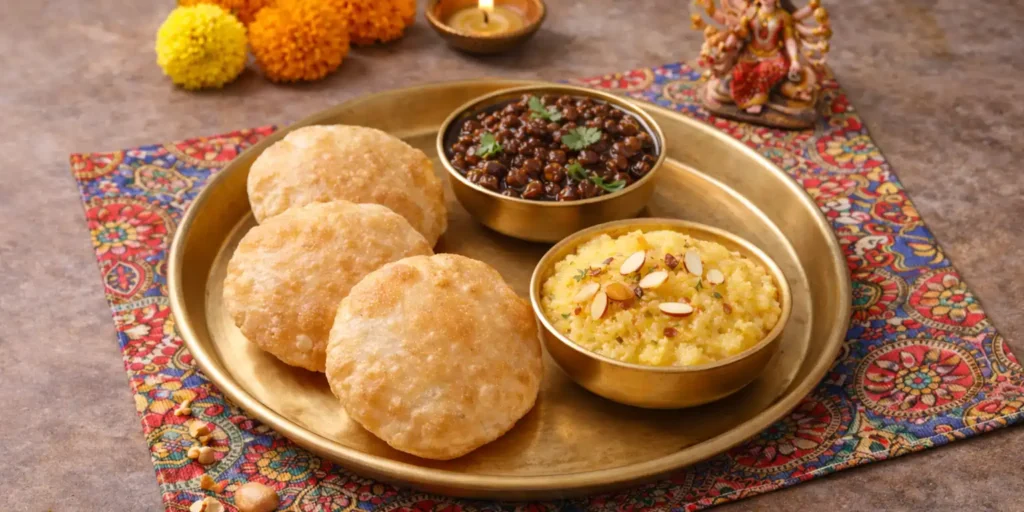
The traditional Kanjak Bhog consists of three main dishes – poori (deep-fried Indian bread), sooji halwa (sweet semolina pudding), and kala chana (black chickpeas cooked with spices). Sometimes people also add aloo sabzi or coconut. The smell of halwa roasting in ghee, puris puffing up in hot oil, and chana simmering with spices – it fills the house with festive warmth and divine aroma.
Making this Kanjak Bhog Recipe at home is not difficult. You just need simple ingredients and a little time. The key is to cook with clean hands and a pure heart. Let me show you how to make this perfect Prasad step by step, just like our grandmothers made.
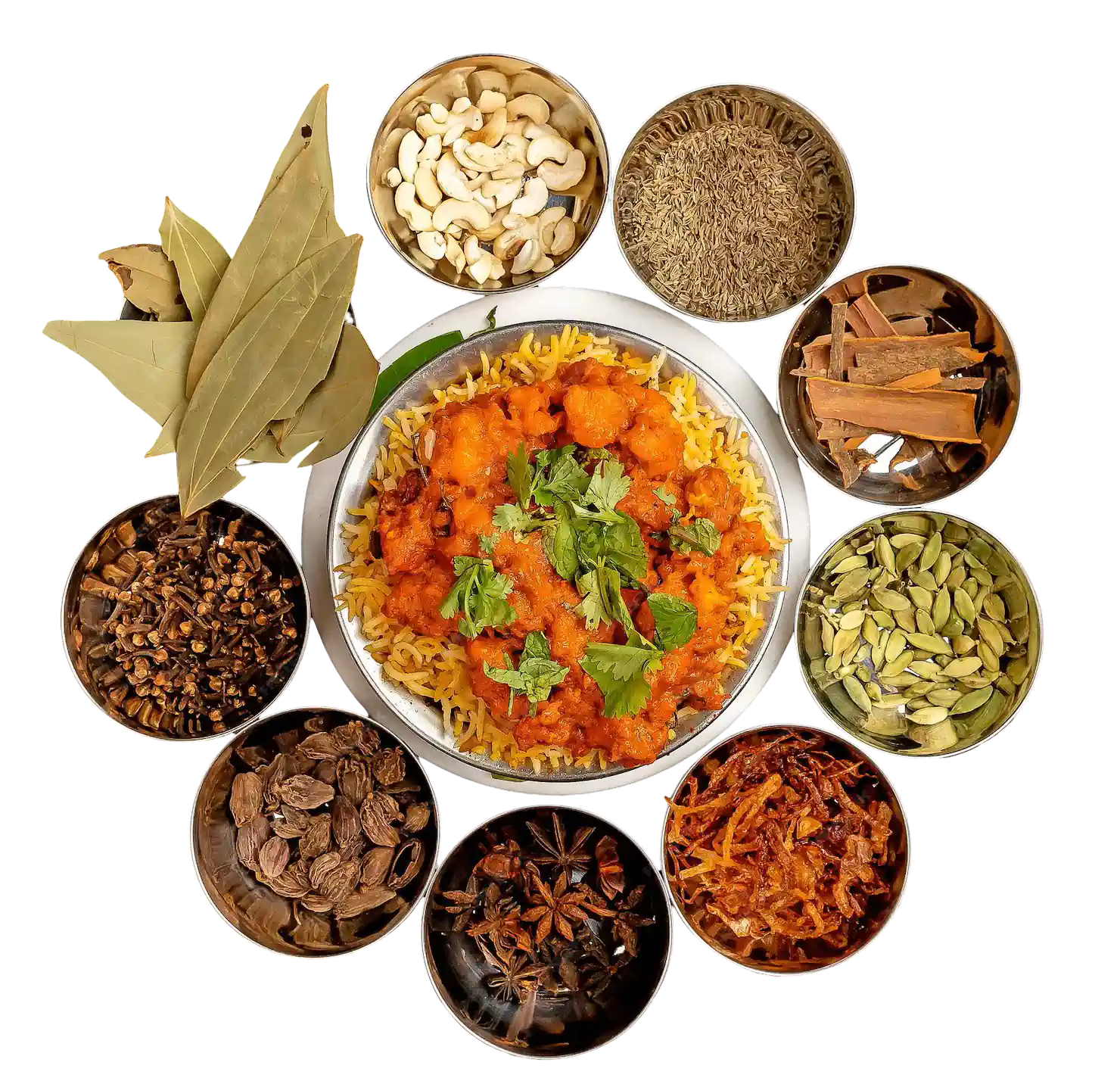
Ingredients for Kanjak Bhog
This recipe serves 8-10 people (for 9 kanyas and 1 langur).
For Kala Chana (Black Chickpeas):
- 2 cups Kala Chana (black chickpeas)
- Salt to taste (regular salt or sendha namak)
- 3 tablespoons Ghee or Oil
- 1 teaspoon Cumin Seeds (Jeera)
- 1 tablespoon Ginger – finely chopped
- 2-3 Green Chilies – slit
- 1 teaspoon Turmeric Powder
- 2 teaspoons Coriander Powder
- 1 teaspoon Red Chili Powder (adjust to taste)
- 1 teaspoon Dry Mango Powder (Amchur)
- ½ teaspoon Garam Masala
- Fresh Coriander Leaves for garnish
For Sooji Halwa (Semolina Pudding):
- 1 cup Sooji (semolina / rawa)
- 1 cup Sugar (adjust to taste)
- 1 cup Ghee (yes, 1 full cup for authentic taste)
- 2 cups Water or Milk (for richer halwa)
- ½ teaspoon Cardamom Powder
- 2 tablespoons mixed Dry Fruits – almonds, cashews, raisins
For Poori (Fried Bread):
- 2 cups Whole Wheat Flour (atta)
- ½ teaspoon Salt
- 2 tablespoons Ghee or Oil (for moyan)
- Water for kneading
- Ghee or Oil for deep frying
Step-by-Step Recipe Method
1st Step: Prepare the Kala Chana
Wash the kala chana 3-4 times with water. Put them in a large bowl and add enough water to cover completely. Let them soak overnight or for at least 8 hours. Next morning, drain the water. Put soaked chana in a pressure cooker. Add fresh water – about 2 cups or until chana are just covered. Add salt. Close cooker and cook for 4-5 whistles on medium flame. Then reduce flame to low and cook for 5-7 minutes more. Turn off heat and let pressure release naturally.
Tip: Soaking overnight is very important. It softens the chana and reduces cooking time.
2nd Step: Make the Sooji Halwa
Take a heavy-bottomed kadhai or pan. Add 1 cup ghee and heat on medium flame. When ghee melts, add 1 cup sooji. Roast on low to medium flame, stirring continuously. Roast until sooji changes color to golden brown and releases a beautiful nutty aroma. This takes about 8-10 minutes. Meanwhile, in a separate pan, heat 2 cups water. Add sugar and stir until dissolved. When sooji is golden, slowly pour the hot sugar syrup into the kadhai. Be careful – it will splutter. Stir quickly and continuously. Add cardamom powder. Keep stirring on low flame until all water is absorbed and halwa leaves the sides of the pan. In a small pan, fry dry fruits in 1 teaspoon ghee and add to halwa. Cover and keep aside.
Tip: Well-roasted sooji gives halwa that perfect texture and taste. Don’t stop stirring while roasting.
3rd Step: Prepare the Chana Masala
Open the pressure cooker. If there is too much water in chana, drain some, but keep about ½ cup water for gravy. Heat a separate pan or kadhai. Add 3 tablespoons ghee or oil. When hot, add cumin seeds. Let them crackle. Add finely chopped ginger and slit green chilies. Saute for 30-40 seconds until fragrant. Now add turmeric powder, coriander powder, and red chili powder. Stir quickly for 10-15 seconds on low heat. Add 2 tablespoons water to prevent spices from burning. Add the boiled chana along with some cooking water. Mix well. Add dry mango powder and garam masala. Mix and let it simmer on medium-low heat for 8-10 minutes so chana absorb all flavors. Garnish with fresh coriander leaves. Turn off heat and cover to keep warm.
Tip: Dry mango powder adds that tangy taste which makes chana special.
4th Step: Make the Poori Dough
In a large bowl, take wheat flour. Add salt and 2 tablespoons ghee. Rub the ghee into flour with fingertips until it looks like breadcrumbs. Add water little by little and knead into a stiff dough. Poori dough should be tighter than roti dough, not soft. Cover and let it rest for 20-30 minutes.
Tip: Resting the dough helps pooris become soft and puffy.
5th Step: Roll the Pooris
After resting, knead the dough again lightly. Divide into small lemon-sized balls. Take one dough ball. Roll it into a small circle, about 3-4 inches wide. Do not use too much dry flour while rolling. Roll evenly from all sides. Roll all pooris similarly and keep them covered with a damp cloth so they don’t dry out.
6th Step: Fry the Pooris
Heat ghee or oil for frying in a kadhai on medium flame. To check if oil is ready, drop a tiny piece of dough. It should come up slowly and sizzle. Oil should be medium hot, not smoking. Gently slide one poori into hot oil. Press lightly with a slotted spoon – it will puff up. Flip and cook the other side until golden brown. Remove with slotted spoon and drain on paper towel. Fry all pooris similarly.
Tip: Do not overcrowd the kadhai. Fry 1-2 pooris at a time for best results.
7th Step: Assemble the Prasad Thali
Take a clean plate or thali. Place 2-3 pooris on one side. Put a bowl of chana and a bowl of halwa next to the pooris. Add a piece of coconut or banana if you like. Make sure everything is arranged neatly.
8th Step: Offer and Serve
First offer the bhog to Maa Durga with prayers. Then serve the warm, delicious Prasad to the kanyas with love and respect. The chana should be served with little gravy, halwa warm, and pooris hot and puffed.
Pro Cooking Tips for Perfect Kanjak Bhog
-
Use Pure Ghee: For authentic Prasad, use good quality desi ghee. It adds richness and is considered pure and sattvic.
-
Soak Chana Overnight: Do not skip overnight soaking. It makes chana soft and easier to digest.
-
Roast Sooji Well: Proper roasting is the secret to perfect halwa. Roast until golden and aromatic, but don’t burn.
-
Knead Stiff Dough: Poori dough should be stiff, not soft. Soft dough absorbs more oil and pooris won’t puff properly.
-
No Onion-Garlic: Kanjak Bhog is sattvic. Do not use onion or garlic in any dish.
-
Cook with Cleanliness: Keep your kitchen and utensils clean. Cook with pure thoughts and devotion.
-
Biggest Mistake: Adding too much water to chana or not roasting sooji enough. Follow the measurements carefully.
Variations & Substitutes to Try
-
Aloo Bhog: Some families add aloo sabzi (potato curry) to the Kanjak thali. Make simple potatoes with cumin, sendha namak, and green chilies.
-
Coconut Prasad: Offer pieces of fresh coconut or coconut water along with the meal.
-
Dry Chana Version: For sookhe chane (dry black chickpeas), drain all water after boiling and toss with spices in pan without adding extra water.
-
Sweet Poori: In some regions, they make sweet poori by adding sugar to the dough.
-
Jain Version: All three dishes are naturally Jain-friendly as they have no onion-garlic.
-
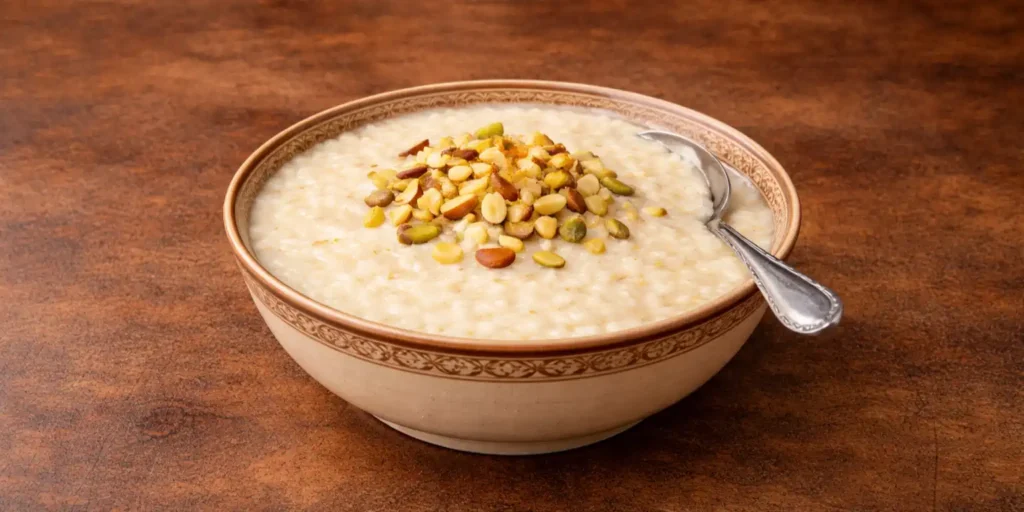
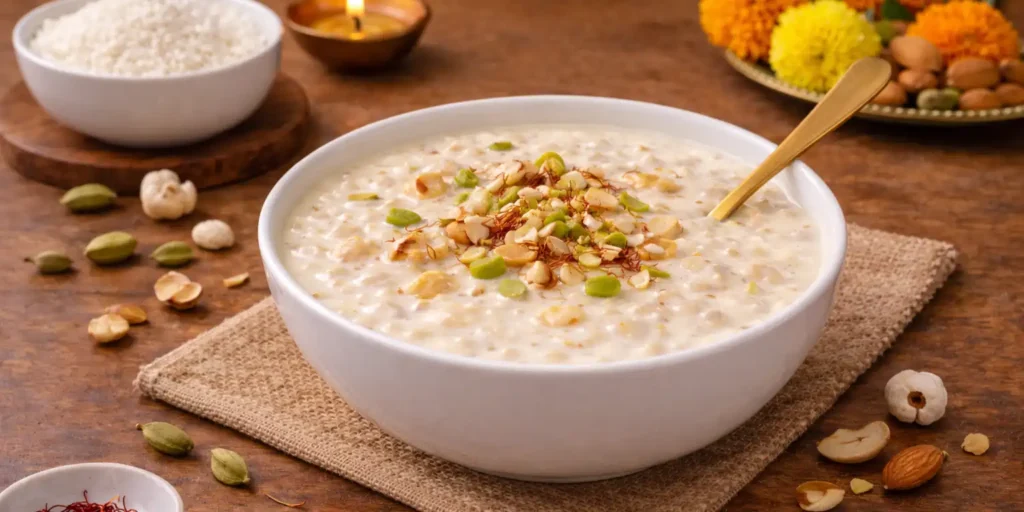
Kheer Option: Some families also make rice kheer as part of the bhog.
Serving Suggestions: Best Ways to Enjoy
-
On Banana Leaf: Traditionally, Kanjak Bhog is served on a plate made of dried leaves or on a clean thali.
-
Complete Thali: Serve 2 pooris, a bowl of chana, a bowl of halwa, and a piece of coconut or fruit.
-
With Gifts: Along with food, offer gifts like bangles, ribbons, pencils, or small money to the kanyas.
-
First to Goddess: Before serving the girls, offer the bhog to Maa Durga first.
-
Best Occasion: Perfect for Navratri Ashtami, Navratri Navami, Ram Navami, and Kanya Pujan ceremonies.
FAQs: Your Kanjak Bhog Questions Answered
Q1: Why is halwa, poori, and chana offered in Kanjak?
A1: This combination is considered pure, sattvic, and complete. Halwa gives instant energy, poori is filling, and chana provides protein. Together they make a balanced, sacred meal.
Q2: Can I make Kanjak Bhog with sendha namak?
A2: Yes, during Navratri fast, many people use sendha namak (rock salt). You can use it in chana and poori dough. Halwa uses sugar, so no salt needed.
Q3: How many girls are fed in Kanjak?
A3: Traditionally, nine girls (kanyas) are worshipped and fed, along with one boy (langur) who represents Bhairav.
Q4: Can I prepare Kanjak Bhog one day before?
A4: Prasad is best made fresh on the same day. But you can soak chana overnight and keep dry ingredients ready. Cook everything fresh in the morning.
Q5: What if I don’t have time to make poori?
A5: Poori is an essential part of Kanjak Bhog. But if you really cannot make poori, some families use chapati as an alternative. However, poori is traditional.
Q6: Is it necessary to use ghee or can I use oil?
A6: Ghee is preferred because it is considered pure and sattvic. But you can use oil if needed. For authentic Prasad, try to use at least some ghee.
Q7: Can I add other dishes to the Kanjak Bhog?
A7: Some families add aloo sabzi, kheer, or coconut. The core three dishes are halwa, poori, and chana. You can add more but don’t remove these three.
Conclusion
So friends, now you know how to make the perfect Kanjak Bhog Recipe at home. This traditional Prasad of halwa, poori, and kala chana is not just food – it is an offering of love and devotion to the divine energy that resides in every young girl.
Making this bhog with clean hands and a pure heart brings blessings to the whole family. The process itself – soaking chana overnight, roasting sooji in ghee, kneading dough, frying pooris – connects us to our roots and traditions.
I hope you try this recipe for the upcoming Navratri. Please make it and tell me in the comments how it turned out! Share your photos and stories. For more festive recipes, check out our Vrat Ke Aloo and Singhare Ke Pakode .
Happy Navratri and may Maa Durga bless your family!