
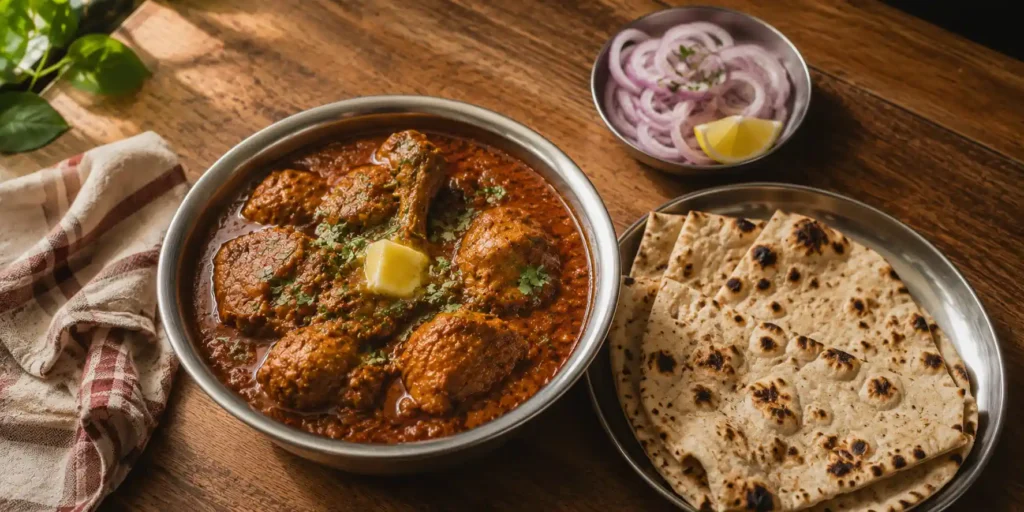
Chicken curry without coconut – yaar, you know that feeling when you are craving a proper, desi chicken curry but you don’t want that heavy, sweet coconut milk? You want something that tastes like your grandmother’s kitchen – rich, spicy, with that deep onion-tomato masala that clings to every piece of chicken. That is what this curry is all about. No coconut. No cream. Just pure, honest, North Indian-style chicken curry.
I remember growing up, my mother would make chicken curry on Sundays. The smell would fill the whole house – garlic, ginger, onions browning, tomatoes simmering, and that magical combination of garam masala and coriander. No coconut. No cream. Just a thick, flavourful gravy that we would soak up with roti or rice. It was simple. It was perfect. And it was comfort.
Chicken Curry Without Coconut
For years, I thought chicken curry had to have coconut or cream to be good. Then I made this version for a friend who was allergic to coconut. He said, “This is the best chicken curry I have ever had.” And he meant it. So here it is. My chicken curry without coconut recipe. Rich. Spicy. Deeply flavourful. And made with ingredients you already have in your kitchen.
A small tangent: My Punjabi friend once said, “Coconut in chicken curry is for South India. North India does it with onions and tomatoes.” I agreed. This is North Indian style. Pure and simple.
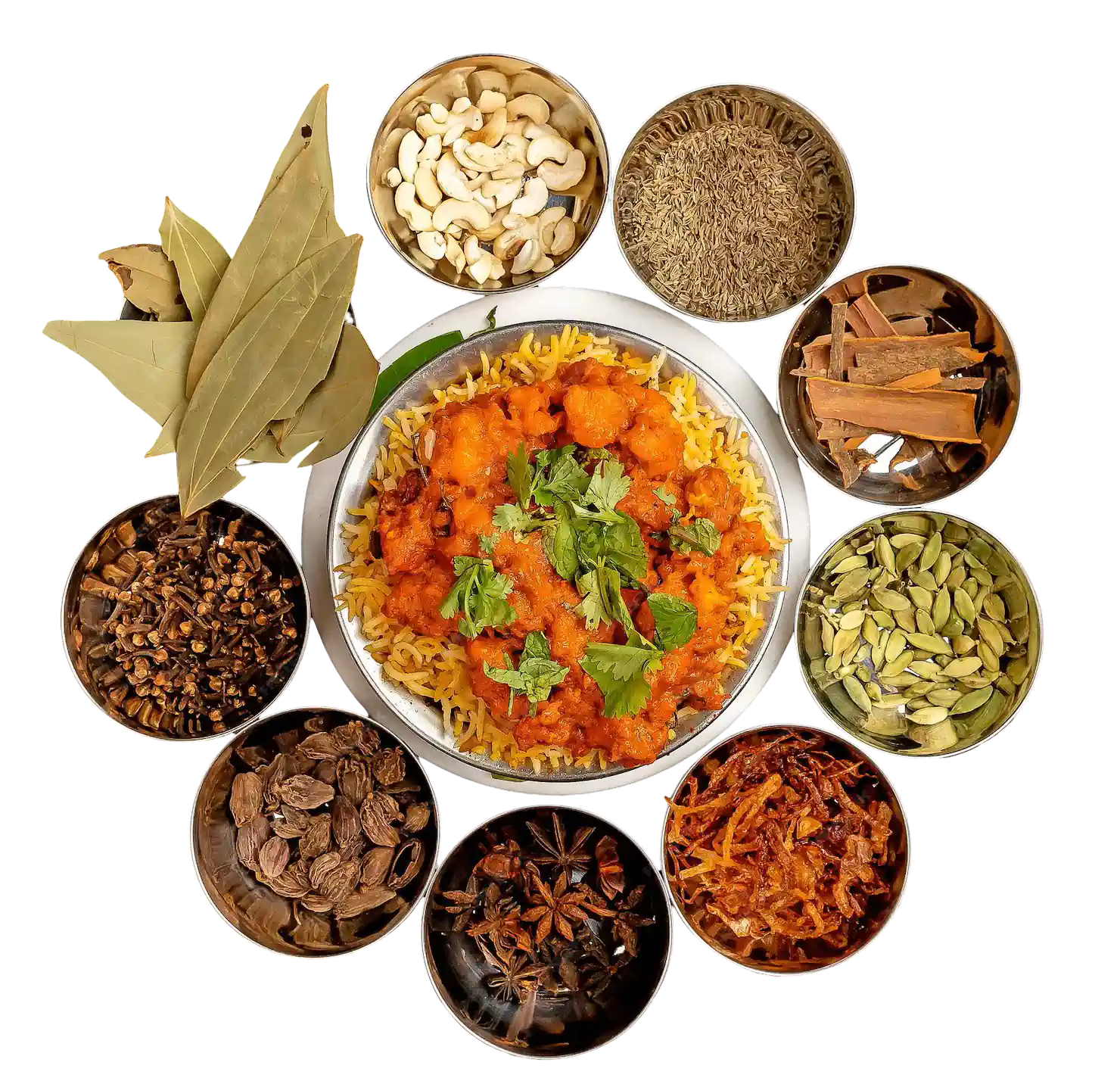

Step-by-Step Recipe Method
1st Step: Marinate the Chicken
Wash the chicken pieces thoroughly. Pat them dry with a paper towel. In a bowl, mix ginger-garlic paste, red chilli powder, turmeric powder, salt, and lemon juice. Add the chicken pieces. Massage the marinade into the chicken. Cover and refrigerate for 30 minutes to 1 hour. This helps the flavours penetrate and tenderises the meat.
A mistake I made: I skipped the marination once. The chicken was bland. The marination is essential.
2nd Step: Heat the Oil and Add Tempering
Place a deep pan or kadhai on medium flame. Add 3 tablespoons of oil or ghee. Let it heat. Add cumin seeds. Let them crackle. The sound is the beginning of a great curry.
3rd Step: Sauté the Onions
Add the finely chopped onions. Sauté on medium flame until they turn golden brown – about 5 to 7 minutes. Do not rush this step. Brown onions are the base of a good curry. They add sweetness and depth.
4th Step: Add Ginger-Garlic and Tomatoes
Add ginger-garlic paste and green chillies. Cook for 1 minute until the raw smell disappears. Add the chopped tomatoes. Cook for 3 to 4 minutes until the tomatoes become soft and mushy. The oil will start separating from the masala – that is the sign of a perfect base.
5th Step: Add Spices and Cook the Masala
Add red chilli powder, turmeric powder, coriander powder, cumin powder, and salt. Stir for 30 seconds. The aroma will be intense and wonderful. Add 2 tablespoons of water to prevent the spices from burning. Cook until the masala is thick and the oil separates again – about 2 to 3 minutes.
6th Step: Add the Marinated Chicken
Add the marinated chicken pieces to the pan. Stir well so every piece is coated with the masala. Cook on medium flame for 5 to 7 minutes, stirring occasionally. The chicken will release its own juices. This is where the flavour builds.
7th Step: Add Hot Water and Simmer
Add 2 cups of hot water. Stir well. Bring the curry to a boil. Then reduce the flame to low. Cover the pan with a lid. Let it simmer for 20 to 25 minutes, or until the chicken is fully cooked and tender. Stir occasionally. The gravy will thicken and become rich.
8th Step: Finish with Garam Masala and Kasuri Methi
Add garam masala powder and crushed kasuri methi. Stir well. Let it simmer for another 2 minutes. Turn off the flame. Garnish with fresh coriander leaves. If you want an extra tadka, heat 1 tablespoon ghee, add cumin seeds and red chilli powder, and pour over the curry.
Pro Cooking Tips
-
Mistake to avoid: Adding cold water to the curry. Always add hot water – it keeps the chicken tender and prevents the curry from becoming tough.
-
Browning onions: Do not rush this step. Golden-brown onions are the foundation of a great curry. They add sweetness and depth.
-
Oil separation: Cook the masala until the oil separates from the tomatoes. This is the sign that the masala is cooked properly.
-
Bone-in chicken: Use bone-in chicken for the best flavour. The bones add richness to the gravy. If using boneless, reduce cooking time by 5 to 10 minutes.
-
Resting time: Let the curry sit for 10 minutes after cooking. The flavours meld and deepen. It tastes even better the next day.
-
Leftover curry: Store in the fridge for up to 3 days. Reheat in a pan with a splash of water. The flavour intensifies overnight.
Variations & Substitutes
Healthy version: Use skinless chicken breast. Reduce oil to 1 tablespoon. Add extra vegetables like capsicum, carrots, or cauliflower. Skip the ghee tadka.
Jain version: This recipe contains chicken and is non-vegetarian. For a Jain version, use paneer or tofu. Skip onion and garlic – add hing (asafoetida) and extra ginger. Use rock salt.
Without onion-garlic: This recipe contains onion and garlic. For a no onion-garlic version, skip them. Add hing, extra ginger, and a pinch of asafoetida. The curry will be milder but still tasty.
Vegan version: Use tofu or paneer instead of chicken. Use oil instead of ghee. Follow the same steps. Tofu cooks in 10 minutes. Paneer in 5 minutes.
Extra spicy version: Add 2 extra green chillies and 1 teaspoon red chilli powder extra. Also add ½ teaspoon black pepper powder.
Serving Suggestions
Serve this chicken curry without coconut with:
-
Tandoori roti or butter naan – perfect for soaking up the gravy
-
Steamed basmati rice or jeera rice – the classic pairing
-
Sliced onions with lemon juice and chaat masala
-
A glass of chaas (buttermilk) – cools down the spice
Best time to enjoy? Sunday lunch with the family. Dinner parties. Or any day you want comfort food that is honest and delicious. Also perfect for meal prep – it tastes even better the next day.
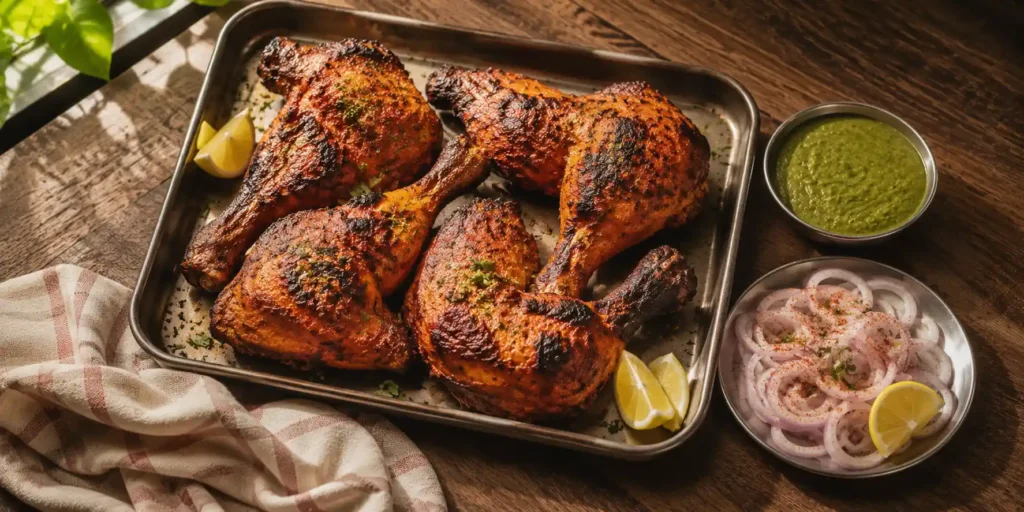
For another classic chicken recipe, check out my Tandoori Chicken in Oven Recipe on Luckky Corner – charred, smoky, and juicy. And if you want a vegetarian main, try my Matar Paneer Dhaba Style – creamy, smoky, and perfect with naan.
FAQs
Why is there no coconut in this chicken curry?
This is a North Indian-style chicken curry that uses onion, tomato, and yogurt-like techniques to create a rich gravy. Coconut is more common in South Indian and coastal curries. This version is lighter and has a deeper, more savoury flavour.
Can I add vegetables to this curry?
Yes. Add potatoes, capsicum, or carrots along with the chicken. Potatoes take about the same time to cook as bone-in chicken. Add them when you add the chicken.
Why is my chicken curry watery?
You added too much water, or you didn’t simmer it long enough. Let the curry simmer uncovered for 5 to 10 minutes to reduce and thicken the gravy.
Can I use boneless chicken?
Yes. Reduce the cooking time to 10 to 12 minutes after adding water. Boneless chicken cooks faster and can become dry if overcooked.
Can I make this curry in a pressure cooker?
Yes. Follow the same steps until adding water. Close the lid and cook for 2 to 3 whistles. Let the pressure release naturally. The chicken will be fall-off-the-bone tender.
How do I store leftover chicken curry?
Store in an airtight container in the refrigerator for up to 3 days. Reheat in a pan with a splash of water. The flavours deepen and improve overnight.
Conclusion
This chicken curry without coconut is my go-to comfort food. It is rich, spicy, and packed with flavour – no coconut, no cream, just honest, homestyle cooking. The onions and tomatoes create a deep, savoury gravy that clings to every piece of chicken. My family now demands this every week. My friend who is allergic to coconut says it is the best chicken curry he has ever had. I will take that as a win.
Make it this weekend. Brown the onions. Simmer the masala. Cook the chicken. Then take a bite and close your eyes. You will feel like you are in a North Indian kitchen. Then come back here and tell me – did you use bone-in or boneless? Did you add extra spice? Did you eat it with roti or rice? I want to hear all your chicken curry stories. And remember – the best curries are made with patience and love.