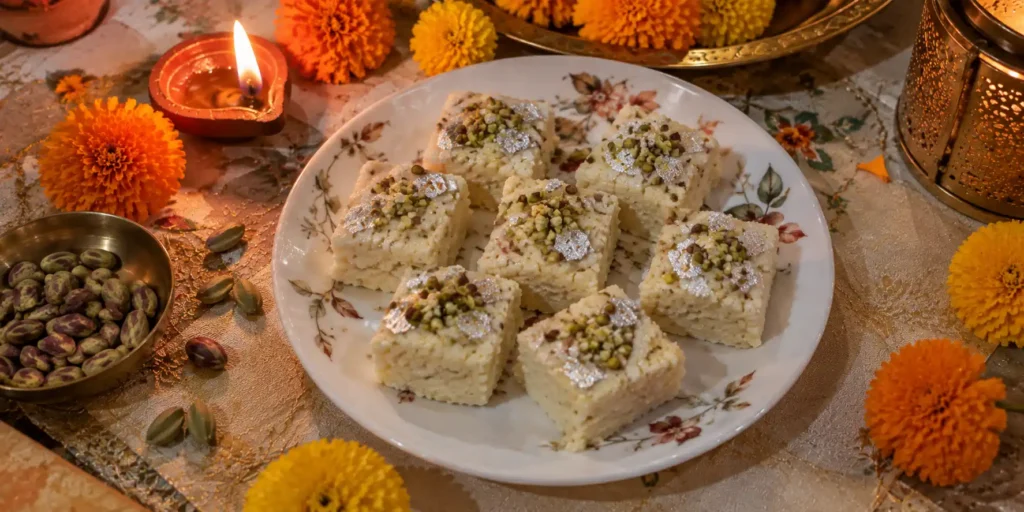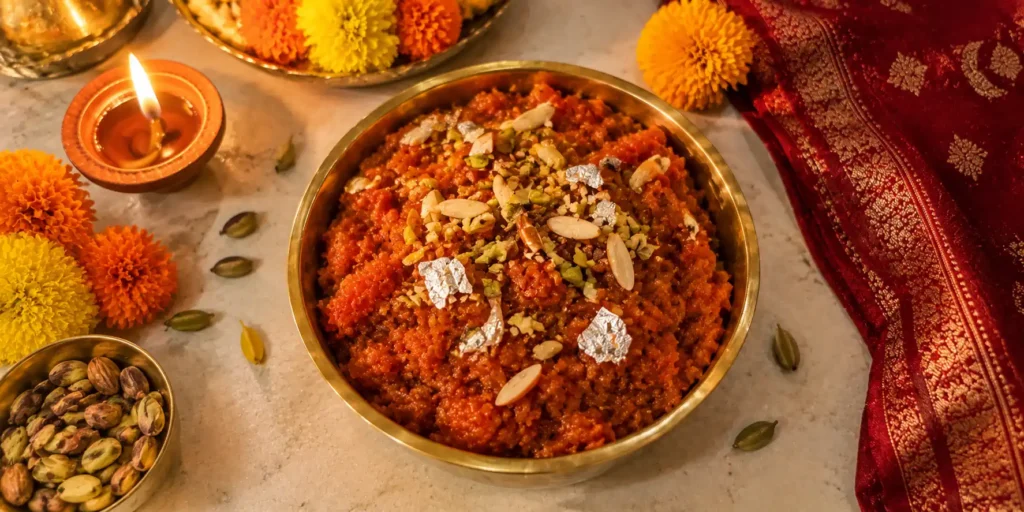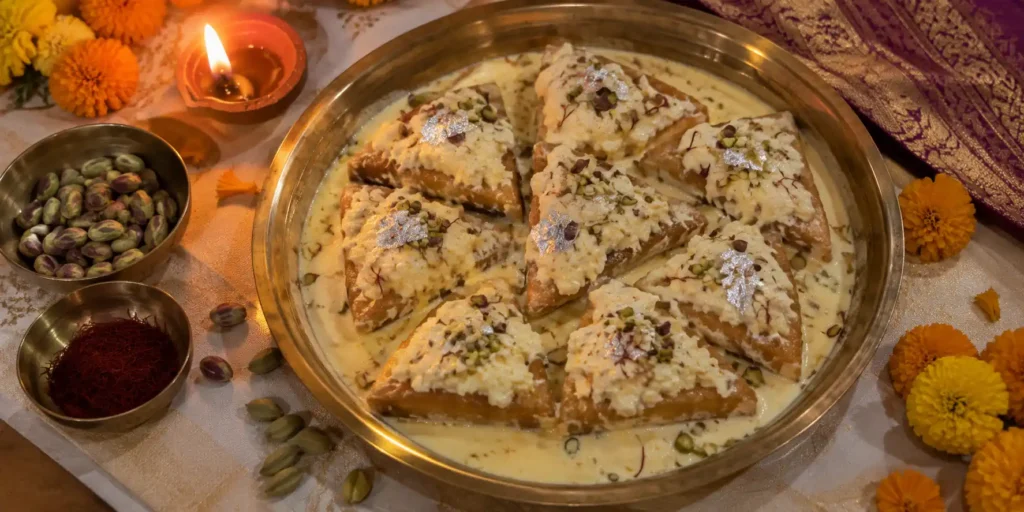

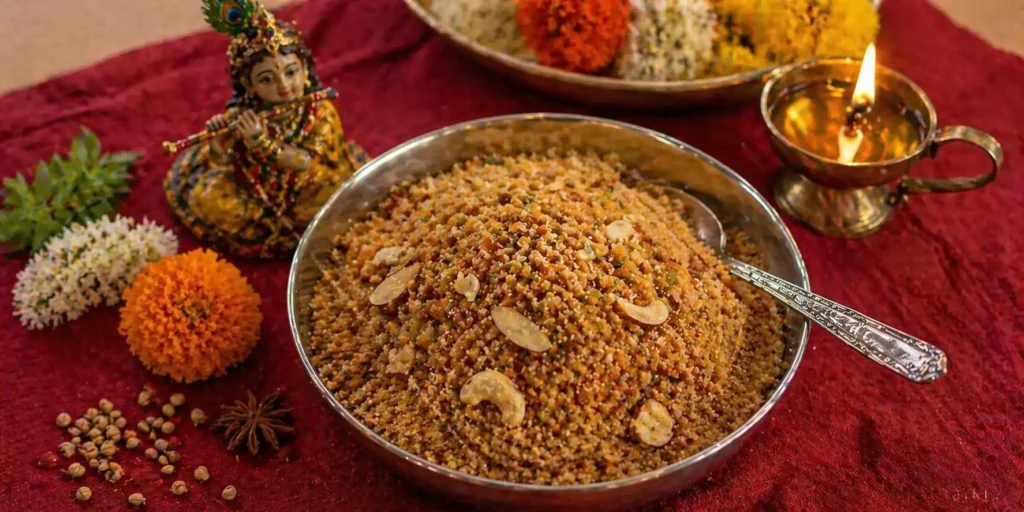
Dhaniya panjiri for Janmashtami – now that is a phrase that takes me back. Actually, let me start properly. Dhaniya panjiri for Janmashtami is not your regular panjiri. You know how regular panjiri smells of roasted atta and ghee? This one has an extra layer – the fresh, lemony, almost grassy aroma of crushed coriander seeds. The first time my aunt made it, I walked into the kitchen and said, “What is that incredible smell?” It was like a garden and a halwai shop had a baby. The texture is crumbly but melts in your mouth, with little bursts of coriander crunch and sweet ghee. Honestly, I forgot to offer it to Krishna first. I ate a spoonful. Then another. My mother caught me. Oops.
Dhaniya Panjiri for Janmashtami
For Janmashtami, we all make regular panjiri. But dhaniya (coriander) panjiri is special because coriander is cooling and digestive. Krishna, being the butter-loving god, probably appreciated something that helps digestion after all that makhan. I read somewhere – I think in some Ayurveda book I half-remember – that dhaniya balances the heavy feeling of ghee. Makes sense, no?
Anyway, I have made this version for the last five Janmashtamis. Every year, I forget one ingredient. One year I forgot the sugar. Another year I added fennel by mistake. But this recipe? I wrote it down and stuck it on my fridge. So even I cannot mess it up. Let me share it with you.
Step-by-Step Recipe Method
1st Step: Crush the Coriander Seeds
Take the coriander seeds in a mortar and pestle (sil batta). Crush them lightly. Do not make a fine powder. You want small, broken pieces – some whole, some half. This gives texture and bursts of flavour. If you use a grinder, just pulse 2 or 3 times. I once ground it into a dust. The panjiri tasted like raw grass. So be gentle.
Keep the crushed dhaniya aside. The smell will already start filling your kitchen – fresh, citrusy, like a morning in a herb garden.
2nd Step: Roast the Nuts and Sesame Seeds
Heat a heavy-bottomed kadhai on low flame. Add the chopped almonds and cashews. Dry roast them for 2 to 3 minutes until they turn light golden. Remove and set aside. Then add the sesame seeds (if using). They will splutter and change colour in 30 seconds. Remove immediately. Do not burn them – burnt til tastes bitter and ruins everything.
I forgot to remove the nuts once and they got dark brown. Still edible, but looked sad. So take them out.
3rd Step: Roast the Flour in Ghee (The Important Part)
In the same kadhai, add the ghee. Let it melt on low flame. Now add the whole wheat flour. Stir continuously. This is not a step you can leave. Keep stirring. The flour will slowly change colour from pale beige to light brown, then to a beautiful golden. It will smell like cookies and halwa. This takes about 12 to 15 minutes.
Do not rush. High flame will burn the flour. Low and slow is the trick. You will know it is ready when the ghee starts separating from the flour – little bubbles of ghee on the sides.
A mistake I made twice? I stopped stirring to answer the phone. Burnt flour. Had to start over. So no phone during roasting.
4th Step: Add Crushed Coriander and Spices
Turn off the flame. Wait for 30 seconds – the kadhai will still be hot but not scorching. Now add the crushed coriander seeds, cardamom powder, and a tiny pinch of nutmeg. Stir well. The residual heat will release the essential oils from the dhaniya. The aroma will hit you – floral, spicy, warm.
Add the roasted nuts and sesame seeds at this point. Mix everything together.
5th Step: Cool Completely
Transfer the mixture to a large, wide plate. Spread it out with the back of a spoon. Let it cool for at least 20 minutes. This is very important. If you add sugar while the mixture is hot, the sugar will melt and your panjiri will become sticky and clumpy instead of crumbly.
I have done this mistake. The panjiri turned into a hard brick. My dog looked at it and walked away. So wait. Go offer water to the tulsi plant. Come back.
6th Step: Add Powdered Sugar
Once the mixture is completely cool to touch (room temperature), add the powdered sugar. Mix well with your fingers or a spoon. The sugar should coat every grain of flour. The texture will become loose and crumbly, like wet sand.
Taste a little – not too much, it is for bhog – and adjust sweetness. Some like it sweeter, some less. I like it balanced.
7th Step: Garnish and Transfer
Take a clean brass or steel bowl. Fill it with the dhaniya panjiri. Sprinkle a few whole coriander seeds and leftover chopped nuts on top. If you have silver varakh, gently place a sheet on top for that festive look. Kanha loves shiny things.
8th Step: Offer as Bhog
Place the bowl on your Janmashtami thali. Light a diya. Ring the bell. Offer it to Krishna with love. Then distribute as prasad to family and neighbours. Do not forget to keep a little for yourself.
Pro Cooking Tips
-
Mistake to avoid: Using coriander powder instead of crushed seeds. Powder burns easily and loses flavour. Whole seeds crushed give that pop and texture. So always use sabut dhaniya.
-
Texture hack: For an extra crumbly panjiri, sift the roasted flour through a strainer before adding sugar. This removes any lumps.
-
Ghee quality: Do not use cheap, hydrogenated ghee. Real desi cow ghee has a grainy texture and deep aroma. That is the soul of panjiri.
-
Storage tip: Dhaniya panjiri stays fresh in an airtight container for 3 to 4 weeks at room temperature. No need to refrigerate. So you can make it a week before Janmashtami.
-
Flavour variation: Add a teaspoon of dry ginger powder (saunth) for a warm, wintery version. But traditional Janmashtami panjiri does not have ginger.
-
Serving size: This recipe makes about 2 cups of panjiri. Enough for a small family bhog. Double it if you have many guests.
Variations & Substitutes
Healthy version: Replace powdered sugar with organic jaggery powder (gud). Use only ⅓ cup ghee instead of ½ cup. Add 2 tablespoons of flaxseed powder for extra fibre.
Jain version: Do not use nutmeg? Actually, nutmeg is allowed. Just ensure no root vegetables – there are none. No changes needed. Ghee is fine in Jain diet.
Without onion-garlic: Already no onion or garlic. Safe for bhog.
Vegan version: Replace ghee with cold-pressed coconut oil. The taste will be coconutty, not traditional, but still edible. Use coconut sugar instead of powdered sugar.
Sugar-free version for diabetics: Use stevia powder or erythritol. Add only after completely cooling. The texture will be slightly different, but the flavour of dhaniya remains.
Serving Suggestions
This dhaniya panjiri for Janmashtami is not a meal – it is a prasad. Serve it in small katoris after the midnight aarti. You can eat it as is, or mix it with a little warm milk to make a thick, porridge-like halwa. Some people roll it into small laddoos – just bind with a little warm ghee or milk.
Best time to enjoy? Right after offering to Krishna, of course. But also during the day as a sweet snack. My grandmother used to give us a spoonful of panjiri before exams – she said it sharpens the brain. I scored okay, so maybe she was right.
For a complete Janmashtami bhog thali, serve this alongside makhan mishri. You can find my full Janmashtami Bhog Thali guide on Luckky Corner – it has 7 recipes including sabudana tikkis and kheer.
FAQs
What is dhaniya panjiri for Janmashtami?
It is a traditional sweet prasad made with roasted wheat flour, ghee, sugar, and crushed coriander seeds (dhaniya). It is offered to Lord Krishna on his birthday because it is saatvik, easy to digest, and aromatic.
Why add coriander seeds to panjiri?
Coriander seeds are cooling and aid digestion. Since panjiri has a lot of ghee, dhaniya balances it out. Also, the flavour pairs beautifully with cardamom and nuts. It is a traditional variation from North Indian homes.
Can I make dhaniya panjiri without ghee?
For bhog purposes, ghee is important. But if you are vegan or lactose intolerant, use coconut oil. The texture will be slightly oily and the taste different. Not recommended for traditional Janmashtami.
How long does dhaniya panjiri stay fresh?
In an airtight container at room temperature, it stays good for 3 to 4 weeks. Keep away from moisture and direct sunlight. No refrigeration needed.
Can I use roasted coriander seeds?
Yes, you can lightly dry roast the coriander seeds before crushing. This makes them more fragrant and less raw-tasting. But traditional recipe uses raw crushed seeds.
Is this recipe gluten-free?
No, because whole wheat flour contains gluten. For gluten-free version, use buckwheat flour (kuttu) or chickpea flour (besan). The taste and texture will be different, but still tasty.
Conclusion
This dhaniya panjiri for Janmashtami is my little twist on a classic. The coriander seeds add a freshness that cuts through the richness of ghee. Every time I make it, the kitchen smells like a temple during a spring festival. Kanha, I believe, appreciates the effort – even if I sometimes forget the sugar or burn the nuts.
Try it this Janmashtami. It takes 30 minutes of active work. The rest is just stirring and waiting. Make it with love. Offer it with a smile. Then come back here and tell me – did your family notice the dhaniya? Did they ask for the recipe? I will be waiting in the comments, probably eating the last spoonful of panjiri that I saved for myself.