
Vegan protein sources – when I first told my mother I was going vegan, she almost dropped her pressure cooker. “Beta, protein kahan se milega?” she said. You know that typical Indian mom worry. I laughed. Then I actually looked up the science. And guess what? I found so many vegan protein sources in our own desi kitchen that I felt a little silly for ever worrying. The smell of cooking dal, the nutty aroma of roasted chana, the earthy taste of fresh tofu – these are not just foods, they are powerhouses.
Vegan Protein Sources List
I am not a doctor. I am just a guy who forgot to eat meat one day, realized he felt lighter, and kept going. But the protein question kept coming up. So I did what any slightly obsessive person would do – I made a list. A real, practical, Indian-kitchen-friendly list. And then I created a one-pot dal that uses three of these sources together. It tastes like comfort. It looks like a warm hug. And it keeps you full for hours.
Let me share the list first. Then we cook.
The Big List of Vegan Protein Sources (All Desi)
Here is the thing. You do not need quinoa or chia seeds (though they are great). Your grandmother’s kitchen already has everything.
-
Masoor dal (red lentil) – cooks fast, becomes creamy, 25g protein per 100g uncooked.
-
Chana dal (split chickpeas) – nutty taste, amazing for curries, 22g protein.
-
Moong dal (yellow lentil) – lightest on stomach, 24g protein.
-
Soya chunks (nuggets) – the hidden champion. 52g protein. Seriously.
-
Tofu (firm) – 17g protein. Takes on any flavour.
-
Peanuts (moongfali) – 26g protein. Make chikki or add to chaat.
-
Chickpeas (kabuli chana) – 19g protein. Chole lovers, rejoice.
-
Black chickpeas (kala chana) – 21g protein. Perfect for sprouts.
-
Sattu (roasted gram flour) – 20g protein. A glass of sattu sharbat in summer? Life-changing.
-
Spinach (palak) – not huge, but combined with grains becomes complete. 3g per cup.
I am forgetting one? Actually, yes – oats (17g) and brown rice (8g). But they are not complete by themselves. The trick is to combine a grain with a legume. That gives you all essential amino acids.
Now, a small tangent. My friend who is a bodybuilder said, “But these are not complete proteins.” I looked it up. It turns out your body can combine them throughout the day. You do not need to eat them in one meal. So relax.
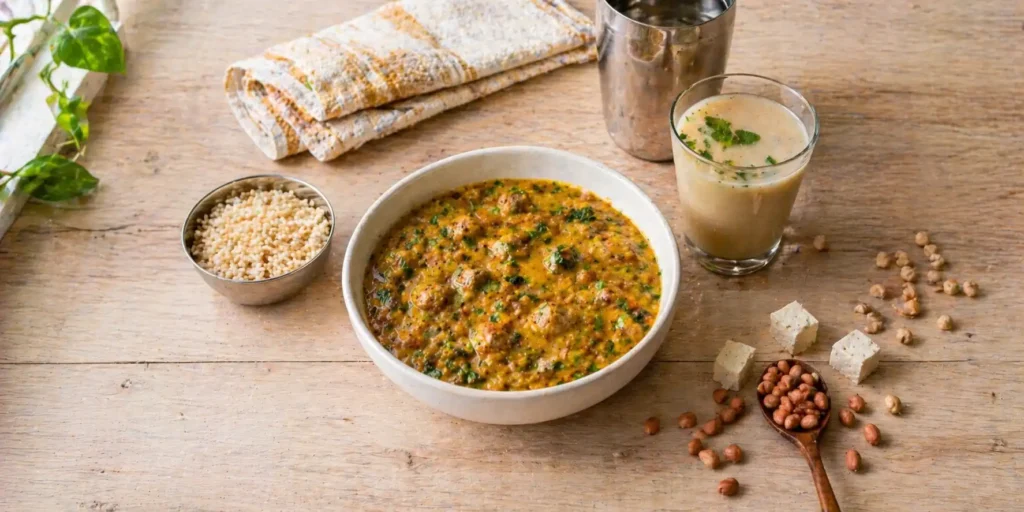
Let me show you a recipe that uses three of these – masoor dal, soya chunks, and spinach. I call it “Triple Power Vegan Dal”.
Ingredients
For the Triple Power Vegan Dal
-
½ cup masoor dal (red lentil) – washed and soaked for 15 minutes
-
½ cup dry soya chunks (nuggets) – about 30g
-
2 cups fresh spinach (palak) – roughly chopped
-
1 tablespoon ginger-garlic paste (or skip ginger for Jain)
-
1 medium tomato – finely chopped
-
1 medium onion – finely chopped (skip for no-onion version)
-
2 green chillies – slit (optional)
-
1 teaspoon turmeric powder
-
1 teaspoon red chilli powder
-
1 teaspoon coriander powder
-
½ teaspoon garam masala
-
1 tablespoon coconut oil or any neutral oil
-
1 teaspoon cumin seeds (jeera)
-
3 cups water
-
Salt to taste
-
Fresh coriander leaves for garnish
Alternatives
-
No masoor dal? Use moong dal or toor dal. Cooking time changes slightly.
-
No soya chunks? Use 100g crumbled tofu or ½ cup boiled chickpeas.
-
No spinach? Use chopped methi (fenugreek leaves) or kale.
-
Want Jain version? Remove onion, garlic, ginger. Use hing (asafoetida) and raw banana puree instead of tomato.

Step-by-Step Recipe Method
1st Step: Prepare the Soya Chunks
Boil 2 cups of water in a small pot. Add the dry soya chunks. Turn off the flame. Let them sit for 10 minutes. The soya chunks will puff up like little sponges. Squeeze out the water gently. Rinse with cold water. Squeeze again. This removes any beany smell. Chop each chunk into 2 or 3 pieces. Keep aside.
A mistake I made the first time: I did not squeeze the water. The soya chunks made the dal watery and weird. Squeeze like you are angry at the soya.
2nd Step: Cook the Masoor Dal
In a pressure cooker, add washed masoor dal, 2 cups of water, turmeric powder, and salt. Pressure cook for 2 whistles on medium flame. Let the pressure release naturally. The dal should be soft and mushy. Mash it slightly with a ladle. Keep aside.
3rd Step: Sauté the Aromatics
In a separate deep pan or kadhai, heat the coconut oil. Add cumin seeds. Let them crackle. Add chopped onion. Sauté until golden brown – about 3 minutes. Add ginger-garlic paste. Cook for 1 minute. The smell will fill your kitchen – warm, spicy, inviting.
Add the chopped tomato and green chillies. Cook until tomatoes become soft and mushy. About 2 to 3 minutes. Now add red chilli powder and coriander powder. Stir for 30 seconds.
4th Step: Add Spinach and Soya Chunks
Add the chopped spinach to the pan. Stir. The spinach will wilt within 1 minute. It will shrink a lot – do not worry. Now add the squeezed soya chunks. Stir everything together. Cook for 2 minutes so the soya chunks absorb the masala flavours.
5th Step: Combine Dal and Vegetables
Pour the cooked masoor dal into the pan. Add 1 cup of water (or more if you want a thinner consistency). Stir well. Add garam masala. Let the dal simmer on low flame for 5 to 7 minutes. The colours will blend – the yellow dal, the green spinach, the brown soya chunks. It is a beautiful mess.
6th Step: Final Adjustments
Taste the dal. Add more salt if needed. If it feels too thick, add a little hot water. If too thin, simmer uncovered for a few more minutes. The texture should be like a creamy soup – not a paste, not a drink.
Garnish with fresh coriander leaves. Drizzle a teaspoon of coconut oil or ghee (if not strictly vegan) on top.
7th Step: Serve Hot
Serve this dal with brown rice, quinoa, or whole wheat roti. A squeeze of lemon just before eating brightens everything.
8th Step: The Sattu Drink (Optional Protein Boost)
Want even more protein? Mix 2 tablespoons sattu with 1 glass water, a pinch of black salt, a squeeze of lemon, and some chopped mint. Shake. Drink alongside your meal. It tastes like a tangy, earthy cooler.
Pro Cooking Tips
-
Mistake to avoid: Do not boil soya chunks for too long. Overcooked soya chunks become mushy and unappetizing. 10 minutes of soaking in hot water is perfect.
-
Digestion tip: Always soak lentils for at least 15 minutes. It reduces the compounds that cause gas. Also add a small piece of asafoetida (hing) while cooking – it helps Indian stomachs.
-
Flavour hack: For a smoky flavour, take the dal off the flame. Drop a hot charcoal piece in a small steel bowl placed in the dal. Pour ½ teaspoon oil over charcoal. Cover for 2 minutes. Instant dhaba taste.
-
Meal prep: Make a big batch of this dal on Sunday. Refrigerate for up to 4 days. The soya chunks actually taste better the next day.
-
Protein per serving: One bowl of this dal (with rice) gives you about 22g of plant protein. That is equal to 3 eggs. Without any cholesterol.
-
For weight loss: Skip the rice. Eat the dal as a soup with lots of spinach and soya chunks. Very filling, very low in calories.
Variations & Substitutes
Healthy version (low carb): Replace rice with grated cauliflower (cauliflower rice). Use only 1 teaspoon oil. Add more spinach and less dal.
Jain version: Remove onion, ginger, garlic. Use hing (asafoetida) in the tempering. Replace tomato with grated raw banana or pumpkin. No green chillies – use black pepper.
Without onion-garlic: Skip onion and ginger-garlic paste. Add 1 teaspoon fennel seeds (saunf) and ½ teaspoon hing. The taste will be different but still delicious.
Vegan version: Already vegan as written. Just ensure the oil is plant-based. Coconut oil works beautifully.
High protein extra version: Add 2 tablespoons of peanut powder (roasted and ground peanuts) at the end. It thickens the dal and adds a nutty flavour.
Serving Suggestions
Serve this protein-packed dal with steamed brown rice and a side of raw onion rings with a squeeze of lemon. A small bowl of cucumber-tomato salad on the side adds freshness. For a complete vegan thali, add a spoonful of thecha (crushed green chilli and peanut chutney).
Best time to enjoy? Post-workout lunch or a heavy dinner when you want to feel satisfied without feeling sleepy. Also perfect for kids who refuse to eat meat – they will love the soft soya chunks.
For another high-protein vegan meal from my blog, try my Tofu Tikka Masala – it is creamy and smoky and always a hit. And if you want a quick breakfast, my Foxtail Millet Upma is packed with plant protein too.
FAQs
What are the best vegan protein sources for muscle building?
Soya chunks, tofu, and sattu are the top three. Soya chunks have 52g protein per 100g – higher than chicken. Combine them with brown rice for complete amino acids.
Can I get enough protein from only dal and roti?
Yes, but you need variety. Dal has protein but is low in one amino acid (methionine). Roti (wheat) has that amino acid. Together they become complete. Eat different dals and add some soya or tofu 2-3 times a week.
Is sattu really a good protein source?
Absolutely. Sattu is roasted chickpea flour. One glass of sattu drink gives about 10-12g protein. It is also cooling for the stomach – perfect for Indian summers.
How do I make soya chunks taste good?
The secret is to squeeze out the water after boiling, then sauté them with masala before adding to gravy. They absorb flavours like a sponge. Never add raw soya chunks to dal.
Are canned chickpeas as good as dried?
Canned are convenient but have lower protein density per 100g because of the water. Dried chickpeas (soaked and boiled) give you more protein for the same volume. Plus they are cheaper.
Can I eat these vegan protein sources every day?
Yes. Indians have been eating dal, chana, and sattu for centuries. Just drink plenty of water and eat some fermented foods like vegan curd or kimchi to help digestion.
Conclusion
This list of vegan protein sources is not theoretical. It is my daily food. The dal recipe above is foolproof – even I, a person who once burnt water, can make it. The soya chunks are forgiving. The spinach adds colour and iron. And the sattu drink? It will keep you going through a 3-hour meeting or a 5-mile walk.
Try this meal tomorrow. Notice how you feel after 2 hours – no crash, no fogginess. Then come back and leave a comment. Tell me if you added extra chillies like my friend does, or if you forgot the spinach like I sometimes do. I reply to every comment. Promise.