
Janmashtami bhog thali – just the thought of it makes me feel like a little kid again, peeking into the kitchen while my mother and grandmother ran around like happy maniacs. The smell of desi ghee roasting semolina, the sound of the mortar and pestle crushing cardamom, the sight of that beautiful brass thali slowly filling up with little bowls – each one holding something sweet, something salty, something absolutely irresistible. I mean, this is Krishna’s birthday. And if there is one thing we know about Kanha, it is that he loves food. Actually, he loves butter the most. But also everything else.
Janmashtami Bhog Thali
Every year, I try to make the perfect janmashtami bhog thali, and every year I forget one item. Last time, I forgot the mishri (sugar crystals). Kanha probably laughed at me from heaven. This time, I made a proper list. And I am sharing it with you so you do not make the same mistake.
A small tangent before we start. My wife says I take too long to explain. But you know, bhog is not just food. It is love. It is devotion. It is the smell of ghee and cardamom floating through your home at midnight. So take a deep breath. Let us make Kanha happy.
Step-by-Step Recipe Method
1st Step: Make Panjiri (The Aromatic Beginning)
Take a heavy-bottomed kadhai. Heat ½ cup ghee on low flame. Add the whole wheat flour. Roast it slowly, stirring continuously. This takes 12 to 15 minutes. The colour will change from pale brown to a lovely golden, and the smell will become nutty and toasty. Do not stop stirring – burnt flour ruins everything.
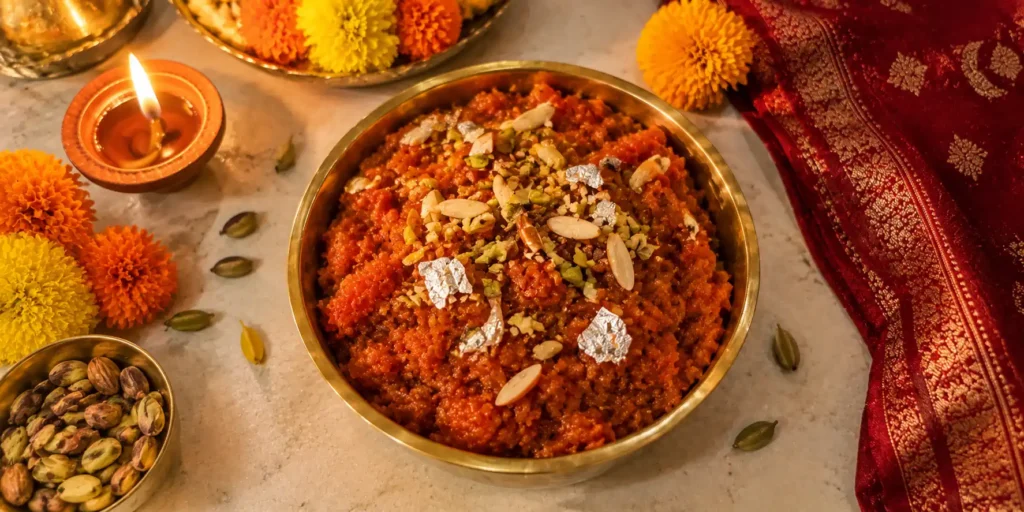
Once roasted, add crushed fennel seeds, cardamom powder, and chopped nuts. Roast for 2 more minutes. Turn off the flame. Let it cool for 10 minutes. Then add powdered sugar. Mix well. Panjiri should be crumbly but moist enough to hold shape when pressed.
A mistake I made: I added sugar when the mixture was hot. The sugar melted and made panjiri sticky. Wait for it to cool.
2nd Step: Prepare Makhan Mishri (Kanha’s Favourite)
Take fresh, soft butter at room temperature. Whip it with a spoon or a whisk until it becomes light and fluffy – about 2 minutes. Add mishri (sugar crystals). Gently fold it in. Do not overmix, or the crystals will dissolve. You want little crunchy bits of sugar in creamy butter.
Transfer to a small clay or steel bowl. Place a tiny silver foil (varakh) on top if you have it. Kanha loves that.
3rd Step: Make Rabri (The Slow-Cooked Wonder)
Pour 1 litre of milk into a wide, heavy pan. Bring it to a boil on medium flame. Then reduce to low flame. Keep stirring occasionally. Let the milk reduce to half – this takes about 30 to 40 minutes. You will see a thick layer of cream (malai) forming on top. Push that layer to the sides.
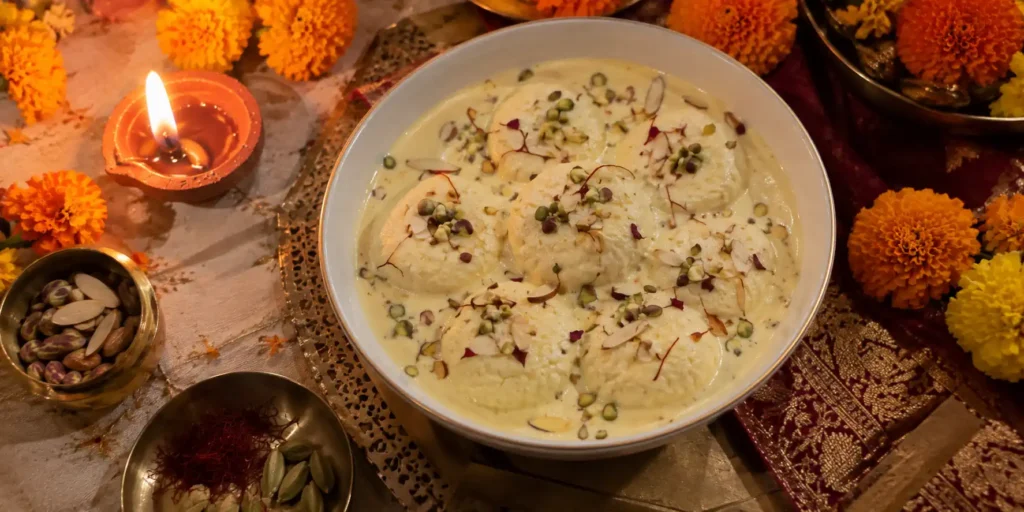
Add sugar and cardamom powder. Stir for 5 more minutes. The rabri should be thick and creamy, almost like soft condensed milk. Garnish with sliced pistachios. Refrigerate for at least 2 hours before serving. Cold rabri is the best.
I once tried to speed up the process. Big mistake. Thin rabri is just sweet milk. No one wants that.
4th Step: Cook Kheer (The Comfort Classic)
Wash the rice and soak it for 15 minutes. In another pot, bring 1 litre milk to a boil. Add the drained rice. Cook on low flame, stirring often, for about 30 minutes. The rice should become soft and the milk should thicken. Add sugar, cardamom powder, and nuts. Cook for 5 more minutes. The kheer should coat the back of a spoon. Serve warm or chilled – both are fine.
5th Step: Make Sabudana Tikki (The Crispy Surprise)
After soaking sabudana for 4 hours, drain all water. The pearls should be soft and non-sticky. In a bowl, mix the soaked sabudana, mashed potatoes, peanut powder, cumin seeds, green chilli, and salt. Knead into a smooth dough. Make small, flat tikkis (patties). Heat a tawa with some ghee. Shallow fry the tikkis on both sides until golden and crispy. Serve hot.
6th Step: Prepare Mohan BhOG (Optional but Divine)
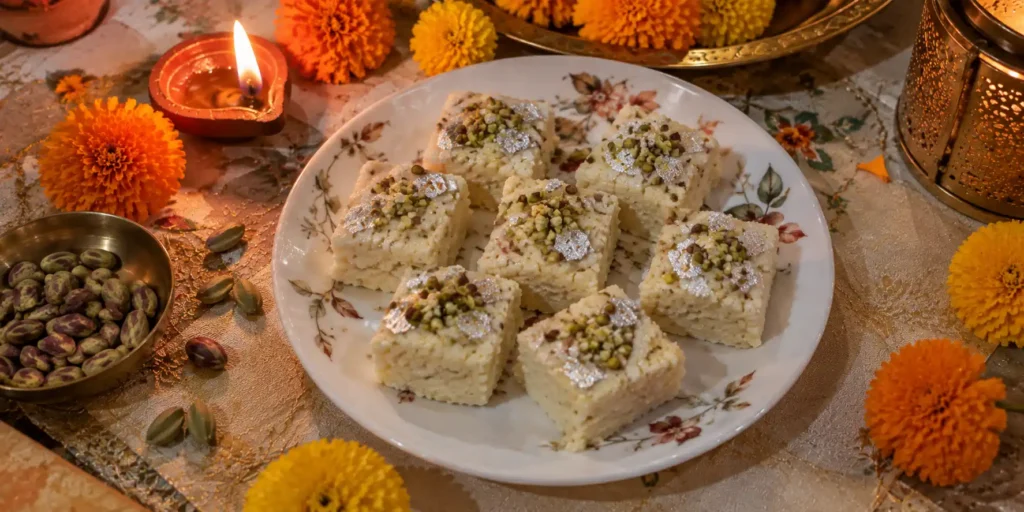
In a kadhai, heat 1 cup ghee on low flame. Add sooji. Roast until golden brown and fragrant – about 10 minutes. The colour should be like sand. In a separate bowl, mix powdered sugar with warm milk until dissolved. Pour this into the roasted sooji. Stir quickly – it will bubble and steam. Cook for 5 minutes until the mixture leaves the sides of the kadhai. Add cardamom powder and nuts. Spread on a greased plate. Cut into squares when set.
7th Step: Arrange the Janmashtami Bhog Thali
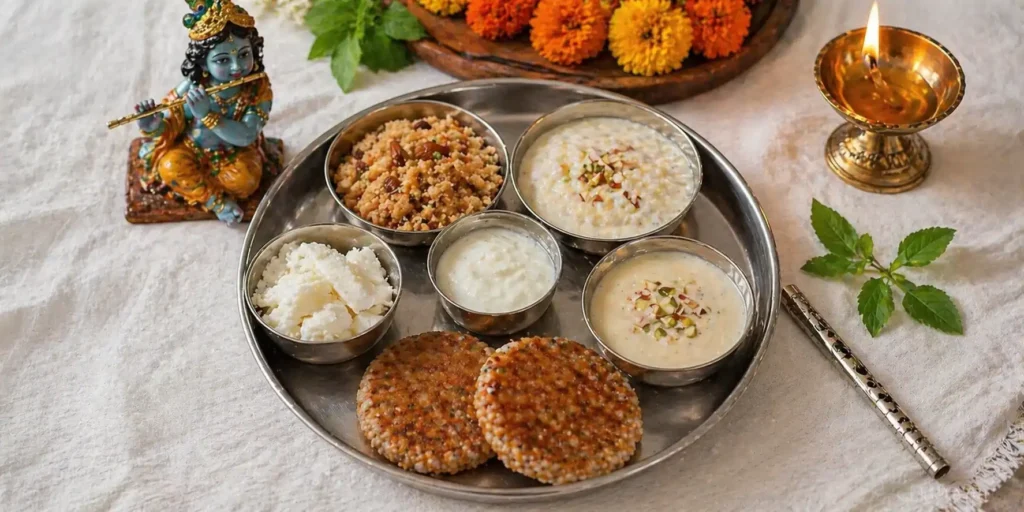
This is the fun part. Take a large brass or steel thali. Place small katoris for each item. Put panjiri in one, makhan mishri in a tiny bowl, rabri in another, kheer in a deep bowl, sabudana tikkis on a small plate, and mohan bhOG pieces on the side. Add a small pot of fresh curd (dahi). Decorate with fresh tulsi leaves and a little diya (lamp) beside the thali.
Do not forget to add a small bowl of mishri (sugar crystals) and maybe a few grapes or banana slices. Kanha loved fruit too.
8th Step: Bhog and Aarti
Place the thali in front of Krishna idol or picture. Light a ghee lamp. Ring a small bell. Offer the food with love. After the aarti, you can eat the bhog as prasad. Remember, nothing is tasted before offering.
Pro Cooking Tips
-
Mistake to avoid: Using onion or garlic in any form. Traditional janmashtami bhog is strictly saatvik – no tamasic ingredients. Even ginger is avoided by many families.
-
Timing tip: Start making rabri and kheer first, as they take time. Make panjiri and mohan bhOG in between. Sabudana tikkis should be the last – they are best hot and crispy.
-
Ghee quality: Use only desi cow ghee. The smell and taste are completely different. Cheap ghee will ruin the bhog.
-
Butter tip: For makhan mishri, use white butter (not yellow). You can make it at home by churning fresh cream. Or buy from a local dairy.
-
Serving suggestion: Most items can be made a day ahead – panjiri, mohan bhOG, and rabri (refrigerated). Make sabudana tikkis and kheer fresh on the day.
-
Portion control: Do not make too much. Bhog is about devotion, not waste. Small quantities made with love are better than huge plates of cold food.
Variations & Substitutes
Healthy version: Use jaggery instead of sugar in panjiri, kheer, and rabri. Replace ghee with coconut oil for panjiri (less heavy). Use brown rice for kheer.
Jain version: Remove potatoes from sabudana tikki – use raw banana instead. No green chilli. All other items are naturally Jain-friendly as they have no root vegetables except for potato. Skip potato.
Without onion-garlic: The entire thali is already without onion and garlic, no changes needed.
Vegan version: This is difficult because milk, ghee, and butter are central. Use coconut milk for rabri and kheer, coconut oil for panjiri, and store-bought vegan butter for makhan mishri. The taste will be different but still devotional.
Serving Suggestions
This janmashtami bhog thali is not served with anything extra – it is a complete meal in itself. However, you can add a glass of thandai (without bhang) or chaas (buttermilk) on the side. The best time to offer bhog is at midnight – the time Krishna was born. Many families keep a fast all day and break it with this thali after the aarti.
For a smaller, everyday version, just make panjiri and makhan mishri. Those two are enough to please Kanha on a regular day.
If you are planning a full festive menu, check out my Sattvic Recipes for Energy on Luckky Corner – they align perfectly with bhog principles. And for a sweet treat that Kanha would definitely steal, try my Janmashtami Bhog Thali (the detailed version) from the blog.
FAQs
What is a janmashtami bhog thali?
It is a platter of vegetarian, saatvik foods offered to Lord Krishna on his birthday. It typically includes panjiri, makhan mishri, kheer, rabri, sabudana tikkis, and more. No onion, no garlic.
Why is makhan mishri always included?
Because Krishna was famously called Makhan Chor (butter thief). Butter with sugar crystals is his absolute favourite. It is said he would steal butter from neighbouring homes.
Can I prepare the bhog thali one day in advance?
Panjiri, mohan bhOG, and rabri can be made a day ahead and refrigerated. Kheer and sabudana tikkis are best fresh. Makhan mishri should be made just before offering, as fresh butter tastes best.
What is the significance of 56 items (chappan bhog)?
Legend says that Indra Dev performed 56 types of offerings to please Krishna. Temples follow that tradition. For home, 7 or 8 items are perfectly fine. Quantity does not matter – devotion does.
Is it necessary to use brass or silver thali?
No, any clean plate works. But using a brass or silver thali adds to the festive feel. Krishna loves love, not expensive vessels.
Can I eat the bhog after offering?
Yes, absolutely. Once offered to the deity, the food becomes prasad – blessed food. You can eat it yourself or share with family and neighbours. Never throw away prasad.
Conclusion
This janmashtami bhog thali is my way of celebrating Kanha – the butter thief, the flute player, the friend who ate everyone’s lunch. Every item in this thali has a story. Panjiri was given to new mothers, and Krishna loved it. Makhan mishri is pure mischief. Rabri is slow-cooked patience. When you make this thali, you are not just cooking. You are telling stories. You are keeping traditions alive.
Make it this Janmashtami. Forget one item – I always do. Kanha will not mind. He will just smile and eat what you offer. Then come back and tell me which item disappeared the fastest from your thali. My bet is on the makhan mishri. Always.