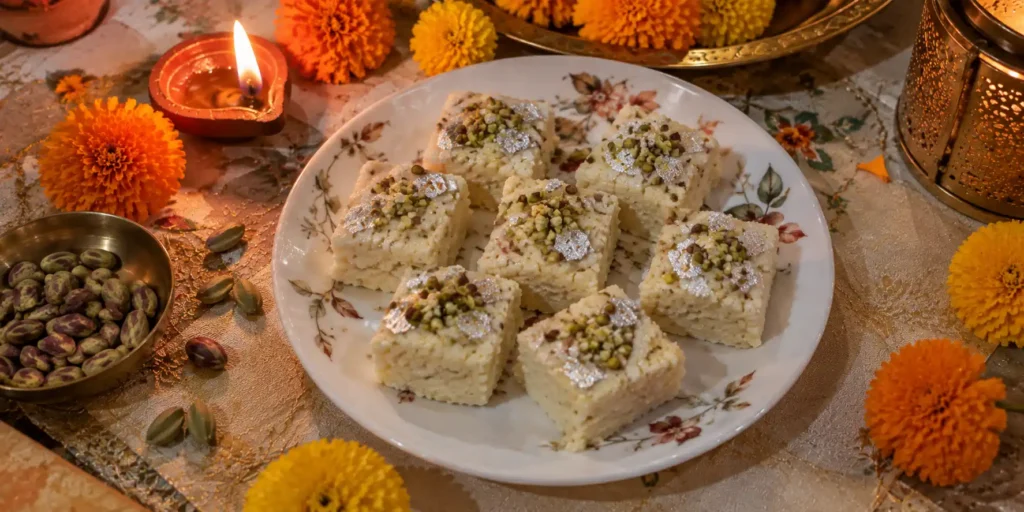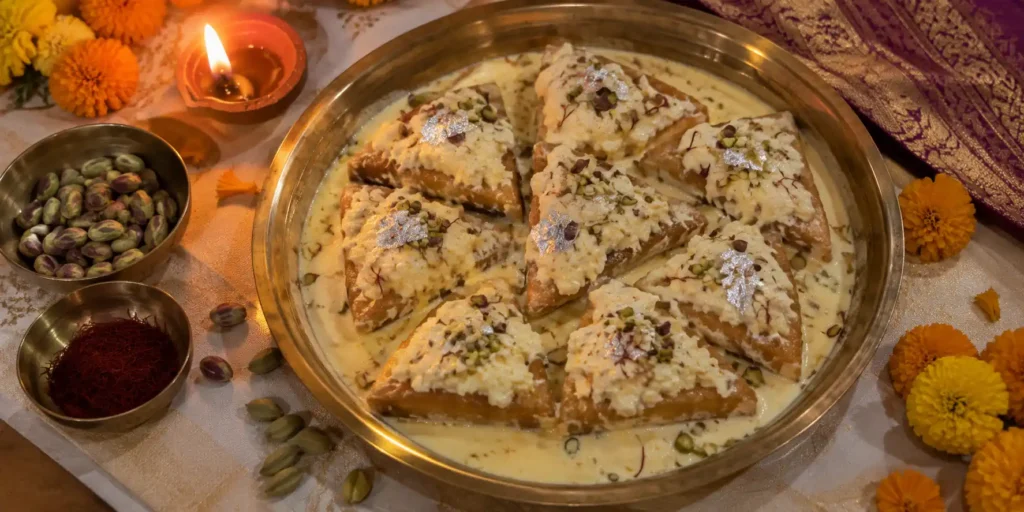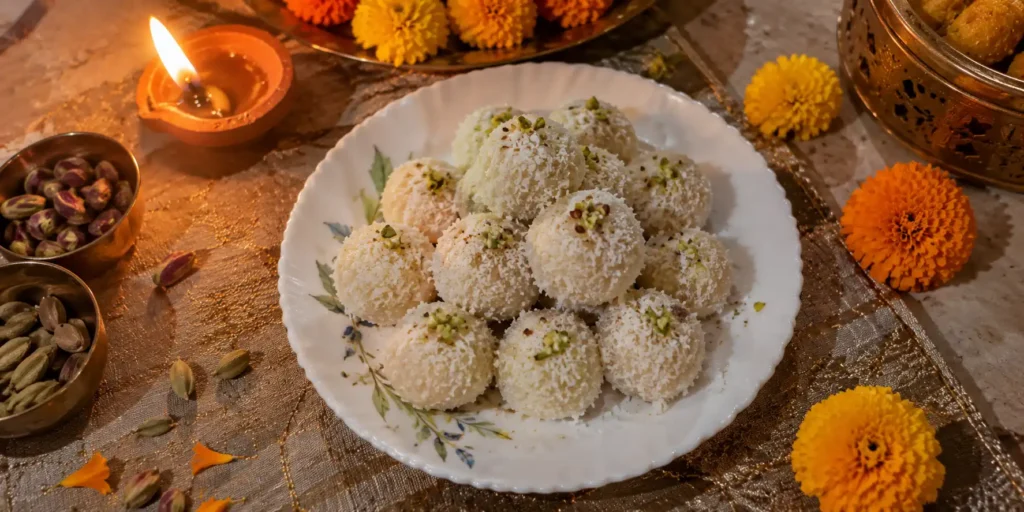

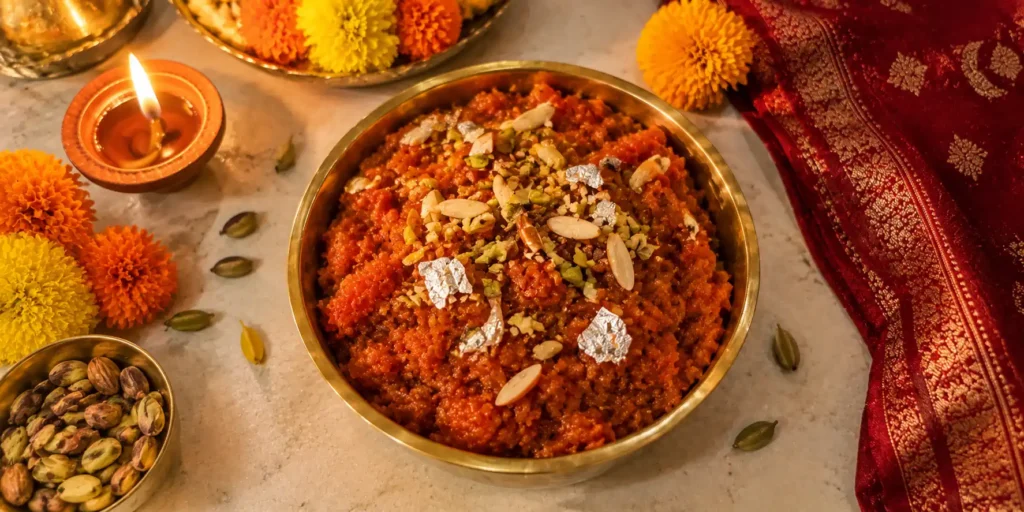
Diwali Dishes – yaar, when you think of Diwali, what comes to mind? The diyas, the rangoli, the new clothes, and of course, the sweets. And among all the sweets, gajar ka halwa holds a special place. It is the taste of winter. It is the taste of celebration. Deep orange grated carrots, slow-cooked in ghee and milk until they become soft, sweet, and meltingly tender. The smell of cardamom and roasted nuts. The richness of ghee. The sweetness of sugar. It is pure comfort. I remember my mother making gajar ka halwa every Diwali and every winter. The whole house would smell like carrots and cardamom. We would stand around the kitchen, waiting for the first spoonful.
Gajar Ka Halwa – Classic Diwali Dishes Dessert Recipe
Gajar ka halwa is one of the most beloved Diwali Dishes you can make at home. It takes a little patience – slow cooking is the key – but the result is absolutely worth it. This recipe is my way of keeping my mother’s tradition alive.
A small tangent: The first time I made gajar ka halwa, I added too much milk. It became carrot kheer. My mother said, “Beta, doodh kam dalna. Halwa gaadha hona chahiye.” I learned. Now it is perfect every time.
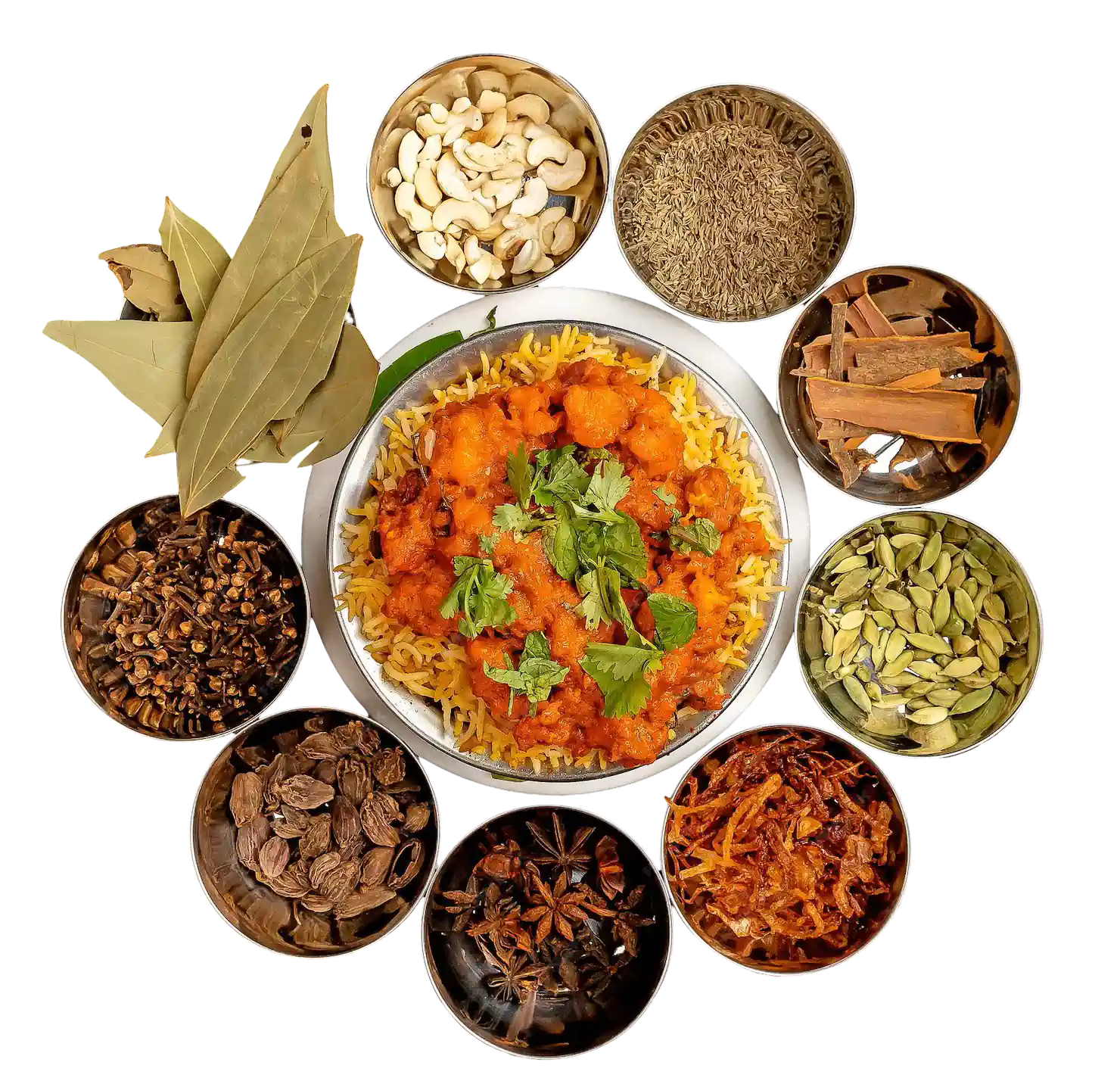
Step-by-Step Recipe Method
1st Step: Prepare the Carrots
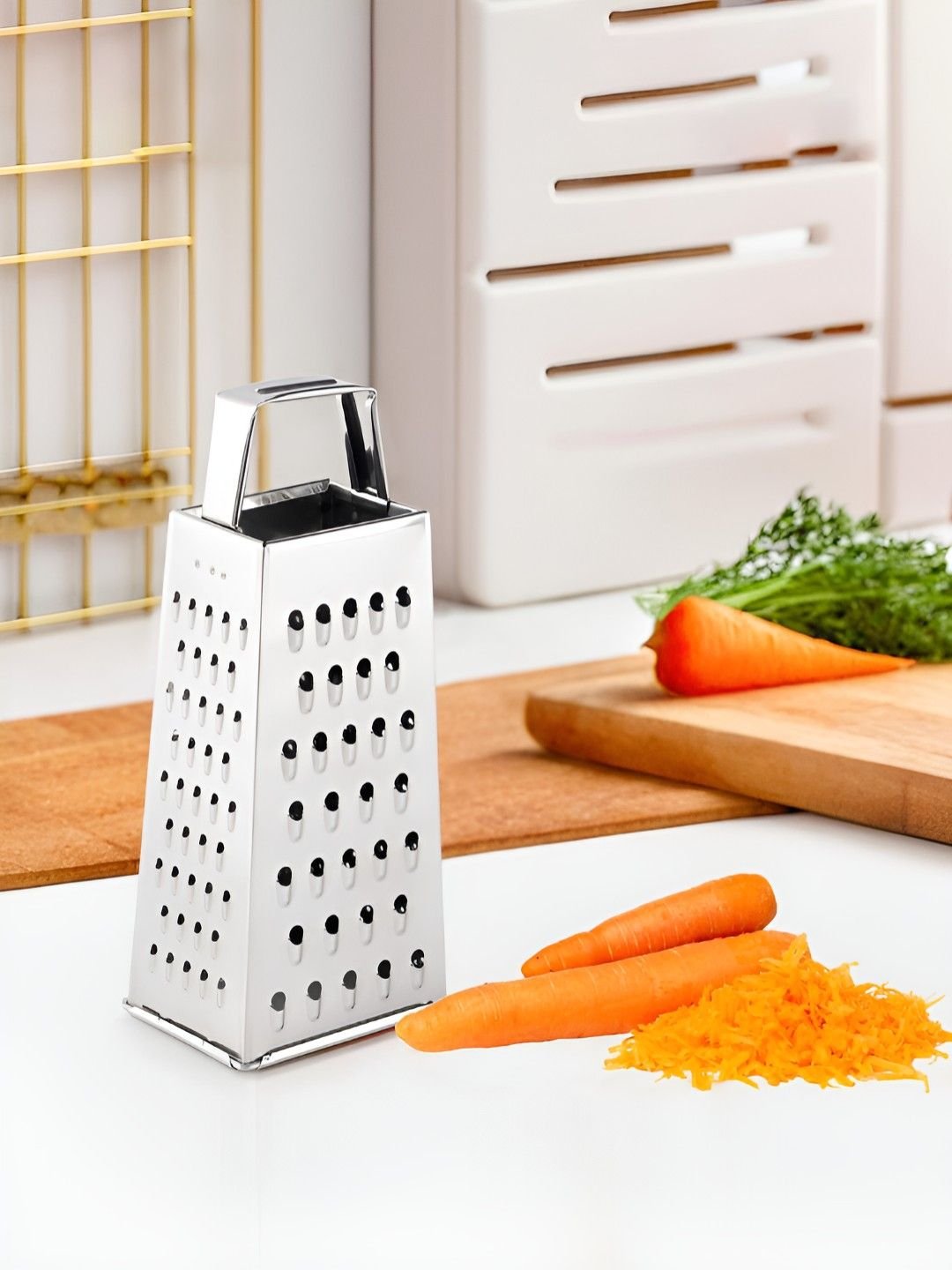
Wash, peel, and grate the carrots. Use the fine side of the grater for best results. The carrots should be finely grated so they cook quickly and become soft.
A mistake I made: I grated the carrots too thick. They took longer to cook and remained slightly crunchy. Use the fine side of the grater.
2nd Step: Heat the Ghee
Take a heavy-bottomed pan or kadhai. Add ½ cup of ghee. Heat on medium flame until it melts completely. Do not let it smoke.
3rd Step: Sauté the Carrots
Add the grated carrots to the ghee. Stir well. Sauté on medium flame for 5 to 7 minutes until the carrots become soft and the raw smell disappears. The colour will deepen to a rich orange.
4th Step: Add the Milk
Pour in 1 litre of full-fat milk. Stir well. Bring to a boil. Then reduce the flame to low. Let the carrots cook in the milk, stirring occasionally. This takes about 30 to 40 minutes. The milk will reduce and the carrots will become soft and mushy.
A mistake I made: I cooked on high flame. The milk burned at the bottom. Keep the flame low and stir occasionally.
5th Step: Add Sugar
Once the milk has almost completely evaporated and the carrots are soft, add ¾ cup of sugar. Stir well. The mixture will become liquid again as the sugar melts. Cook on low flame, stirring continuously, until the sugar is absorbed and the mixture thickens again. This takes about 10 to 15 minutes.
6th Step: Add Cardamom and Nuts
Add cardamom powder, chopped pistachios, almonds, and raisins. Stir well. Cook for another 2 to 3 minutes. The halwa should leave the sides of the pan and come together as a mass.
7th Step: Check the Consistency
The gajar ka halwa is ready when it is thick, glossy, and the ghee starts separating from the mixture. You will see a shiny layer of ghee on top. Turn off the flame.
8th Step: Garnish and Serve
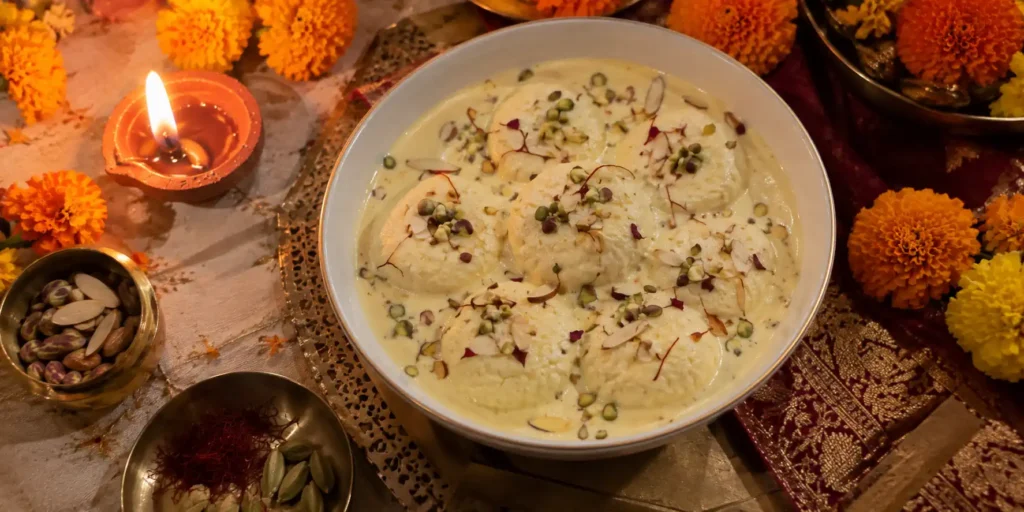
Transfer the gajar ka halwa to a serving bowl. Garnish with chopped pistachios, almonds, and silver foil (if using). Serve warm or at room temperature.
Pro Cooking Tips
-
Mistake to avoid: Adding too much milk. The halwa should be thick, not runny. Start with 1 litre and adjust as needed.
-
Patience is key: Slow cooking is essential. Do not rush the process. The carrots need time to absorb the milk and become soft.
-
Stir occasionally: Stir the halwa every few minutes to prevent it from sticking to the bottom of the pan.
-
Sugar adjustment: Taste the carrots before adding sugar. If they are very sweet, reduce the sugar slightly.
-
Ghee separation: The halwa is ready when the ghee starts separating. This is the sign of perfectly cooked halwa.
-
Storage: Store in an airtight container in the refrigerator for up to 5 days. Reheat in a pan with a little ghee.
Variations & Substitutes
Healthy version: Use less ghee (¼ cup). Use toned milk. Use jaggery instead of sugar. Add a tablespoon of flaxseed powder.
Jain version: No onion, no garlic – already not in this recipe. Use ghee from non-violent dairy or oil. All ingredients are Jain-friendly.
Without onion-garlic: Already without.
Vegan version: Use plant-based milk and coconut oil instead of ghee. The taste will be different but still delicious.
Carrot and Beetroot Halwa: Add 1 grated beetroot for a beautiful red colour and earthy flavour.
Carrot and Khoya Halwa: Add ½ cup crumbled khoya (mawa) at the end. The halwa becomes richer and creamier.
Serving Suggestions
Serve this gajar ka halwa as:
-
A festive dessert during Diwali, Holi, or weddings
-
A winter warmer after a special meal
-
A dessert for guests
-
A sweet treat with a cup of hot chai
Best time to enjoy? Any festive occasion. Also perfect for winter days when carrots are sweet and abundant.
For another traditional Diwali Dishes favourite, check out my Shahi Tukda Recipe on Luckky Corner – royal bread soaked in saffron milk. And for a quick sweet, try my Coconut Ladoo Recipe – no cooking required.
FAQs
What is gajar ka halwa made of?
Gajar ka halwa is made from grated carrots, ghee, milk, and sugar. It is a traditional Indian dessert that is especially popular during Diwali and winter.
Why is my gajar ka halwa not thick?
You added too much milk, or you did not cook it long enough. Cook on low flame until the milk evaporates and the ghee separates.
Why is my gajar ka halwa bitter?
You burned the milk or the carrots at the bottom of the pan. Stir occasionally and keep the flame low.
Can I make gajar ka halwa without ghee?
Yes. Use unsalted butter or coconut oil. The taste will be different but still delicious.
How long does gajar ka halwa last?
Store in an airtight container in the refrigerator for up to 5 days. It also freezes well for up to 2 months.
Can I use jaggery instead of sugar?
Yes. Use jaggery powder instead of sugar. The colour will be darker and the taste will be earthier.
Conclusion
This Diwali Dishes favourite – gajar ka halwa – is my way of bringing festival magic to my kitchen. The deep orange colour, the rich aroma, the melt-in-mouth texture – it all comes together like a celebration in every bite. My family now asks for this every Diwali. My mother’s recipe lives on.
Make this for your next festival. Grate the carrots. Cook them slowly in milk. Add sugar and ghee. Then take a bite and close your eyes. You will taste winter and celebration. Then come back here and tell me – did your halwa turn out thick? Did you add extra nuts? Did you eat two bowls in one sitting? I am waiting.