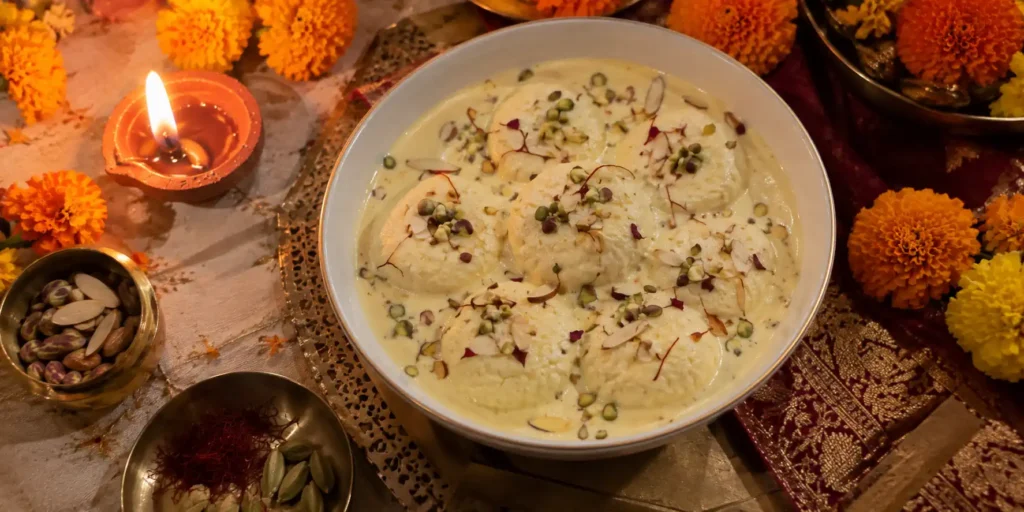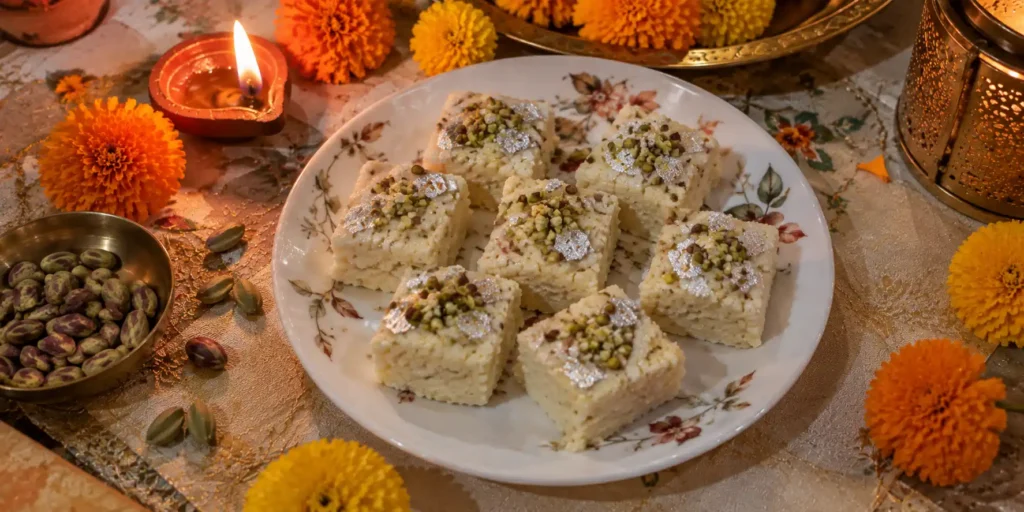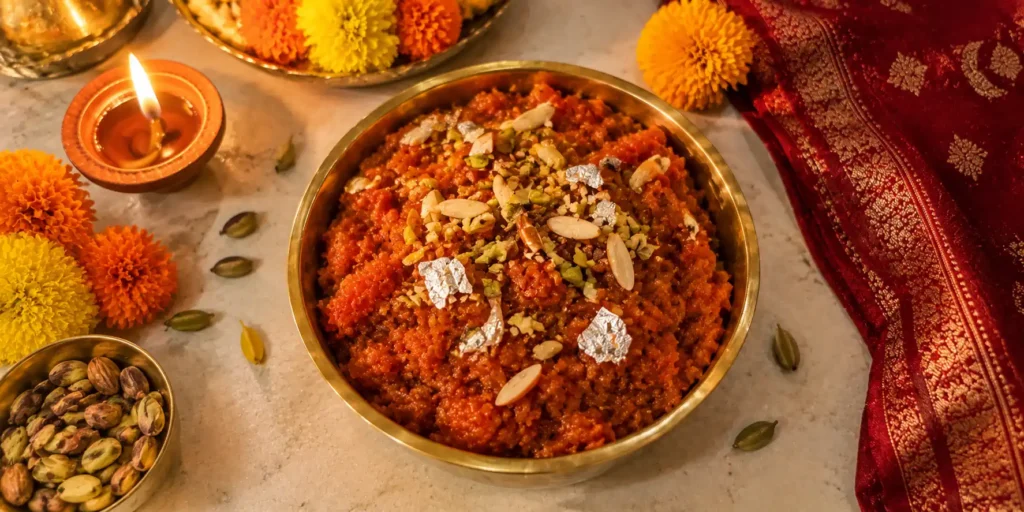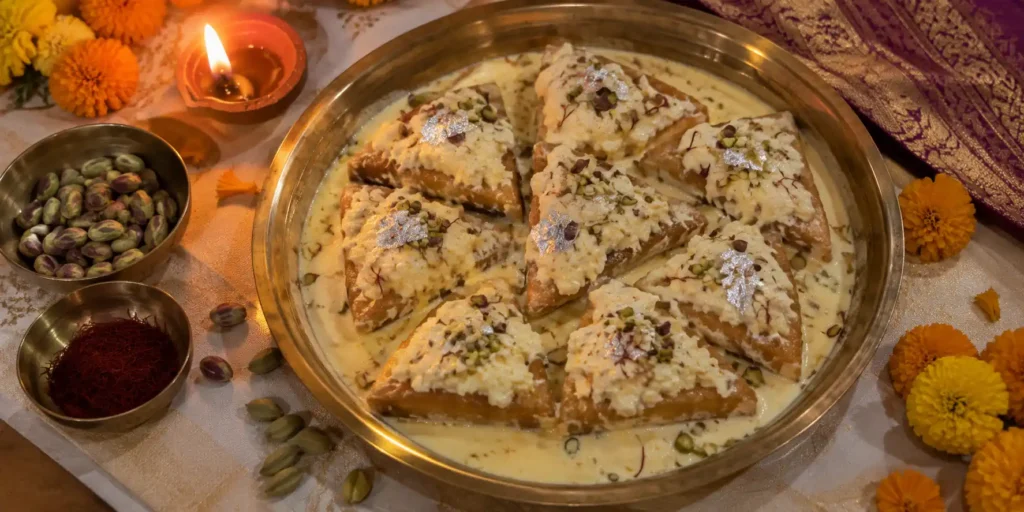

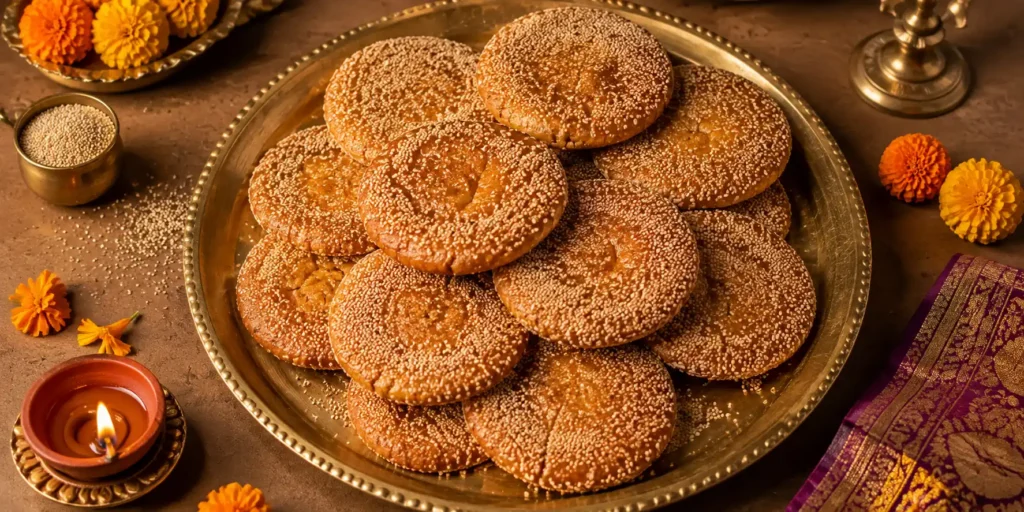
Anarsa – yaar, have you ever tasted a sweet that reminds you of festivals, of grandmothers, and of a time when life was slower? I have. Anarsa is one of those rare sweets that carries the weight of tradition. It is crisp on the outside, soft and chewy on the inside, and has that beautiful golden colour that seems to glow like the morning sun. The smell of roasted jaggery and rice flour, the nutty aroma of poppy seeds, and the warmth of ghee – it all comes together to create something magical.
I remember the first time I helped my grandmother make Anarsa. She was preparing for Diwali. The house smelled like cardamom and ghee. She said, “Beta, Anarsa banana ek kala hai. I’m telling you, it is art.” She explained that the sweetness of jaggery, the earthiness of rice, the softness of ghee, the crispiness of the frying, and the crunch of poppy seeds all come together to create a balance. She called it the “Panchtatwa” – the five elements. Earth, water, fire, air, and space – all present in one tiny sweet. I was a kid. I didn’t understand. But now I do.
Anarsa Recipe – Balancing Panchtatwas With Creativity
So here it is. My Anarsa recipe. It is not just a sweet. It is a memory. It is a tradition. It is the balance of the five elements wrapped in golden-brown deliciousness.
A small tangent: The first time I made Anarsa on my own, I used the wrong type of rice flour. The Anarsa came out hard as rocks. My dog tried to bite one and gave up. So learn from my mistakes. Use the right rice flour. And follow the steps carefully.
Step-by-Step Recipe Method
1st Step: Melt the Jaggery
Take the grated jaggery in a small pan. Add 2 tablespoons of water. Turn the flame to low. Let the jaggery melt completely. Stir occasionally. Do not let it boil vigorously – just melt it into a thick syrup. The syrup should be of one-string consistency (when you drop a little between your fingers and pull apart, it should form a single thin thread). Turn off the flame. Let it cool until it is warm but not hot.
A mistake I made: I boiled the jaggery. It turned into a hard lump when it cooled. Just melt it gently.
2nd Step: Mix the Dough
Take the rice flour in a large bowl. Add the cardamom powder and a pinch of salt. Pour the warm jaggery syrup into the flour. Add the warm ghee. Mix with your fingers or a spoon until it forms a soft, smooth dough. The dough should be like a soft chapati dough – not sticky, not dry. If it feels dry, add a teaspoon of warm water. If it is sticky, add a little more flour.
Knead the dough for 3 to 4 minutes until it is smooth and pliable. Cover with a damp cloth and let it rest for 10 to 15 minutes.
3rd Step: Prepare the Poppy Seed Coating
Take the poppy seeds (khus khus) in a small plate. Spread them evenly. If you want a more intense flavour, lightly dry roast the poppy seeds on a low flame for 2 minutes until they release a nutty aroma. Let them cool before using.
4th Step: Shape the Anarsa
Take a small portion of the dough – about the size of a lemon. Roll it into a smooth ball. Press it lightly to form a small disc. Do not make it too thin. The thickness should be about ½ cm. Now gently press the disc into the poppy seeds, coating both sides. Shake off the excess.
5th Step: Heat the Ghee/Oil
Take a deep kadhai or pan. Add enough ghee or oil to submerge the Anarsa (about 2 inches deep). Heat on medium flame. To test if the oil is ready, drop a tiny piece of dough into the oil. It should rise to the surface slowly and sizzle gently. Not too fast (oil too hot) and not too slow (oil too cold).
6th Step: Fry the Anarsa
Carefully slide the shaped Anarsa into the hot oil. Do not overcrowd – fry 2 to 3 at a time. Fry on medium-low flame. The Anarsa will sink initially, then slowly rise to the surface. Fry for 2 to 3 minutes, turning occasionally, until they are golden brown and crisp. The edges should be slightly darker. Remove with a slotted spoon and place on paper towels to drain excess oil.
7th Step: The Cooling Balance
Let the fried Anarsa cool completely on a wire rack. Do not stack them while they are hot – they will stick together. Once cooled, they become crisp and hold their shape.
8th Step: The Five Element Gratitude
Place the Anarsa on a beautiful brass or ceramic plate. If you want, garnish with crushed pistachios or a drizzle of honey. Light a diya. Take a moment to appreciate the balance – the earth of the rice, the water of the syrup, the fire of the frying, the air of the cooling, and the space within each bite.
Pro Cooking Tips
-
Mistake to avoid: Using too much water to melt the jaggery. The syrup should be thick. Thin syrup makes the dough sticky and the Anarsa break in the oil.
-
Resting the dough: Do not skip the resting step. It allows the rice flour to absorb the moisture properly. If you skip it, the Anarsa will be hard.
-
Oil temperature: Keep the oil at a medium-low heat. If the oil is too hot, the Anarsa will brown quickly on the outside but remain raw inside.
-
Poppy seed coating: Do not press the poppy seeds too hard. A gentle press is enough. Pressing too hard makes the Anarsa uneven.
-
Make ahead: Anarsa can be stored in an airtight container for up to 2 weeks. Keep in a cool, dry place.
-
Festival tip: Anarsa is traditionally made during Diwali, but it is perfect for any celebration – weddings, anniversaries, or just a rainy afternoon.
Variations & Substitutes
Healthy version: Use coconut oil instead of ghee. Use brown rice flour. Reduce the amount of jaggery. Add a little whole wheat flour for fibre.
Jain version: No onion, no garlic – already not in this recipe. Use jaggery that is Jain-friendly (some brands use bone char). Use ghee made from non-violent dairy if possible.
Without onion-garlic: Already without.
Vegan version: Use coconut oil or vegan ghee. Ensure the jaggery is plant-based.
Sugar-free version: Use dates paste or stevia instead of jaggery. The texture will be different, but it will work.
Chocolate Anarsa (fusion): Add 1 tablespoon cocoa powder to the dough. Dip in melted chocolate instead of poppy seeds. Fusion at its best.
Serving Suggestions
Serve Anarsa as:
-
A festive sweet during Diwali, Holi, or Ganesh Chaturthi
-
A dessert after a heavy meal
-
A snack with a cup of hot chai
-
A gift for friends and family (pack in a beautiful box)
Best time to enjoy? Anytime you want a taste of tradition. Also perfect for when you need a sweet that is crisp, nutty, and deeply comforting.
For another traditional sweet, check out my Mango Kulfi Recipe on Luckky Corner – it is creamy, rich, and perfect for summer. And if you want a healthy breakfast, try my High Protein Indian Breakfast – energy for your whole day.
FAQs
What is Anarsa?
Anarsa is a traditional Indian sweet made from rice flour and jaggery, coated with poppy seeds and deep-fried. It is crisp on the outside and soft on the inside. It is especially popular during Diwali.
Why is my Anarsa hard?
You either used too much flour, or the jaggery syrup was too thick. Also, if the oil was too hot, the Anarsa browned quickly but remained raw inside. Use a medium-low flame.
Can I make Anarsa without poppy seeds?
Yes. You can use sesame seeds (til) or skip the coating entirely. The Anarsa will still taste delicious – just different.
What is the best rice flour for Anarsa?
The best rice flour is made from raw rice that has been soaked and dried. You can also buy fine rice flour from a good brand. Do not use coarse flour – it makes the Anarsa grainy.
Can I store Anarsa?
Yes. Store in an airtight container in a cool, dry place for up to 2 weeks. Do not refrigerate – it makes them soft.
Is Anarsa healthy?
It is a festive sweet made with jaggery and rice flour. It is healthier than sweets made with refined sugar and maida. Enjoy in moderation.
Conclusion
This Anarsa recipe is my way of connecting with the past, with my grandmother, and with the wisdom of Panchtatwas. The sweetness of jaggery, the earthiness of rice, the softness of ghee, the crispiness of frying, and the crunch of poppy seeds – all come together to create something beautiful. It is not just a sweet. It is a meditation. It is balance.
Make this for your next festival. Shape the Anarsa with patience. Fry it with love. Then take a bite and close your eyes. You will taste tradition. Then come back here and tell me – did your Anarsa turn out crisp? Did you add your own twist? Did you feel the balance? I am waiting.