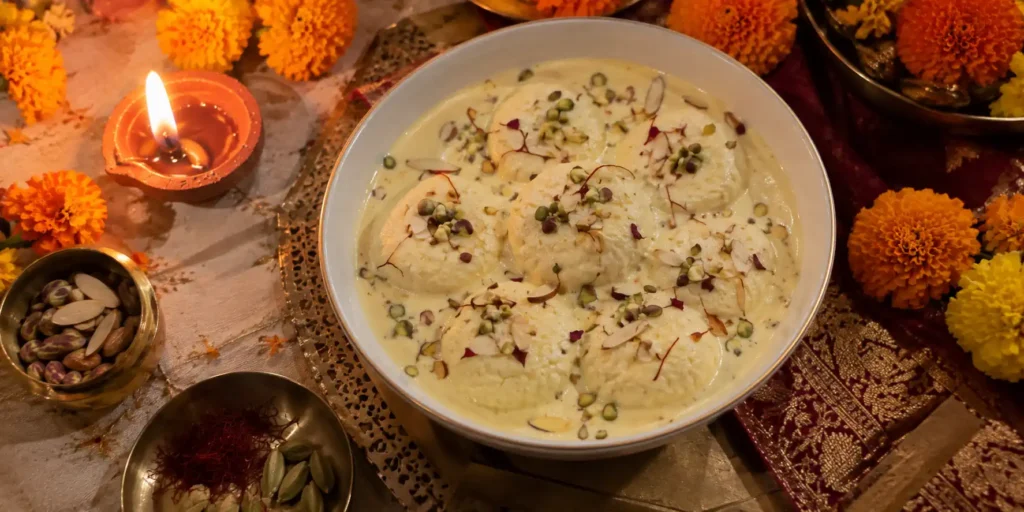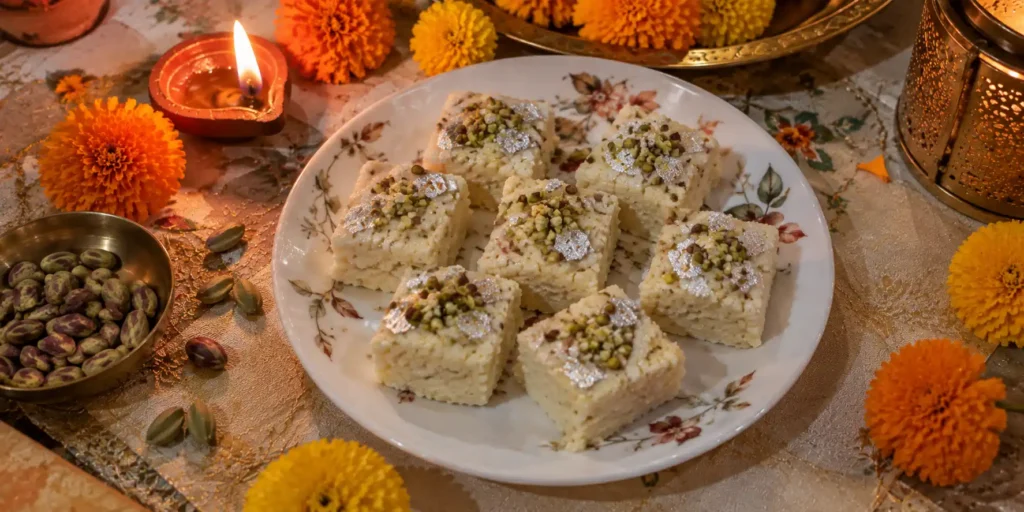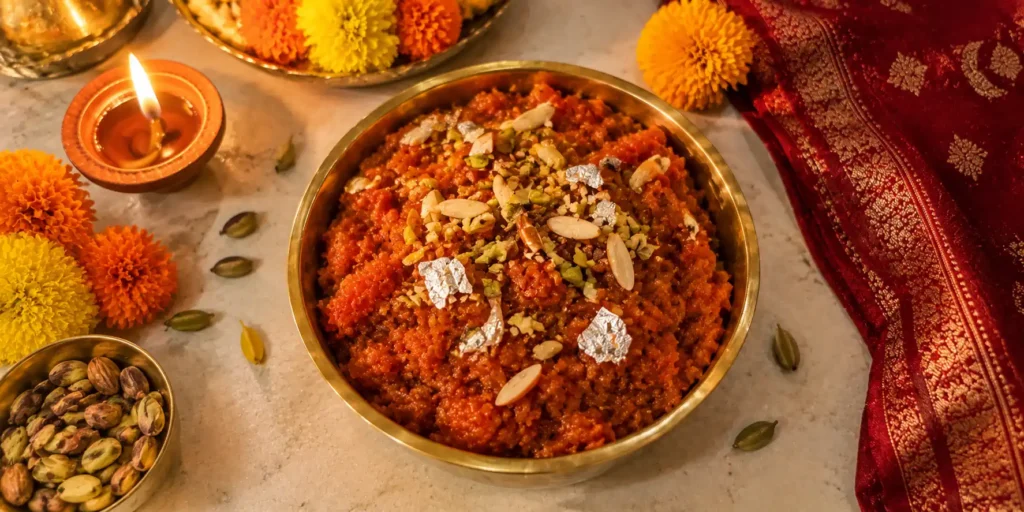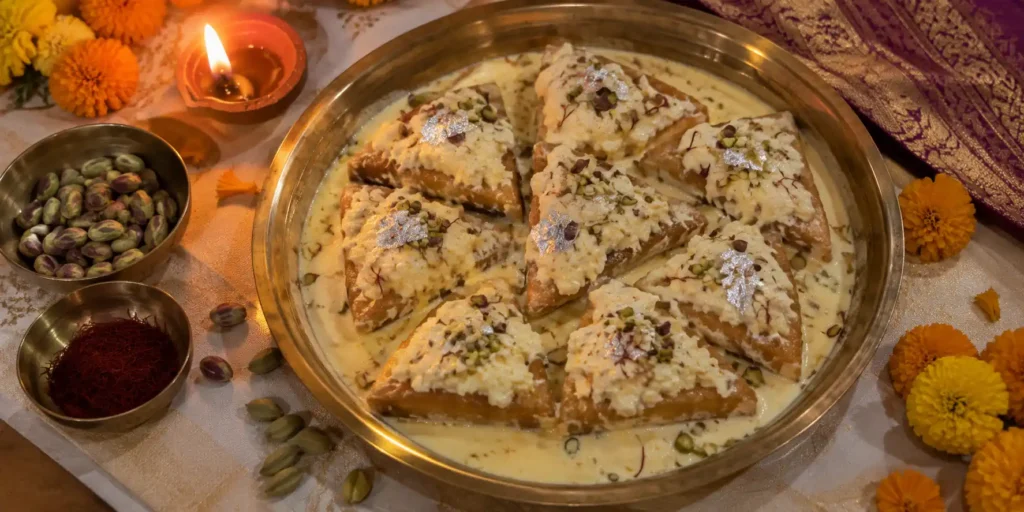

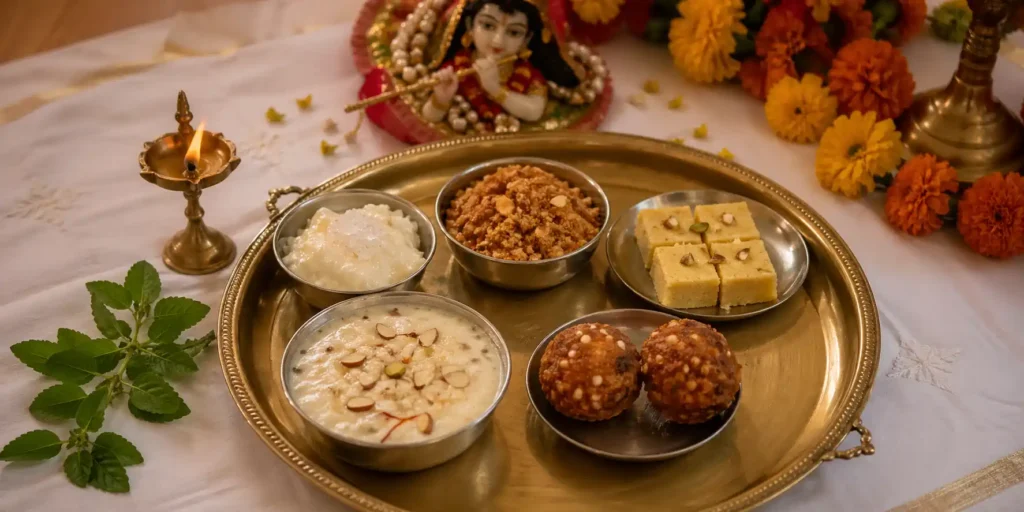
Janmashtami prasad recipes – you know, every year I tell myself, “This time I will be organised.” And every year, on the morning of Janmashtami, I am running around the kitchen like a headless chicken, searching for mishri, realising I forgot to buy fennel seeds, and somehow my ghee gets over. But you know what? Krishna does not care about perfection. He cares about love. And maybe a little bit of butter. Actually, a lot of butter.
The smell of ghee-roasted semolina, the soft squeak of fresh curd being churned into butter, the sweet aroma of cardamom floating through the house – that is what Janmashtami feels like. These janmashtami prasad recipes are the ones my mother made, and her mother before her. Simple. Honest. Made with whatever is in the kitchen. No fancy equipment. No last-minute trips to the mall.
Janmashtami Prasad Recipes
I am sharing five prasad items that are foolproof. Even if you forget something – like I always do – the prasad will still turn out great. Because Kanha has a soft corner for clumsy cooks.
A small tangent: One year, I accidentally used salted butter for makhan mishri. Salty butter with sugar? My niece still teases me about it. So pay attention to the salt part. Okay, let us begin.
The 5 Janmashtami Prasad Recipes
We will make:
-
Makhan Mishri (whipped butter with sugar crystals)
-
Panjiri (sweet roasted wheat flour with nuts)
-
Sabudana Vada (crispy tapioca pearl fritters)
-
Kheer (rice and milk pudding)
-
Mohan BhOG (semolina halwa-like sweet)
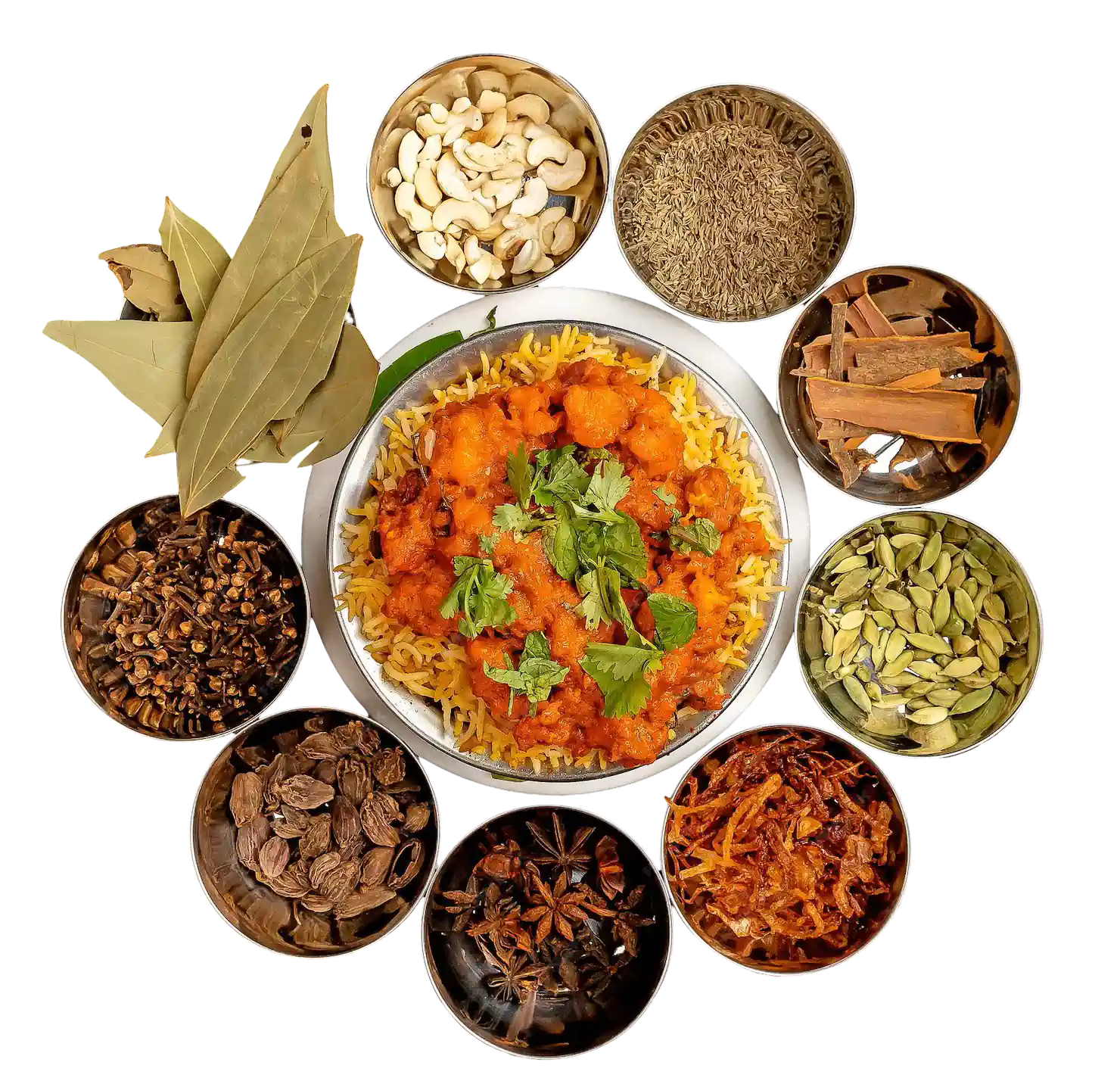
Ingredients
For Makhan Mishri (Kanha’s Absolute Favourite)
-
½ cup fresh white butter (makkhan) – unsalted, at room temperature
-
2 tablespoons mishri (sugar crystals) or crushed sugar cubes
-
A pinch of cardamom powder (optional but nice)
For Panjiri (The Energy-Packed Prasad)
-
1 cup whole wheat flour (gehu ka atta)
-
½ cup desi cow ghee
-
½ cup powdered sugar (or jaggery powder)
-
2 tablespoons chopped almonds (badam)
-
2 tablespoons chopped cashews (kaju)
-
1 tablespoon fennel seeds (saunf) – coarsely crushed
-
1 teaspoon cardamom powder
For Sabudana Vada (Crispy & Fasting-Friendly)
-
1 cup sabudana (tapioca pearls)
-
2 medium potatoes – boiled and mashed
-
2 tablespoons roasted peanut powder
-
1 teaspoon cumin seeds (jeera)
-
1 green chilli – finely chopped (skip for mild)
-
Salt to taste (sendha namak for fasting)
-
Ghee or oil for shallow frying
For Kheer (The Creamy Comfort)
-
½ cup basmati rice (or any short grain rice)
-
1 litre full cream milk
-
½ cup sugar
-
¼ teaspoon cardamom powder
-
1 tablespoon chopped almonds and pistachios for garnish
For Mohan BhOG (The Rich One)
-
1 cup sooji (semolina / rava)
-
1 cup ghee
-
1 cup powdered sugar
-
¼ cup warm milk
-
¼ cup mixed nuts (chopped)
-
1 teaspoon cardamom powder
Alternatives
-
No white butter? Use unsalted American butter, but fresh makkhan is best.
-
No sabudana? Use singhare ka atta (water chestnut flour) to make simple vadas.
-
No milk? Use coconut milk for kheer (vegan version).
-
Want sugar-free? Use date paste or stevia, but traditional prasad is made with sugar.

Step-by-Step Recipe Method (5 Recipes, One by One)
Let us start with the easiest – the one Kanha will try to steal first.
1st Step: Make Makhan Mishri
Take the fresh white butter in a small bowl. Let it sit for 10 minutes to soften. Now whip it with a spoon or a small whisk – just for 2 minutes until it becomes light and fluffy. Do not over-whip, or it will turn into liquid ghee. Add the mishri (sugar crystals) and cardamom powder. Gently fold it with a spoon. The crystals should remain crunchy. Transfer to a tiny clay or steel bowl. Keep in the fridge until offering.
I once used powdered sugar by mistake. It dissolved and turned the butter into sweet paste. Still tasty, but not the real makhan mishri. So remember – only mishri crystals.
2nd Step: Prepare Panjiri
Take a heavy kadhai. Add ½ cup ghee. Heat on low flame. Add the whole wheat flour. Now comes the patience part. Roast the flour on low flame, stirring continuously, for about 12 to 15 minutes. The colour will slowly change from pale beige to golden brown. The smell will become nutty and toasty – like roasted biscuits. Do not stop stirring, or the bottom will burn.
When the flour is golden, add crushed fennel seeds, cardamom powder, and chopped nuts. Roast for 2 more minutes. Turn off the flame. Let the mixture cool completely – this takes 15 to 20 minutes. Then add powdered sugar and mix well. The texture should be crumbly but moist. Press a little between your fingers – it should hold shape.
3rd Step: Make Sabudana Vada (The Crispy One)
Wash the sabudana well. Soak it in just enough water to cover the pearls – about 1 cup water – for 4 hours. Do not over-soak, or they become mushy. After 4 hours, drain any excess water. The pearls should be soft and separate.
In a bowl, mix the soaked sabudana, mashed potatoes, peanut powder, cumin seeds, green chilli, and salt. Knead into a smooth dough. If too sticky, add a little more peanut powder. If too dry, sprinkle a few drops of water. Make small, flat vadas (patties). Heat a tawa or pan with ghee. Shallow fry the vadas on medium flame until golden brown and crispy on both sides – about 2-3 minutes per side. Drain on a paper towel. Serve hot.
4th Step: Cook Kheer (The Slow Hug)
Wash the basmati rice and soak for 15 minutes. In a heavy-bottomed pot, bring 1 litre milk to a boil on medium flame. Reduce flame to low. Add the drained rice. Cook on low flame, stirring every 5 minutes, for about 30 to 35 minutes. The rice should become soft and the milk should thicken to a creamy consistency. Add sugar and cardamom powder. Cook for 5 more minutes. The kheer should coat the back of a spoon. Garnish with chopped nuts. Serve warm or chilled.
I once forgot to stir and the milk stuck to the bottom. The kheer tasted smoky – not in a good way. So stir occasionally.
5th Step: Make Mohan BhOG (The Fancy One)
In a kadhai, heat 1 cup ghee on low flame. Add sooji. Roast on low flame, stirring continuously, for 8 to 10 minutes. The sooji will turn light golden and smell like roasted nuts. In a separate bowl, mix powdered sugar with warm milk until the sugar dissolves. Pour this into the roasted sooji. Be careful – it will bubble and steam vigorously. Stir quickly to avoid lumps. Cook for 5 minutes until the mixture leaves the sides of the kadhai and comes together like a soft dough. Add cardamom powder and chopped nuts. Spread on a greased thali or plate. Flatten with a greased spatula. Let it set for 30 minutes. Cut into squares or diamonds.
6th Step: Arrange the Prasad Thali
Take a clean brass or steel thali. Place the makhan mishri in a tiny bowl, panjiri in another, sabudana vadas on a small plate, kheer in a deep bowl, and mohan bhOG pieces on a small plate. Add a few fresh tulsi leaves and a lit diya (lamp) beside the thali. Offer with love to Krishna.
7th Step: The Offering (Bhog)
Ideally, make these prasad items on the morning of Janmashtami. Offer them to Lord Krishna during the evening or midnight aarti. After the aarti, distribute the prasad to family and friends. Never taste anything before offering.
8th Step: What If You Forget Something?
You forgot mishri? Use small sugar cubes crushed. No fennel seeds? Skip them – panjiri still works. No ghee for vadas? Use coconut oil. Krishna is not a food critic. He is a friend. He will eat whatever you give with a happy heart.
Pro Cooking Tips
-
Mistake to avoid: Using salted butter for makhan mishri. Always use unsalted white butter. Salt with sugar – not a good combo. I learned this the hard way.
-
Panjiri texture: Do not add sugar while the flour mixture is hot. The heat melts the sugar and makes panjiri sticky and clumpy. Wait until it cools completely.
-
Sabudana soaking: Do not drown the sabudana. Use just enough water. After 4 hours, the pearls should be soft but not mushy. Excess water makes the vadas soggy.
-
Kheer consistency: If you want thicker kheer, simmer longer. If you want it thinner, add warm milk after cooking. But traditional bhog kheer is thick and creamy.
-
Mohan bhOG setting: Grease the plate well before spreading. Otherwise the mohan bhOG will stick. Also cut it only after it sets completely – about 30 minutes.
-
Timing advice: Make panjiri and mohan bhOG one day in advance. Make makhan mishri and sabudana vadas fresh on the day. Kheer can be made a few hours ahead and refrigerated.
Variations & Substitutes
Healthy version: Use jaggery powder instead of sugar in panjiri and kheer. Replace ghee with coconut oil for panjiri (less heavy). Use brown rice for kheer. Bake sabudana vadas instead of frying.
Jain version: No potatoes in sabudana vada – use raw banana or grated bottle gourd (lauki). No green chilli. All other items are Jain-friendly as they have no root vegetables except potato.
Without onion-garlic: All these janmashtami prasad recipes are naturally without onion and garlic. No changes needed.
Vegan version: Use coconut milk for kheer. Use coconut oil instead of ghee for panjiri and mohan bhOG. For makhan mishri, use vegan butter (like soy or coconut based). Sabudana vadas are already vegan if fried in oil.
Fasting (vrat) version: Use sendha namak (rock salt) instead of regular salt. Use singhare ka atta instead of wheat flour for panjiri? Actually, wheat is allowed in fasting for some communities, but traditionally for Janmashtami vrat, many use kuttu or singhare ka atta. You can make panjiri with singhare ka atta – roast in ghee, then add jaggery and nuts.
Serving Suggestions
Serve these janmashtami prasad recipes as a complete bhog thali. No need for extra curries or sabzis. The combination of sweet (panjiri, kheer, mohan bhOG), salty-crispy (sabudana vada), and creamy (makhan mishri) is balanced. A glass of thandai (without bhang) or a cup of masala chai on the side is lovely.
Best time to enjoy? After the midnight aarti on Janmashtami, breaking your fast. Or share with neighbours and friends the next morning. Prasad is meant to be distributed, not hoarded.
For more festive recipes, check out my Janmashtami Bhog Thali on Luckky Corner – it has a full menu with rabri and more. And if you want a quick, everyday prasad idea, try my Sattvic Recipes for Energy – many of them are perfect for bhog too.
FAQs
What are the most common janmashtami prasad recipes?
Makhan mishri (butter with sugar crystals), panjiri (roasted wheat flour with ghee and nuts), kheer, sabudana vada or tikki, and mohan bhOG are the most popular. Some also make dahi (curd) and fresh fruits.
Can I make these prasad items one day before Janmashtami?
Yes. Panjiri, mohan bhOG, and kheer can be made a day in advance and refrigerated. Makhan mishri and sabudana vada are best made fresh on the day of Janmashtami.
Is it necessary to use cow ghee for prasad?
Traditionally, yes. Cow ghee is considered pure and saatvik. But if you do not have it, unsalted butter or coconut oil can be used – your devotion matters more than the ingredient.
Can I offer these prasad items without a fast?
Absolutely. You do not need to fast to make prasad. You can offer bhog to Krishna on any day – not just Janmashtami. He loves homemade food any time.
Why is makhan mishri always included?
Krishna was famously known as Makhan Chor (butter thief). He would steal butter from neighbours. So offering butter with sugar crystals is like giving him his favourite treat. It is a must-have in any Janmashtami prasad thali.
What can I do with leftover prasad?
Leftover prasad can be eaten the next day – just reheat kheer and mohan bhOG gently. Panjiri stays fresh for a week in an airtight container. Sabudana vadas are best eaten fresh, but you can refrigerate and reheat on a tawa. Never throw away prasad – share it with someone.
Conclusion
These janmashtami prasad recipes are not about perfection. They are about love. The love you put into roasting that flour without burning it. The love of churning fresh butter for Kanha. The love of making crispy vadas even when you are tired. I have made mistakes every single year. Burnt panjiri. Salty makhan mishri. Runny kheer. But I never stopped making prasad. Because Krishna never stopped eating it.
Make these recipes this Janmashtami. Sing a little bhajan while you cook. Let the smell of ghee and cardamom fill your home. Then come back here and tell me – which prasad did your family finish first? My money is on the makhan mishri. Always.
Jai Shri Krishna.