
Why do we eat fafda jalebi on dussehra – honestly, this question popped into my head while I was standing in a ridiculously long queue outside a Gujarati farsan shop last Dussehra. I was tired, slightly hangry, and my feet were hurting. But the smell – oh, the smell! That warm, spicy, gram flour aroma of freshly made fafda, mixed with the sweet, syrupy fragrance of jalebis dripping with sugar – it pulled me forward like a magnet. I mean, have you ever seen a Gujarati person skip fafda-jalebi on Dussehra morning? Neither have I.
Why Do We Eat Fafda Jalebi on Dussehra
For the Indian home cook, this combination is more than just breakfast. It is a celebration. It is the reward after nine nights of garba, dandiya, and maybe a little bit of fasting. But unlike other festivals where we eat kheer or laddoos, Dussehra in Gujarat has a very specific rule: you eat fafda and jalebi. And I used to think, “Why not dhokla? Why not khandvi?” So I dug around. I asked my Gujarati friends. I annoyed my mother-in-law. And finally, I found the answer.
Let me tell you the story. Actually, there are a few stories. And some science too. But do not worry – it is all fascinating.
The Legend of Lord Ram and His Beloved Sweet
The most popular reason is connected to Lord Ram. You see, Ram was not just a warrior. He had a sweet tooth. A big one. According to Hindu scriptures, his absolute favourite dessert was something called “Shashkuli.” And guess what Shashkuli is? It is the ancient version of our modern-day jalebi.
Now picture this. Ram has just won the war against Ravana. He is returning to Ayodhya. Victory is sweet. And what does he do? He celebrates by eating his favourite sweet – jalebi. That is how the tradition started. People began eating jalebi on Dussehra to honour Ram’s victory and to bring sweetness into their own lives.
But why fafda? Where does the savoury, crispy gram flour snack come in? There are two beautiful reasons.
First, Hanuman – Ram’s biggest devotee – loved dishes made from gram flour (besan). So while Ram ate jalebi, Hanuman ate fafda. By eating both together, Gujaratis celebrate the victory along with both Ram and Hanuman.
Second, and this is very practical. Many people observe a fast during the nine days of Navratri. On Dussehra, they break the fast. And according to Hindu traditions, a fast should be broken with food made from gram flour (besan) because it is light on the stomach. Fafda fits this requirement perfectly.
The Science Behind the Tradition (Yes, There is Science!)
I am a storyteller, not a scientist. But even I found this fascinating. After nine days of fasting or even just late-night garba sessions, your body feels tired. Energy levels are low. You need something that gives you a quick boost.
Jalebis are made of sugar. Sugar gives you instant energy. And get this – according to Ayurvedic experts, hot jalebis dunked in milk can actually help cure migraines and reduce fatigue. Fafda, on the other hand, is made from besan and carom seeds (ajwain). Ajwain is great for digestion. So the combination of fafda and jalebi is not just tasty – it is also functional.
Some people say that after dancing all night, your body needs glucose. Hot, syrupy jalebis provide that glucose. Your blood sugar levels rise, and suddenly you feel alive again. So the tradition is actually quite smart. Our ancestors knew what they were doing.
The Recipe: How to Make Fafda and Jalebi at Home
Now, you can buy fafda-jalebi from any farsan shop. But if you want to impress your family, make it at home. It takes effort, but the result is pure magic.
Step-by-Step Recipe Method
1st Step: Prepare the Fafda Dough
Take a large bowl. Add besan, baking soda, carom seeds, turmeric powder, salt, and 1 tablespoon oil. Mix well with your fingers. The spices should be evenly distributed. Now add warm water little by little and knead into a smooth, soft dough. It should be pliable but not sticky. Cover with a damp cloth and let it rest for 20 minutes.
Do not rush the resting time. The baking soda needs to activate slightly. I once skipped this step, and my fafda turned out hard like papad.
2nd Step: Make the Jalebi Batter
In another bowl, add all-purpose flour, cornflour, curd, baking powder, and a pinch of orange food colour. Gradually add water and whisk vigorously in one direction for 5 to 7 minutes. The batter should have a flowing consistency – not too thick, not too runny. It should fall off the whisk like a thick ribbon. Cover and let it ferment for at least 4 hours. Overnight is best.
The fermentation is what gives jalebis that slight tang and crispiness. Do not skip this.
3rd Step: Prepare the Sugar Syrup
In a pan, add sugar and water. Bring to a boil. Reduce flame and simmer until the syrup becomes slightly sticky – one-string consistency. To test, take a drop of syrup between your thumb and finger. It should form a single thread. Add saffron, cardamom powder, and lemon juice. The lemon juice prevents sugar from crystallizing. Keep the syrup warm on very low flame.
4th Step: Shape and Fry the Fafda
Heat oil for deep frying in a wide kadhai. Take a small portion of the fafda dough. Place it on a greased surface or banana leaf. Pat it into a long, flat strip using your fingers. The traditional shape is about 4 inches long and 1 inch wide. Do not make it too thick – thin fafdas are crispier.
Gently slide the fafda strip into hot oil. Fry on medium flame until golden brown and crispy. Flip once. Remove with a slotted spoon and drain on a paper towel.
A pro tip: Do not overcrowd the kadhai. Fry 3 to 4 fafdas at a time. Otherwise, the oil temperature drops, and the fafdas become oily.
5th Step: Make the Jalebi Spirals
Fill a piping bag or a clean squeeze bottle with the fermented jalebi batter. Heat oil or ghee in a separate kadhai – the oil should be medium hot, not smoking. Squeeze the batter directly into the oil in a spiral, circular motion. Start from the centre and move outward. Make 3 to 4 concentric circles. Fry until the jalebis are crisp and light golden. This takes about 2 minutes per side.
Do not make them brown. Brown jalebis are overcooked and become hard.
6th Step: Soak in Sugar Syrup
Remove the fried jalebis from oil and immediately dunk them into the warm sugar syrup. Let them soak for 30 to 40 seconds. Then remove and place on a serving plate. The jalebis should absorb the syrup but still remain crispy on the outside.
The timing here is crucial. Too long in the syrup, and jalebis become soggy. Too short, and they remain dry and tasteless.
7th Step: Assemble Your Fafda-Jalebi Plate
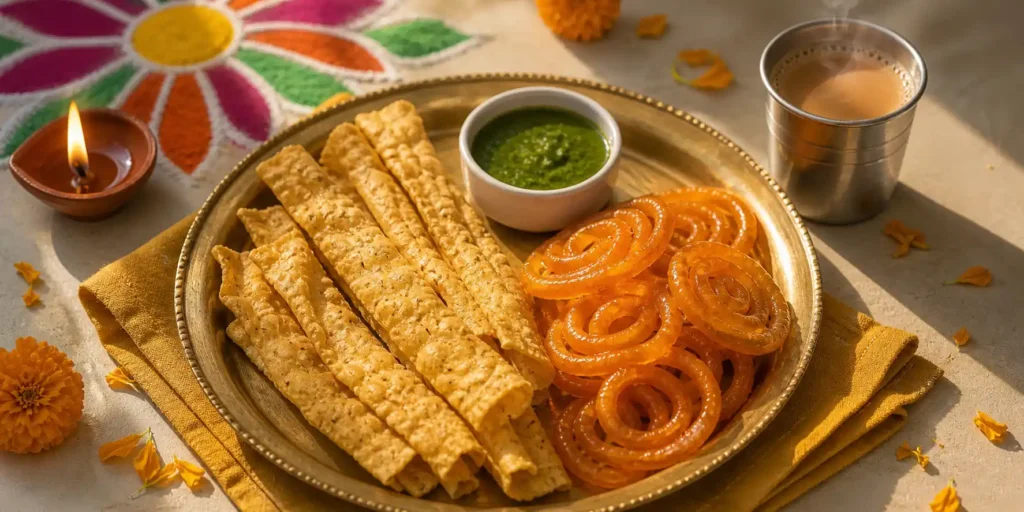
Arrange the crispy fafdas and glossy jalebis on a large plate. Sprinkle a little black salt and red chilli powder on the fafdas if you like extra kick. Serve immediately with a side of green chutney or masala chai.
8th Step: Enjoy the Perfect Bite
Here is how the pros eat it: take a piece of fafda, dip it in chutney, and take a bite. Immediately follow it with a small piece of jalebi. The combination of spicy, crispy, sweet, and syrupy all at once is heavenly.
Pro Cooking Tips
-
Mistake to avoid: Using cold oil for frying. Always check the oil temperature by dropping a small piece of dough. It should sizzle and rise immediately. Cold oil makes the snacks greasy and heavy.
-
Fafda crispiness tip: Add a pinch of papad khar (a type of soda) to the dough for extra crispiness. But baking soda works fine for home cooking.
-
Jalebi colour hack: If you do not have food colour, add a pinch of saffron soaked in warm milk. It gives a natural yellow-orange hue.
-
Sugar syrup consistency: The most common mistake is making the syrup too thin or too thick. One-string consistency is perfect. If you pull a drop between your fingers, it should form a single thread.
-
Serving tip: Fafda-jalebi is best eaten within 2 hours of making. After that, the fafdas lose their crunch, and the jalebis become sticky. So make fresh or buy fresh.
Variations & Substitutes
Healthy version: Bake the fafdas instead of deep frying. Brush with oil and bake at 180°C for 15 minutes. Use less sugar in the syrup and add a little honey.
Jain version: Remove the baking soda. Use sendha namak (rock salt) instead of regular salt. Ensure no root vegetables are used in the accompaniments.
Without onion-garlic: This recipe has no onion or garlic anyway.
Vegan version: Use vegan curd for the jalebi batter. Use oil instead of ghee for frying. The taste will differ slightly, but it works.
Sugar-free version: Use dates syrup or stevia for the jalebi soak. Not traditional, but diabetic-friendly.
Serving Suggestions
Serve this fafda-jalebi combination as a festive breakfast or as an evening snack with masala chai. In Gujarat, people eat it on Dussehra morning after breaking their Navratri fast. Add a side of green chutney (made from coriander, mint, and green chillies) and some fried green chillies for extra heat.
The best time to enjoy this is immediately after making it. Hot, crispy, and fresh. Also perfect for kitty parties and festive gatherings. If you have leftover fafdas, do not throw them. Crush them and use as a topping for chaat or raita.
If you are looking for more festive recipes for the Dussehra thali, check out my detailed Janmashtami Bhog Thali on Luckky Corner – many of the saatvik principles apply here too. And for those who love experimenting with other traditional sweets, do not miss my guide on How to Make Modak Without a Mold – it will save you during Ganesh Chaturthi.
FAQs
Why do Gujaratis specifically eat fafda-jalebi on Dussehra?
Gujarat has a strong tradition of breaking Navratri fasts with besan-based foods. Fafda fits this perfectly. Plus, the combination of fafda (Hanuman’s favourite) and jalebi (Ram’s favourite) celebrates the victory together. It has become a cultural identity for Gujaratis on this festival.
Is there a scientific reason behind eating jalebi on Dussehra?
Yes. After nine days of fasting or late-night garba, the body needs quick energy. Jalebi provides glucose instantly. The combination of hot jalebis with milk is also said to reduce migraine and fatigue.
Can I eat fafda-jalebi on any other day?
Of course! But the tradition is specifically for Dussehra morning. You will find farsan shops in Gujarat packed with customers on this day, with long queues starting as early as 6 AM.
What is the difference between jalebi and imarti?
Jalebi is made from all-purpose flour (maida) and has a thinner, crispier texture. Imarti is made from urad dal (black gram) and is thicker, denser, and usually darker in colour. Both are spiral-shaped, but the taste and texture are different.
My jalebis turned out hard instead of crispy. Why?
Three possible reasons: your batter was too thick, you did not ferment it long enough, or you fried them at too high a temperature. The oil should be medium hot. Also, do not skip the cornflour – it adds crispiness.
Can I make fafda-jalebi without a squeeze bottle?
Yes. Use a clean plastic bag. Fill it with batter. Cut a very small corner of the bag and use it like a piping bag. It works perfectly for home cooking.
Conclusion
So, why do we eat fafda jalebi on dussehra? Because it is tradition. Because it is delicious. Because Ram loved jalebi and Hanuman loved besan. Because after nine days of fasting and dancing, your body deserves a reward. And honestly, because some combinations are just meant to be.
The next time you bite into a hot, syrupy jalebi followed by a crispy, spiced fafda, remember the story. Remember the victory of good over evil. And remember that our ancestors were not just spiritual – they were also pretty smart about food.
Make this at home this Dussehra. Stand in line at your local farsan shop if you must. But do not miss it. And after you have eaten your fill, come back here and tell me – do you prefer your jalebi hot or at room temperature? And do you dip your fafda in chutney or eat it plain? I need to know.
Jai Shri Ram. Happy Dussehra.