
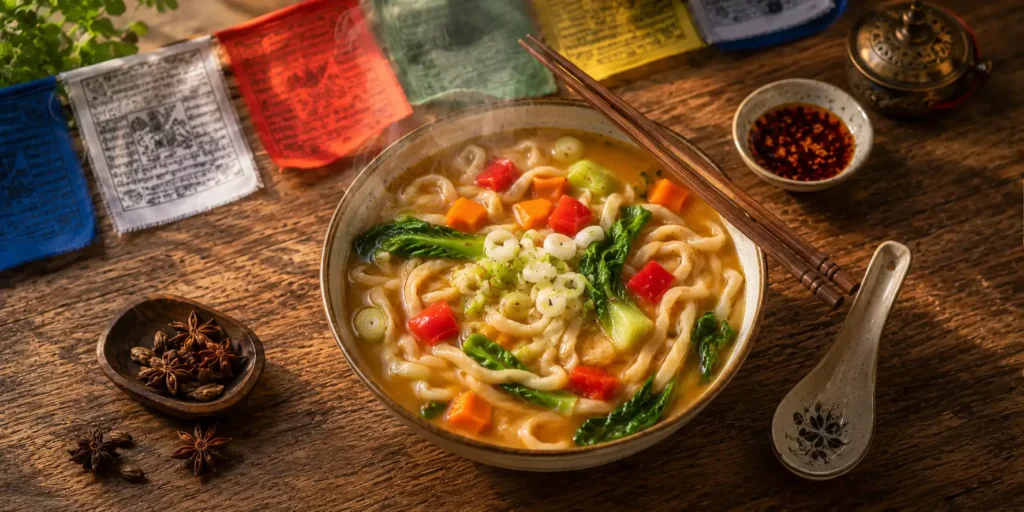
Thenthuk tibetan noodle soup – the name itself sounds like a warm blanket, doesn’t it? I first had it in a small, steamy kitchen in Dharamshala. Snow was falling outside. Inside, a Tibetan auntie was pulling dough and tearing it directly into a boiling pot. The smell was incredible – ginger, garlic, tomatoes, and something earthy. When she handed me the bowl, I saw thick, ragged noodles swimming in a rich, slightly tangy broth with chunks of vegetables. I took a spoonful of the broth first. It was warm, savoury, and comforting. Then I pulled up a noodle – chewy, uneven, obviously made by hand – and it was perfect. That is thenthuk tibetan noodle soup. Not fancy. Not uniform. Just honest, soul-warming food.
Thenthuk means “hand-pulled noodle” in Tibetan. Thuk means noodle soup. And honestly, it is the perfect dish for Indian homes – especially in winter or when you are feeling a little under the weather. It is like our khichdi but with noodles and a spicy, tangy broth. You can make it with whatever vegetables you have. No fancy equipment needed. Just your hands, some dough, and patience.
Thenthuk Tibetan Noodle Soup
A small tangent: My first attempt at pulling noodles ended up with me wearing half the dough. My wife walked in and said, “Are you making soup or a flour bomb?” But after a few tries, I got the hang of it. And if I can do it, you can definitely do it.

Step-by-Step Recipe Method
1st Step: Make the Noodle Dough
In a large bowl, mix the flour and salt. Add the oil. Slowly pour in the lukewarm water, a little at a time, while mixing with your fingers. Knead until a soft, smooth dough forms – about 5 to 7 minutes. The dough should be soft and elastic, not sticky. If sticky, add a little more flour. If dry, add a teaspoon of water.
Cover the dough with a damp cloth. Let it rest for 30 minutes. This resting time is crucial – it relaxes the gluten so you can pull the noodles easily.
A mistake I made: I rushed the resting time. The dough snapped when I tried to pull it. So wait. Drink some chai. Relax.
2nd Step: Prepare the Broth Base
While the dough rests, start the broth. Heat oil in a large pot or kadhai on medium flame. Add chopped onion. Sauté until golden brown – about 3 minutes. Add garlic and ginger. Cook for 1 minute until fragrant. The smell will be amazing.
Add the chopped tomatoes. Cook until they become soft and mushy – about 3 to 4 minutes. Add turmeric, red chilli powder, cumin powder, and coriander powder. Stir for 30 seconds.
3rd Step: Add Liquids and Simmer
Pour in the vegetable stock (or water) and soy sauce. Add vinegar and salt. Stir well. Bring the broth to a boil. Then reduce the flame to low. Let it simmer for 10 minutes. This lets all the flavours marry together.
Taste the broth. It should be tangy, spicy, and savoury. Adjust salt and chilli as needed.
4th Step: Add the Vegetables
Add the carrot, cabbage, capsicum, beans, and the white parts of spring onions. Stir. Let the vegetables cook in the simmering broth for about 5 minutes. They should be tender but still have a little crunch. Do not overcook – mushy vegetables are sad.
If you are adding bok choy or spinach, add them in the next step (they cook very fast).
5th Step: Stretch and Tear the Noodles (The Fun Part)
This is the thenthuk magic. Take the rested dough. On a lightly floured surface, roll it into a thick log. Cut the log into small pieces – like lemon-sized balls. Take one piece. Flatten it into a rough disc. Now hold the disc with both hands. Gently stretch and pull it – like you are making a small roti but then you keep pulling. The dough will become a long, thin sheet. Then, tear it into bite-sized strips directly into the boiling soup. Let the strips fall into the broth.
Do not worry about perfect shapes. Ragged, uneven noodles are authentic. Pull, tear, drop. Repeat with all the dough pieces.
A mistake I made: I tried to make perfect uniform noodles. Thenthuk is supposed to look rustic. Embrace the chaos.
6th Step: Cook the Noodles in the Soup
After all the noodle pieces are in the pot, increase the flame to medium-high. Let the soup boil for 3 to 4 minutes. The noodles will float to the top when they are cooked. They should be chewy and firm, not mushy. Taste one to check.
If you are adding delicate greens like spinach or bok choy, add them now. They will wilt in 1 minute.
7th Step: Final Seasoning
Turn off the flame. Add the green parts of spring onions and fresh coriander. Drizzle a little chilli oil if you want extra heat. Squeeze half a lemon into the soup for brightness.
8th Step: Serve Hot
Ladle the thenthuk into deep bowls. Make sure each bowl gets a good mix of broth, noodles, and vegetables. Garnish with more coriander and a lemon wedge on the side. Serve immediately – this soup waits for no one.
Pro Cooking Tips
-
Mistake to avoid: Overworking the noodle dough. Knead just until smooth. Over-kneaded dough becomes tough and hard to pull.
-
Noodle pull hack: Keep a small bowl of oil nearby. Dip your fingers in oil while pulling – it prevents sticking and makes the noodles smoother.
-
Broth depth: For a richer broth, add a piece of kombu (dried kelp) or a few dried shiitake mushrooms while simmering. Remove before serving.
-
Make ahead: You can make the dough and the broth separately a day before. Keep dough in the fridge wrapped in plastic. Keep broth in the fridge. Next day, reheat broth, pull noodles fresh.
-
Leftover noodles: If you have leftover cooked thenthuk, store broth and noodles separately. Noodles absorb liquid and become mushy. Reheat broth, then add noodles.
-
Spice level: If you are serving kids, reduce red chilli powder to ¼ teaspoon. Add a teaspoon of tomato ketchup for sweetness. They will love it.
Variations & Substitutes
Healthy version: Use whole wheat flour for noodles. Add more vegetables – broccoli, zucchini, bell peppers. Reduce oil. Skip the soy sauce (use coconut aminos). Add a handful of boiled chickpeas for protein.
Jain version: Remove onion, garlic, ginger. Use hing (asafoetida) in oil before adding tomatoes. Skip spring onions (use only the green part if allowed – some Jains avoid all onions). Use carrots, cabbage, capsicum.
Without onion-garlic: Skip onion, garlic. Use extra ginger and a pinch of hing. Add a teaspoon of celery or fennel seeds for flavour. Use only spring onion greens for garnish.
Vegan version: Already vegan. Just ensure no dairy in the dough (none here). Use vegetable stock. Perfect.
Tomato-free version: Skip tomatoes. Add 1 tablespoon tamarind paste (imli) mixed with 2 tablespoons water. Gives a similar tanginess.
Serving Suggestions
Serve thenthuk tibetan noodle soup as a complete meal – it has noodles, vegetables, and broth. But if you want a feast, pair it with Tibetan momos (steamed dumplings) and a side of chilli oil or sesame sauce. A small bowl of pickled radish or kimchi adds a tangy crunch.
Best time to enjoy? Cold winter evenings, rainy days, or when you have a cold and need something to clear your sinuses. Also perfect after a long trek – real or imaginary. My sofa counts as a trek.
If you love Tibetan flavours, check out my Laphing Dry Masala recipe on Luckky Corner – it is a cold, spicy noodle dish from the same region. And for another hearty soup, try my Hot Ramen – it has a similar comfort factor but Japanese style.
FAQs
What does thenthuk mean?
Thenthuk is a Tibetan word. “Then” means hand-pulled, and “thuk” means noodle soup. So literally, “hand-pulled noodle soup”. The noodles are torn by hand directly into the boiling broth.
Is thenthuk different from thukpa?
Yes. Thukpa is a general Tibetan noodle soup (often with pre-cut noodles). Thenthuk specifically refers to the hand-pulled, torn noodle version. The texture is thicker, chewier, and more rustic.
Can I use store-bought noodles?
You can, but then it is not thenthuk. It would just be vegetable noodle soup. The charm of thenthuk is the irregular, hand-pulled noodles. That said, if you are in a rush, use udon noodles or thick ramen noodles. I won’t tell.
How do I get the noodles to be chewy and not mushy?
Do not overcook. Fresh hand-pulled noodles take only 3 to 4 minutes in boiling soup. Taste one after 3 minutes. It should have a slight bite. Also, do not add the noodles too early – add them at the very end of cooking.
Can I freeze thenthuk?
The soup broth freezes well (up to 2 months). But the noodles do not freeze well – they become mushy when thawed. Freeze the broth separately. Make fresh noodles when you reheat the broth.
Is this soup spicy?
As written, it is medium spicy. You can control the heat by adjusting red chilli powder and chilli oil. For a mild version, skip the red chilli powder and use only paprika for colour.
Conclusion
This thenthuk tibetan noodle soup recipe took me from a clumsy dough-puller to a confident noodle-tearer. The broth is rich and tangy. The noodles are chewy and satisfying. And the whole process – pulling and tearing the dough – is strangely therapeutic. You feel like a real cook, even if your noodles look like wiggly worms.
Make this on a lazy Sunday. Invite a friend. Pull noodles together. Slurp loudly. Then come back here and tell me – did your noodles look like mine? Did you add extra vegetables? Did you burn your tongue because you could not wait? I want to hear every messy detail.