
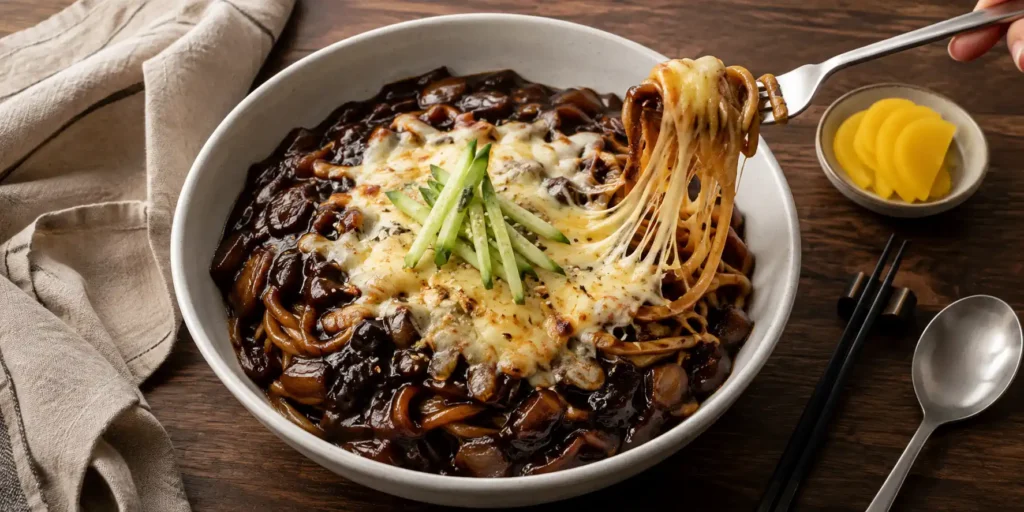
Cheesy jajangmyeon – yaar, have you ever seen something so beautiful that it made you emotional? I have. It was a bowl of jajangmyeon, those thick, chewy Korean black bean noodles, covered in a glossy, dark sauce. But there was a twist. A blanket of melted golden cheese on top, stretching like a dream. I took a bite. The savoury, slightly sweet black bean sauce hit my tongue first. Then the cheese – gooey, salty, and creamy. The noodles were chewy. The vegetables were crunchy. It was like a Korean drama and a pizza had a baby. And it was perfect.
I discovered cheesy jajangmyeon during a late-night YouTube binge. A Korean food vlogger was eating it with this dramatic cheese pull – you know, the kind where you lift the noodles and the cheese stretches for miles. I had to have it. But Korean restaurants in my city didn’t serve the cheesy version. So I made it at home. My first attempt was a disaster – the cheese didn’t melt properly, the sauce was too salty, and the noodles were overcooked. But I kept trying. And now, I have perfected it.
Cheesy Jajangmyeon
For Indian homes, this is the perfect fusion dish. It is like our chowmein but with attitude. And the cheese? It takes it to a whole new level. It is comfort food for rainy days, for when you are sad, or for when you just want to eat noodles with a dramatic backstory.
A small tangent: I once made this for my mom. She said, “Yeh noodles mein cheese? Kya karega?” I said, “Try karo.” She tried. She ate two bowls. Now she asks for it every week.

Step-by-Step Recipe Method
1st Step: Make the Chunjang Paste
Here is the trick that most people miss. Chunjang from the jar is very salty and has a raw, bitter taste. You need to fry it. Heat 1 tablespoon oil in a small pan on low flame. Add the chunjang paste. Stir and fry for 2 to 3 minutes until it becomes darker and releases a nutty, savoury aroma. Add 1 tablespoon sugar. Stir for 30 seconds. Turn off the flame. Set aside.
A mistake I made: I used chunjang directly without frying. The sauce was so bitter that my family said it tasted like medicine. Do not skip this step.
2nd Step: Prepare the Vegetables
Dice the potato, zucchini, carrot, and onion into small, even pieces – about 1 cm cubes. Chop the mushrooms, mince the garlic, shred the cabbage. Keep everything ready because the cooking goes fast.
3rd Step: Stir-Fry the Vegetables
Heat 2 tablespoons of oil in a large wok or deep pan on medium-high flame. Add the minced garlic and onion. Sauté for 1 minute until fragrant. Add the potato, carrot, and mushrooms. Stir-fry for 2 minutes. Add the zucchini and cabbage. Stir-fry for another 2 minutes. The vegetables should start looking glossy and slightly soft, but still have a bite.
4th Step: Add the Fried Chunjang
Add the pre-fried chunjang paste to the vegetables. Stir well so every vegetable piece gets coated in that dark, black-brown paste. The colour will become intense. The smell will be amazing – earthy, savoury, slightly sweet.
5th Step: Add Water and Simmer
Pour 1 cup of water into the pan. Stir. Bring to a boil, then reduce the flame to low. Let it simmer for 8 to 10 minutes. The vegetables, especially the potato, should become soft and cooked through. The sauce will darken further.
6th Step: Thicken the Sauce
In a small bowl, mix the potato starch with 2 tablespoons of water to make a slurry. Pour the slurry into the simmering sauce while stirring continuously. The sauce will thicken almost immediately – within 30 seconds. It should become glossy and thick enough to coat the back of a spoon.
7th Step: Cook the Noodles
While the sauce is simmering, cook the noodles. Bring a large pot of water to a boil. Add the noodles. Cook according to package instructions (usually 3 to 5 minutes for fresh noodles). Do not overcook – they should be chewy and springy. Drain the noodles and rinse briefly under cold water to stop cooking. Toss with a teaspoon of oil to prevent sticking.
8th Step: Assemble and Add the Cheese
Place a serving of noodles in a deep bowl. Ladle a generous amount of the black bean sauce and vegetables over the noodles. While the sauce is still hot, sprinkle the shredded mozzarella cheese on top. If you want extra cheesy goodness, add a layer of cheddar too. You can either let the heat melt the cheese naturally, or pop it under the grill/broiler for 1 to 2 minutes until the cheese is bubbly and golden.
Top with cucumber strips, spring onions, and sesame seeds. Mix everything together right before eating. Slurp loudly. Enjoy that cheese pull.
Pro Cooking Tips
-
Mistake to avoid: Adding cheese to cold sauce. The cheese won’t melt. Make sure the sauce and noodles are piping hot before adding cheese.
-
Cheese pull hack: Use a combination of mozzarella and cheddar. Mozzarella gives the stretch, cheddar gives the flavour. A 70:30 ratio works best.
-
Oil separation hack: Traditional jajangmyeon has oil floating on top – that is a good sign. If your sauce looks dull, drizzle 1 teaspoon of sesame oil at the end.
-
Make ahead: The sauce can be made a day in advance. Store in the fridge. Reheat and add fresh cheese when serving.
-
Melting cheese: If you don’t have an oven or broiler, cover the bowl with a lid for 2 minutes – the trapped steam will melt the cheese.
-
Customising cheese: Add a sprinkle of chilli flakes or black pepper on top of the cheese before melting for a spicy kick.
Variations & Substitutes
Healthy version: Use whole wheat noodles. Add more vegetables. Use reduced-fat cheese. Reduce oil.
Jain version: No onion, no garlic – skip them. Add hing (asafoetida) while frying vegetables. No potato (some Jains avoid root vegetables) – use sweet potato or extra zucchini.
Without onion-garlic: Skip onion and garlic. Add hing and extra ginger. Still tasty.
Vegan version: Use vegan cheese. Ensure your chunjang is vegan (most are). Use plant-based noodles.
Extra spicy version: Add 1 tablespoon gochugaru (Korean red pepper flakes) to the sauce. Also add sliced fresh red chillies as garnish.
Serving Suggestions
Serve cheesy jajangmyeon with a side of danmuji (yellow pickled radish) – it cuts through the richness perfectly. Also great with kimchi on the side. For a full Korean meal, serve with Korean fried cauliflower or veg mandu (dumplings).
Best time to enjoy? Friday night when you want comfort. Rainy days when you need something warm and gooey. Or any time you need a cheesy, noodley hug.
If you love Korean-inspired dishes, check out my Veg Jajangmyeon recipe on Luckky Corner – the original version without cheese. And for a crispy side, try my Korean Fried Cauliflower – it uses the same gochujang magic.
FAQs
What is cheesy jajangmyeon?
It is a Korean-Chinese black bean noodle dish topped with melted cheese. The sauce is made from chunjang (fermented black bean paste), vegetables, and a starch thickener. The cheese adds a creamy, savoury twist.
Is chunjang vegetarian?
Yes, traditional chunjang is made from fermented black soybeans, wheat flour, and salt. No animal products. Always check the label to be sure.
What cheese is best for cheesy jajangmyeon?
Mozzarella is best for that stretchy, gooey pull. Cheddar adds flavour. A mix of 70% mozzarella and 30% cheddar is ideal.
Can I use instant noodles for this?
Yes. Use the noodle block only. Discard the flavour packet. Cook as per package instructions.
How do I get that cheese pull in the photo?
Make sure the cheese is completely melted and hot. Use a fork to lift the noodles slowly – the cheese will stretch. Having a combination of mozzarella and cheddar helps.
How do I store leftovers?
Store sauce and noodles separately in the fridge. Sauce lasts 3 to 4 days. Noodles last 1 day. Reheat sauce in a pan, boil fresh noodles, and add fresh cheese.
Conclusion
This cheesy jajangmyeon recipe is my ultimate comfort food. The dark, savoury black bean sauce, the chewy noodles, and that blanket of melted golden cheese – it is pure happiness. It took me a few tries to get it right, but now it is perfect. My family loves it. My mom asks for it. Even my cheese-sceptic friend ate two bowls.
Make it this weekend. Fry the chunjang. Simmer the sauce. Add that cheese. Then take a bite and enjoy the cheese pull. Then come back here and tell me – did you get the stretch? Did you add extra cheese? Did you eat it straight from the pan like I do? I want to hear everything.