
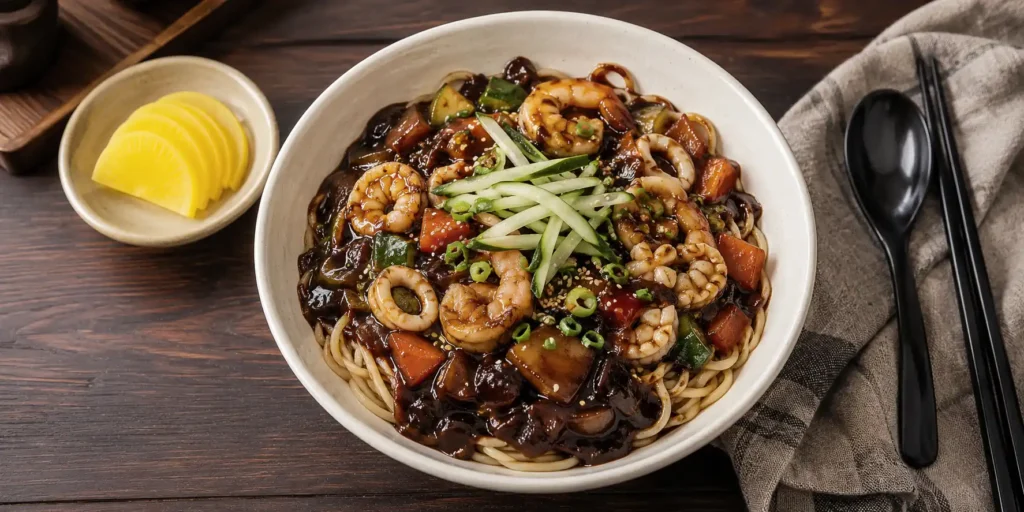
Jajangmyeon – yaar, you know that feeling when you are watching a K-drama and the main character is having a terrible day, and then they order a big bowl of black noodles and suddenly everything feels better? That is jajangmyeon. That glossy, dark, savoury sauce coating thick, chewy noodles – it is pure comfort. And when you add seafood to it? It becomes something truly special.
I remember the first time I tried seafood jajangmyeon. I was at a Korean restaurant in Mumbai. The waiter brought out a bowl of noodles with this dark, almost black sauce. I could see pieces of shrimp and squid peeking through. I took a bite. The sauce was savoury, slightly sweet, with a deep umami flavour. The shrimp were plump and juicy. The squid was tender, not rubbery. And the noodles – oh, the noodles – were perfectly chewy. I finished the entire bowl in under ten minutes. I asked for another.
Seafood Jajangmyeon
This Seafood Jajangmyeon is my way of bringing that restaurant experience to my Indian kitchen. It is rich, savoury, and packed with the flavours of the sea. The black bean sauce is the star of the show – it is made from chunjang, a fermented black bean paste that gives the dish its signature dark colour and deep, savoury taste. The seafood adds a briny sweetness that balances the richness of the sauce. It is a dish that feels fancy but is actually quite simple to make.
A small tangent: My daughter once asked, “Papa, why is the sauce black?” I said, “Because it is made from fermented black beans.” She said, “Like soy sauce?” I said, “Better.” She ate two bowls.

Step-by-Step Recipe Method
1st Step: Prepare the Seafood
Clean the shrimp – peel and devein them. Clean the squid – remove the skin, cut the tubes into rings, and halve the tentacles. If using clams, scrub them well under running water. Pat all the seafood dry with a paper towel. In a bowl, marinate the shrimp and squid with rice wine, a pinch of salt, and pepper for 10 minutes. This removes any fishy smell and adds flavour.
A mistake I made: I didn’t pat the seafood dry. The sauce became watery. Pat them dry.
2nd Step: Fry the Chunjang (Crucial Step!)
This is the most important step. Chunjang from the jar can be bitter. You must fry it. Heat a small pan on low flame. Add 1 tablespoon of oil. Add the chunjang paste. Stir-fry for 3 to 5 minutes until it becomes fragrant and darker in colour. Do not burn it. Stir continuously. Set aside.
A mistake I made: I skipped this step once. The sauce was bitter and my family refused to eat it. Do not skip.
3rd Step: Parboil the Seafood
Bring 2 cups of water to a boil in a separate pot. Add the shrimp and squid. Parboil for 1 to 2 minutes until the shrimp turn pink and the squid becomes opaque. Do not overcook – seafood becomes rubbery. Drain immediately and set aside. Keep the broth for the sauce.
4th Step: Cook the Vegetables
Heat 2 tablespoons of oil in a large wok or deep pan on medium-high heat. Add the diced onion. Stir-fry until soft and translucent – about 2 minutes. Add the minced garlic and ginger. Stir-fry for 30 seconds until fragrant.
Add the potato, carrot, zucchini, and cabbage. Stir-fry for 2 to 3 minutes until the vegetables start to soften.
5th Step: Add the Sauce Ingredients
Add the fried chunjang to the wok. Stir well so every vegetable piece is coated in that dark paste. Add soy sauce, sugar, oyster sauce, and 1 cup of the reserved seafood broth (or water). Stir until everything is combined.
6th Step: Simmer Until Vegetables Are Tender
Bring the sauce to a boil. Then reduce the flame to low. Cover and let it simmer for 8 to 10 minutes. The potato and carrot should become soft and the sauce will darken further.
7th Step: Thicken the Sauce and Add Seafood
In a small bowl, mix the cornstarch with 2 tablespoons of water to make a slurry. Pour the slurry into the simmering sauce while stirring continuously. The sauce will thicken in about 30 seconds. It should become glossy and thick enough to coat the back of a spoon. Add the parboiled seafood and clams (if using). Stir gently. Let it cook for 2 to 3 minutes until the seafood is heated through. Turn off the flame.
8th Step: Cook the Noodles and Assemble
While the sauce is simmering, cook the noodles. Bring a large pot of water to a boil. Add the noodles. Cook according to the package instructions (usually 3 to 5 minutes). Do not overcook – they should be chewy and springy. Drain the noodles and rinse briefly under cold water to stop cooking. Toss with a teaspoon of oil to prevent sticking.
Place a serving of noodles in a deep bowl. Ladle a generous amount of the seafood and black bean sauce over the noodles. Top with cucumber strips, chopped spring onions, and a sprinkle of sesame seeds. Mix everything together right before eating. Slurp loudly. Enjoy.
Pro Cooking Tips
-
Mistake to avoid: Overcooking the seafood. Shrimp and squid cook very quickly. Parboil for only 1 to 2 minutes. Add them at the very end of the sauce cooking.
-
Sauce consistency: A good jajangmyeon sauce should be thick and glossy. If it is too thin, add more slurry. If too thick, add a splash of broth.
-
Oil separation: A little oil floating on top is a sign of a rich, authentic sauce. Do not be alarmed – it is supposed to be there.
-
Make ahead: The sauce can be made a day in advance. Store in the fridge. Reheat and cook fresh noodles.
-
Noodle texture: Rinse the cooked noodles with cold water. It stops cooking and removes excess starch.
-
Cucumber topping: Cucumber adds freshness and crunch. Do not skip it.
Variations & Substitutes
Healthy version: Use less oil. Add more vegetables – bell peppers, broccoli, or spinach. Use whole wheat noodles.
Jain version: This contains seafood – not Jain. Use paneer or tofu instead. Skip onion and garlic – add hing.
Without onion-garlic: Skip onion and garlic. Add hing and extra ginger.
Vegan version: Use tofu or mushrooms instead of seafood. Use vegetable stock instead of seafood broth.
Extra spicy version: Add 1 teaspoon gochugaru (Korean red pepper flakes) or a spoonful of chilli oil.
Serving Suggestions
Serve this Seafood Jajangmyeon with:
-
Danmuji (yellow pickled radish) – cuts through the richness
-
Kimchi – for a spicy, tangy side
-
A cold glass of barley tea – balances the savoury flavours
Best time to enjoy? Friday night when you need comfort. Rainy days when you want something warm. Or any time you need a noodley, savoury hug.
If you love Korean food, check out my Vegetarian Jajangmyeon recipe on Luckky Corner – it is the perfect plant-based version. And for a crispy side, try my Korean Fried Cauliflower – it is delicious with these noodles.
FAQs
What is Jajangmyeon?
Jajangmyeon (also spelled jjajangmyeon) is a Korean-Chinese noodle dish topped with a thick sauce made from chunjang (fermented black bean paste), vegetables, and meat or seafood. It is a beloved comfort food in Korea.
What is the seafood version called?
The seafood version of jajangmyeon is called Samseon-jjajang (삼선짜장) in Korean. It typically includes squid, shrimp, and sometimes mussels or clams.
Can I use frozen seafood?
Yes. Thaw frozen seafood completely and pat it dry before using. Do not overcook it.
What noodles are best for jajangmyeon?
Thick, chewy noodles – fresh jajangmyeon noodles or udon noodles work best. You can also use thick spaghetti in a pinch.
Is chunjang vegetarian?
Yes, chunjang is made from fermented black soybeans, wheat flour, and salt. No animal products. Always check the label to be sure.
How do I store leftovers?
Store the sauce and noodles separately in the fridge. Sauce lasts 3 to 4 days. Noodles last 1 day. Reheat sauce in a pan and boil fresh noodles.
Conclusion
This Seafood Jajangmyeon recipe is my way of bringing Korean restaurant magic to my Indian kitchen. The dark, glossy sauce, the tender shrimp and squid, the chewy noodles – it all comes together like a warm hug. My family now asks for this every week. My daughter loves the “black noodles.” My wife says it is better than the restaurant.
Make it this weekend. Fry the chunjang. Parboil the seafood. Simmer the sauce. Cook the noodles. Then take a bite and close your eyes. You will feel like you are in Seoul. Then come back here and tell me – did you use shrimp and squid? Did your sauce get that perfect gloss? Did you eat it straight from the pan like I do? I am waiting.