
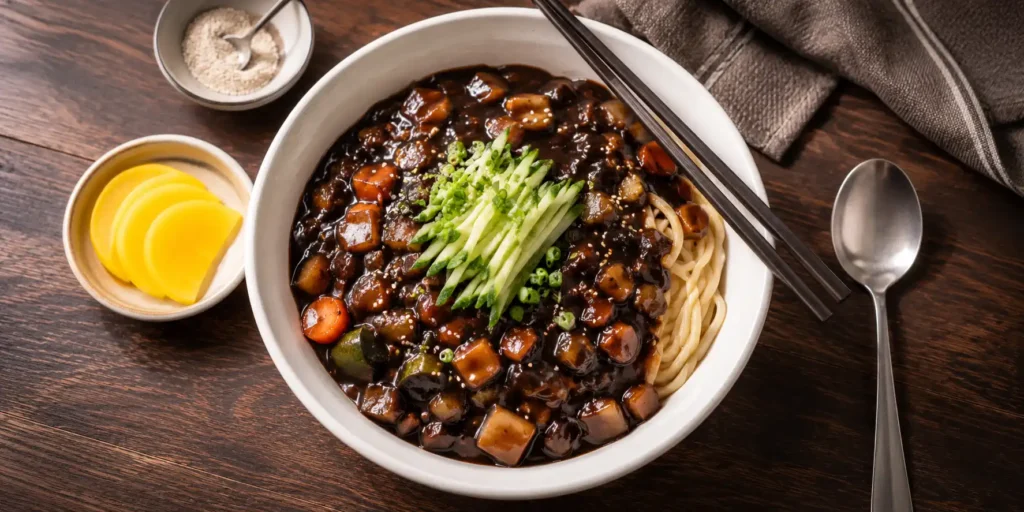
Veg Jajangmyeon – I first saw it in a K-drama. The actor was sitting alone in a Chinese-Korean restaurant, wearing a suit, looking miserable. He took a huge bite of these thick noodles covered in a dark, almost black sauce. Sauce smeared all over his lips. He did not care. I did not know what he was eating, but I wanted it. Badly. So I typed “black bean noodles” into Google. And my life changed.
The smell of jajangmyeon is unforgettable – savoury, a little sweet, with that deep fermented bean aroma that makes your stomach growl. The sauce is thick, glossy, and dark like midnight. The noodles are thick and chewy. And when you mix it all together, each strand gets coated in that rich, umami-packed sauce. Traditional jajangmyeon has pork. But I am a vegetarian. So I made my own Veg Jajangmyeon with mushrooms, zucchini, potatoes, and lots of love.
Veg Jajangmyeon
For Indian homes, this is like our chowmein but much more intense. It is comfort food for rainy days, for when you are sad, or for when you just want to eat noodles with a dramatic backstory. My family now demands this on Sundays. My mother asked, “Is this healthy?” I said, “It has vegetables.” She said okay.
A small tangent: The first time I made this, I used too much black bean paste. The sauce was so dark that my daughter asked if I had added charcoal. It was salty like the ocean. Lesson learned. Now I measure properly.

Step-by-Step Recipe Method
1st Step: Make the Chunjang Paste (The Secret to Not-Salty Sauce)
Here is the trick that most people miss. Chunjang (black bean paste) from the jar is very salty and has a raw, bitter taste. You need to fry it. Heat 1 tablespoon oil in a small pan on low flame. Add the chunjang paste. Stir and fry for 2 to 3 minutes until it becomes darker and releases a nutty, savoury aroma. Add 1 tablespoon sugar. Stir for 30 seconds. Turn off the flame. Set aside.
A mistake I made: I used chunjang directly without frying. The sauce was so bitter that my husband said it tasted like medicine. So do not skip this step.
2nd Step: Prepare the Vegetables
Dice the potato, zucchini, carrot, and onion into small, even pieces – about 1 cm cubes. Smaller pieces cook faster. Chop the mushrooms, mince the garlic, shred the cabbage. Keep everything ready because the cooking goes fast.
Pro tip: Potato takes the longest to cook. Cut it into the smallest pieces.
3rd Step: Stir-Fry the Vegetables
Heat 2 tablespoons of oil in a large wok or deep pan on medium-high flame. Add the minced garlic and onion. Sauté for 1 minute until fragrant. Add the potato, carrot, and mushrooms. Stir-fry for 2 minutes. Add the zucchini and cabbage. Stir-fry for another 2 minutes. The vegetables should start looking glossy and slightly soft, but still have a bite.
4th Step: Add the Fried Chunjang
Add the pre-fried chunjang paste to the vegetables. Stir well so every vegetable piece gets coated in that dark, black-brown paste. The colour will become intense. The smell will be amazing – earthy, savoury, slightly sweet.
5th Step: Add Water and Simmer
Pour 1 cup of water into the pan. Stir. Bring to a boil, then reduce the flame to low. Let it simmer for 8 to 10 minutes. The vegetables, especially the potato, should become soft and cooked through. The sauce will darken further.
Taste the sauce. It should be savoury, slightly sweet, and not too salty. Adjust with a pinch of sugar if needed.
6th Step: Thicken the Sauce
In a small bowl, mix the potato starch (or cornstarch) with 2 tablespoons of water to make a slurry. Pour the slurry into the simmering sauce while stirring continuously. The sauce will thicken almost immediately – within 30 seconds. It should become glossy and thick enough to coat the back of a spoon. Turn off the flame.
If it becomes too thick, add a little hot water. If too thin, add more slurry (mix another teaspoon starch with water).
7th Step: Cook the Noodles
While the sauce is simmering, cook the noodles. Bring a large pot of water to a boil. Add the noodles. Cook according to package instructions (usually 3 to 5 minutes for fresh noodles). Do not overcook – they should be chewy and springy. Drain the noodles and rinse briefly under cold water to stop cooking. Toss with a teaspoon of oil to prevent sticking.
8th Step: Assemble and Serve
Place a serving of noodles in a deep bowl. Ladle a generous amount of the black bean sauce and vegetables over the noodles. The sauce should almost drown the noodles. Top with julienned cucumber, chopped spring onions, and a sprinkle of roasted sesame seeds.
Mix everything together right before eating. Slurp loudly. Get sauce on your face. That is the authentic jajangmyeon experience.
Pro Cooking Tips
-
Mistake to avoid: Adding the starch slurry without dissolving it first. Always mix starch with cold water. Adding dry starch directly creates lumps.
-
Oil separation hack: Traditional jajangmyeon has oil floating on top – that is a good sign. If your sauce looks dull, drizzle 1 teaspoon of sesame oil at the end.
-
Potato texture: The potato pieces should be soft but not mushy. If they are still hard after simmering, add a little more water and cook longer.
-
Make ahead: The sauce can be made a day in advance. Store in the fridge. Reheat and add a splash of water to loosen it. Cook noodles fresh.
-
Leftover sauce: Leftover sauce is amazing on rice (jajangbap) or even on top of steamed vegetables.
-
Customising thickness: If you want a saucier jajangmyeon, add an extra ½ cup water before thickening. Some people like it almost soupy.
Variations & Substitutes
Healthy version: Use whole wheat noodles. Add more vegetables – broccoli, snow peas, bok choy. Reduce oil. Use only 1 tablespoon chunjang and add 1 tablespoon miso for flavour.
Jain version: No onion, no garlic. Skip them. Add hing (asafoetida) while frying vegetables. No potato (some Jains avoid root vegetables) – use sweet potato or raw banana. Use zucchini, cabbage, carrots.
Without onion-garlic: Skip onion and garlic. Add hing and extra ginger. Still tasty.
Vegan version: Already vegan. Just ensure your noodles are egg-free (most Asian noodles are).
Extra spicy version: Add 1 tablespoon gochugaru (Korean red pepper flakes) or a spoonful of sriracha to the sauce while simmering.
Serving Suggestions
Best time to enjoy? Friday night after a long week. Rainy Sunday afternoon. Or whenever you need to feel like a K-drama protagonist eating their feelings.
If you love Korean-inspired dishes, check out my Hot Ramen Recipe on Luckky Corner – similar but with different vegetables. And for a completely different noodle experience, try my Thenthuk Tibetan Noodle Soup – hand-pulled and comforting.
FAQs
What is Veg Jajangmyeon?
It is a vegetarian version of the popular Korean-Chinese black bean noodle dish. The sauce is made from chunjang (fermented black bean paste), vegetables, and a starch thickener. Served over thick wheat noodles.
Is chunjang vegetarian?
Yes, traditional chunjang is made from fermented black soybeans, wheat flour, and salt. No animal products. However, some brands may add anchovy or oyster extract – check the label. Most are vegan.
Why is my sauce bitter?
You either used too much chunjang, or you did not fry the chunjang properly. Frying the paste in oil with sugar removes the bitterness and raw flavour. If it is still bitter, add a little more sugar.
Can I use regular soy sauce instead of chunjang?
No. Chunjang has a unique flavour – it is sweet, savoury, and fermented. Regular soy sauce will not work. You need to buy chunjang from an Asian grocery store or online.
What noodles are best for jajangmyeon?
Thick, chewy noodles – Korean jajangmyeon noodles or fresh udon noodles work best. If unavailable, use thick spaghetti or ramen noodles (cook al dente).
How do I store leftovers?
Store sauce and noodles separately in the fridge. Sauce lasts 3 to 4 days. Noodles last 1 day (toss with oil). Reheat sauce in a pan with a splash of water. Boil fresh noodles – leftover noodles get mushy.
Conclusion
This Veg Jajangmyeon recipe took me from a confused K-drama fan to a confident Korean noodle maker. The sauce is rich, dark, and packed with umami. The vegetables add sweetness and texture. And those thick, chewy noodles? Pure joy. It is not a quick 10-minute meal, but it is worth every minute.
Make it on a day when you want to eat with your soul. Slurp loudly. Get messy. Then come back here and tell me – did you add extra vegetables? Did your family ask for seconds? Did you also cry over a K-drama while eating? I want to hear everything. Jajangmyeon is love. Jajangmyeon is life.