
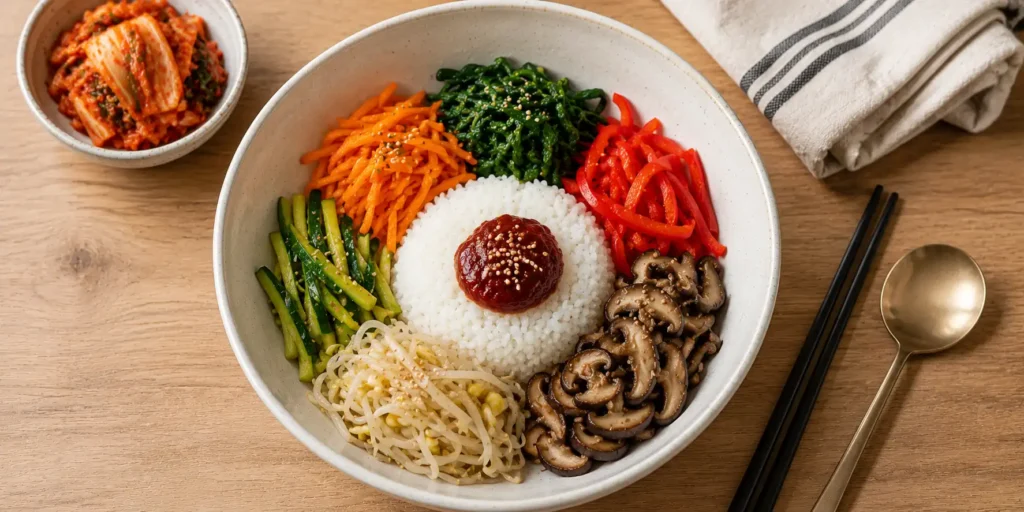
Veg bibimbap – the first time I heard the word, I thought someone was sneezing. But then I saw it. A wide, beautiful bowl of white rice, topped with an rainbow of vegetables – orange carrots, green spinach, red bell peppers, brown mushrooms – all arranged like a work of art. And on top, a fried egg with a golden yolk, staring at me like a sunny eye. And then the sauce. Gochujang. Red, spicy, sweet, and so addictive that I wanted to drink it.
I remember making veg bibimbap for the first time at home. My daughter said, “Why is my food looking at me?” referring to the egg. My son said, “Can I mix everything together?” And when he did – oh, the magic. The runny yolk coated the rice, the vegetables released their juices, the sauce added heat, and every spoonful was different. Crunchy, soft, spicy, savoury. That is bibimbap. It means “mixed rice” in Korean. And mixing is the whole point.
Veg Bibimbap
For Indian homes, this is like our khichdi but way more exciting. It is a clean-out-the-fridge meal disguised as a fancy Korean dish. Leftover vegetables? Throw them in. Extra rice? Perfect. It is healthy, colourful, and comes together in 20 minutes.
A small tangent: I once tried to arrange the vegetables perfectly like the pictures online. Spent 10 minutes on each bowl. Then my husband mixed it all into a brown mess in 3 seconds. I almost cried. Now I just mix it myself. Life is too short for perfect arrangements.

Step-by-Step Recipe Method
1st Step: Cook the Rice
Cook 2 cups of rice in a rice cooker or pot. Use slightly less water than usual so the grains are separate and slightly firm. Once cooked, fluff with a fork. Add 1 teaspoon sesame oil and 1 teaspoon sesame seeds. Mix gently. Keep covered to stay warm.
A mistake I made: I used mushy, overcooked rice. Bibimbap needs rice that holds its shape. Do not overcook.
2nd Step: Prepare the Vegetables
Wash and cut all vegetables into thin, uniform strips or bite-sized pieces. Keep each vegetable separate because you will cook them separately. Yes, separately. I know it is more work. But Korean cooking believes each vegetable should keep its own flavour and colour.
For carrots and zucchini: Heat a small pan with ½ teaspoon oil. Add carrots and a pinch of salt. Sauté on high flame for 1 minute – they should stay crunchy. Remove to a plate. Repeat for zucchini.
For spinach: Blanch in hot water for 30 seconds, then squeeze out water. Mix with a drop of sesame oil and a pinch of salt.
For mushrooms: Sauté with a little oil until brown.
For bell peppers: Quick stir-fry for 30 seconds – keep crunchy.
For beansprouts: Blanch in hot water for 1 minute, then drain.
3rd Step: Cook the Protein (Tofu)
Cut firm tofu into thin slices or cubes. Pat dry with a paper towel. Heat 1 tablespoon oil in a pan. Pan-fry the tofu on both sides until golden brown and crispy. Sprinkle a little salt and pepper. Remove and set aside.
If using egg, fry it sunny-side up in a separate pan. The yolk should be runny.
4th Step: Make the Gochujang Sauce
In a small bowl, whisk together gochujang, soy sauce, sesame oil, sugar, rice vinegar, water, garlic, and sesame seeds. The sauce should be thick but pourable – like ketchup. If too thick, add a teaspoon of water. Taste. It should be spicy, sweet, savoury, and tangy. Adjust to your liking.
5th Step: Assemble the Bowl (The Art Part)
Take a wide, shallow bowl. Place a generous scoop of sesame rice in the centre. Arrange the sautéed vegetables around the rice in small piles – each vegetable in its own section. Like a colour wheel. Place the tofu or fried egg on top of the rice. Add a dollop of gochujang sauce in the centre or on the side.
6th Step: The Mixing Ceremony (The Important Part)
This is the bibimbap ritual. Right before eating, mix everything together thoroughly. Use your spoon or chopsticks. Break the egg yolk. Let it coat the rice and vegetables. Ensure every grain of rice gets some sauce and some veggie. The colours will blend into a beautiful, messy, delicious bowl.
7th Step: Garnish and Serve
Sprinkle sesame seeds, chopped spring onions, and crumbled nori on top. Serve immediately. Provide extra gochujang sauce on the side for those who want more heat.
8th Step: Eat with a Spoon
Bibimbap is traditionally eaten with a long-handled spoon. Scoop from the bottom, getting rice, veggies, and sauce in every bite. Slurping is allowed. Happiness is mandatory.
Pro Cooking Tips
-
Mistake to avoid: Using wet or watery vegetables. Sauté quickly on high heat to keep them crunchy and dry. Soggy vegetables make the rice mushy.
-
Batch cooking: You can prep all the vegetables in advance and store in separate containers in the fridge for up to 2 days. Assemble when ready.
-
Make it crispy (dolsot bibimbap): Heat a stone bowl or a cast iron pan on the stove. Brush with sesame oil. Add rice and toppings. Cook on medium flame for 5 to 7 minutes. The rice at the bottom becomes crispy and golden. That is the Korean version.
-
Gochujang hack: If you cannot find gochujang, mix regular red chilli paste with a little miso and sugar. The flavour is different but works.
-
Leftover vegetables: This recipe is perfect for using up leftover sabzi. Just chop them finely and sauté briefly.
-
Serving for kids: Reduce gochujang to 1 teaspoon and add a little ketchup. Skip the chilli. They will love the colourful bowl.
Variations & Substitutes
Healthy version: Use brown rice. Add more vegetables (broccoli, kale, bok choy). Reduce oil. Use air-fried tofu instead of pan-fried. Skip the egg.
Jain version: No onion, no garlic. Use hing in the sauce (a pinch). Skip mushrooms (some Jains avoid). No egg. Use only vegetables that are allowed (carrots, spinach, cabbage, bell peppers). Use rock salt.
Without onion-garlic: Skip garlic in the sauce. Add a pinch of hing. Perfect.
Vegan version: Skip the egg. Use tofu or edamame for protein. Ensure your gochujang is vegan (most are, but check for fish or shrimp). Use maple syrup instead of sugar.
Low-carb version: Replace rice with cauliflower rice. Sauté cauliflower rice with sesame oil. Arrange vegetables on top. Same deliciousness, fewer carbs.
Serving Suggestions
Serve veg bibimbap as a complete meal on its own. Pair with kimchi on the side for an authentic Korean experience. Also great with Korean fried cauliflower or kimchi jeon if you are having a Korean feast. A bowl of miso soup or clear vegetable soup on the side is traditional.
Best time to enjoy? Any day when you have leftover vegetables. Also perfect for lunch meal prep – keep the sauce separate and mix when eating. Great for impressing guests with minimal effort.
If you love Korean food, check out my Kimchi Jeon recipe on Luckky Corner – it is crispy, tangy, and addictive. And for a noodle lover’s dream, try my Veg Jajangmyeon – black bean noodles that are pure comfort.
FAQs
What does bibimbap mean?
Bibimbap is Korean for “mixed rice”. “Bibim” means mixed, and “bap” means rice. You mix everything together before eating.
Is veg bibimbap healthy?
Yes, very healthy. It has rice (carbs), lots of vegetables (fibre and vitamins), and a spicy sauce (capsaicin). The egg adds protein. You can make it even healthier by using brown rice and less oil.
Can I make bibimbap without gochujang?
Gochujang is the signature flavour. Without it, it is just rice and vegetables – still tasty but not bibimbap. You can try sriracha or a homemade red chilli paste, but the flavour is different.
What is the best rice for bibimbap?
Short-grain or medium-grain white rice – the sticky kind. Sona masoori works. Basmati is too dry and separate. Sushi rice is perfect.
Can I use raw vegetables?
Traditionally, some vegetables are raw (like cucumber and lettuce), but most are lightly cooked. In Korean homes, they often use a mix of raw and cooked. For food safety and texture, it is best to lightly sauté or blanch most vegetables.
How do I store leftover bibimbap?
Store the rice, vegetables, sauce, and egg separately in the fridge. Do not store mixed – it becomes soggy. Reheat rice and vegetables in a pan, add fresh egg, and sauce. Leftovers last 2 days.
Conclusion
This veg bibimbap recipe is my happy bowl. It is colourful, healthy, and so forgiving – you can use any vegetables you have. The gochujang sauce is the real hero, turning a simple bowl of rice and veggies into something spectacular. And that fried egg on top? Pure drama.
Make it on a day when you need something beautiful and satisfying. Arrange the vegetables like an artist. Then mix it all into a delicious mess. Then come back here and tell me – did you add extra sauce? Did you try the crispy rice version? Did your family fight over the last bowl? I am listening.