
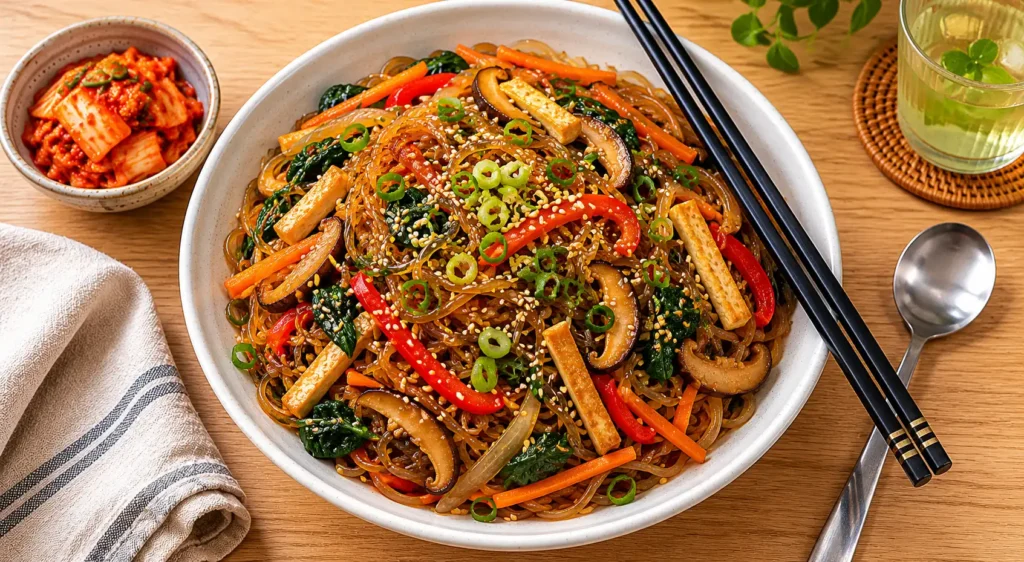
Japchae – the first time I heard the name, I thought someone was sneezing. But then I saw it. A beautiful tangle of translucent, brownish noodles mixed with bright orange carrots, green spinach, red bell peppers, and mushrooms. The smell hit me – sesame oil, soy sauce, garlic, a hint of sweetness. I took a bite. The noodles were so chewy, so springy, unlike any noodle I had ever eaten. Not soft like pasta, not hard like rice noodles. They bounced back. I was in love.
I discovered japchae during a Korean food phase. You know, after watching too many K-dramas where characters eat delicious things in tiny apartments. I ordered it from a restaurant. It was good. Then I thought, why not make it at home? How hard can it be? Very hard, it turns out. My first attempt was a sticky, clumpy mess. The noodles were overcooked. The vegetables were soggy. But I kept trying. And now, I can confidently say that my japchae is better than takeout.
Japchae
For Indian homes, japchae is like our veg noodles but with attitude. It uses sweet potato starch noodles (dangmyeon), which are gluten-free and have that amazing chewy texture. It is naturally vegan, colourful, and perfect for parties. Plus, it tastes great cold the next day – if there are leftovers, which there usually aren’t.
A small tangent: My mother-in-law saw me making japchae and asked, “Yeh noodles glass ke bane hain?” I said, “Almost.” She took a bite. She asked for the recipe. That is the highest compliment.

Step-by-Step Recipe Method
1st Step: Cook the Sweet Potato Noodles
Bring a large pot of water to a boil. Add the dangmyeon noodles. Cook according to package instructions – usually 5 to 6 minutes. They will become translucent and very springy. Do not overcook. Overcooked sweet potato noodles turn into glue. Trust me, I have made that mistake.
Drain the noodles in a colander. Rinse immediately with cold water to stop cooking. This also removes excess starch. Drain well. Then toss with 1 tablespoon of sesame oil. The oil prevents sticking and adds flavour. Set aside.
2nd Step: Prepare All the Vegetables
While the noodles cook, chop all your vegetables into thin, uniform strips. The key to japchae is that everything should be bite-sized and cook quickly. Julienne the carrot. Slice the bell peppers, onion, and mushrooms. Keep the spinach separate because it cooks in 30 seconds.
Pro tip: Pat dry any washed vegetables with a paper towel. Wet vegetables will make the dish soggy.
3rd Step: Make the Japchae Sauce
In a small bowl, whisk together soy sauce, brown sugar, maple syrup, sesame oil, rice vinegar, minced garlic, black pepper, and toasted sesame seeds. Stir until the sugar dissolves. Taste. It should be sweet, savoury, and a little tangy. Adjust to your liking.
4th Step: Cook the Vegetables (One by One)
This is the traditional Korean way – cook each vegetable separately to keep their colours and textures distinct. Heat a large pan or wok over medium-high heat. Add ½ teaspoon oil. Cook the carrots for 1 minute until slightly soft but still crunchy. Remove to a large mixing bowl. Repeat for bell peppers (30 seconds), mushrooms (1 minute), onion (1 minute), and spinach (30 seconds – it will wilt). Add each cooked vegetable to the same bowl.
A mistake I made: I cooked everything together. The colours bled. The carrots stained the mushrooms. It looked like a brown mess. Cook separately.
5th Step: Cook the Protein (If Using)
In the same pan, add 1 tablespoon oil. Add the tofu strips or seitan. Cook until golden brown on both sides – about 2 to 3 minutes. Remove and add to the vegetable bowl.
6th Step: Combine Everything – The Big Mix
Add the sesame-oiled noodles to the bowl with the vegetables and tofu. Pour the japchae sauce over everything. Toss well using your hands (wear gloves) or two spatulas. Make sure every noodle is coated. The sauce should cling to the noodles and vegetables. Add the white parts of spring onions and half the sesame seeds. Toss again.
7th Step: Final Heat (Optional but Recommended)
For that authentic just-cooked flavour, return the mixed japchae to the pan. Turn the heat to high. Stir-fry for 1 to 2 minutes. This caramelises the sauce slightly and gives a subtle smoky flavour. Do not overcook – the noodles will become sticky.
8th Step: Garnish and Serve
Transfer the japchae to a large serving plate or bowl. Garnish with the green parts of spring onions and the remaining sesame seeds. Drizzle a little extra sesame oil on top. Serve warm or at room temperature. Cold japchae the next day is also amazing.
Pro Cooking Tips
-
Mistake to avoid: Overcooking the noodles. Sweet potato noodles go from perfect to mushy in 30 seconds. Set a timer. Rinse immediately with cold water.
-
Sesame oil is the star: Do not skip it. It gives japchae that nutty, aromatic flavour. Use toasted sesame oil, not plain.
-
Rinse and oil: After boiling the noodles, rinse them thoroughly under cold water to remove starch. Then toss with sesame oil. This is the secret to non-sticky japchae.
-
Make ahead: Japchae is one of the few noodles that tastes great the next day. Make it a day ahead, refrigerate, and serve at room temperature.
-
Customising vegetables: Use whatever you have – zucchini, cabbage, broccoli, snap peas. Just cut them thin and cook separately.
-
Serving temperature: Japchae is traditionally served at room temperature as a side dish (banchan). It does not need to be piping hot.
Variations & Substitutes
Healthy version: Use less oil. Replace brown sugar with dates paste. Add more vegetables and less noodles. Use low-sodium soy sauce.
Jain version: No onion, no garlic – skip onion and garlic. Use hing (asafoetida) in the sauce. No mushrooms (some Jains avoid). Use carrots, bell peppers, spinach, cabbage. Use tofu or edamame.
Without onion-garlic: Skip onion and garlic. Add extra ginger and a pinch of hing. Works well.
Vegan version: Already vegan if you use maple syrup instead of honey.
Spicy version: Add 1 tablespoon gochujang to the sauce. Also add sliced fresh red chillies while stir-frying.
Protein-packed version: Add both tofu and edamame. Also add shredded seitan. Make it a meal in itself.
Serving Suggestions
Serve japchae as a side dish (banchan) with Korean mains like veg bulgogi, kimchi, and steamed rice. It also works beautifully as a standalone light meal. Pair with kimchi jeon (kimchi pancake) or Korean fried cauliflower for a feast.
Best time to enjoy? Korean BBQ nights, potlucks (it travels well), or when you need a colourful, satisfying noodle dish that is not too heavy. Also perfect for lunch boxes – it tastes great cold.
If you love Korean noodles, check out my Veg Jajangmyeon recipe on Luckky Corner – black bean noodles that are pure comfort. And for a sweet Korean dessert, try my Bingsu Korean Shaved Ice – fluffy, milky, and perfect after spicy food.
FAQs
What is japchae made of?
Japchae is a Korean dish made from sweet potato starch noodles (dangmyeon), stir-fried with assorted vegetables, sometimes tofu or meat, and seasoned with a sweet-savoury soy-sesame sauce.
Are japchae noodles gluten-free?
Yes, traditional dangmyeon noodles are made from 100% sweet potato starch and are gluten-free. Always check the label to ensure no wheat flour is added.
Why is my japchae sticky?
Two reasons: you overcooked the noodles, or you did not rinse them thoroughly. Rinse with cold water until the water runs clear, then toss with sesame oil.
Can I make japchae without sesame oil?
You can, but the flavour will be very different. Sesame oil is the signature aroma of japchae. Substitute with a few drops of regular oil + roasted sesame seeds for a hint of flavour.
How long does japchae last in the fridge?
Properly stored in an airtight container, japchae lasts 3 to 4 days in the fridge. It actually tastes better the next day as the flavours meld. Serve at room temperature – do not reheat (it makes the noodles mushy).
Is japchae healthy?
Yes, it is relatively healthy. Sweet potato noodles are lower in calories than wheat noodles and have a low glycemic index. The dish is loaded with vegetables and uses minimal oil. Watch the sugar content in the sauce.
Conclusion
This japchae recipe turned me into a Korean noodle fanatic. The chewy sweet potato noodles, the colourful vegetables, the sweet-savoury sesame sauce – it all comes together into something truly special. And the best part? It is forgiving. Overcook the noodles a little? Rinse and oil. Forget an ingredient? Add extra sesame seeds. It will still be delicious.
Make it for your next Korean-themed dinner. Watch your family dig into that beautiful tangle of glass noodles. Then come back here and tell me – did you add tofu? Did you burn the vegetables? Did you eat it straight from the mixing bowl like I do? I want all the stories.